
Lime Neighborhoods
Why Build-to-Rent Is Reshaping Suburban Ohio
By Derek Anders • May 28, 2026 • 8 min read
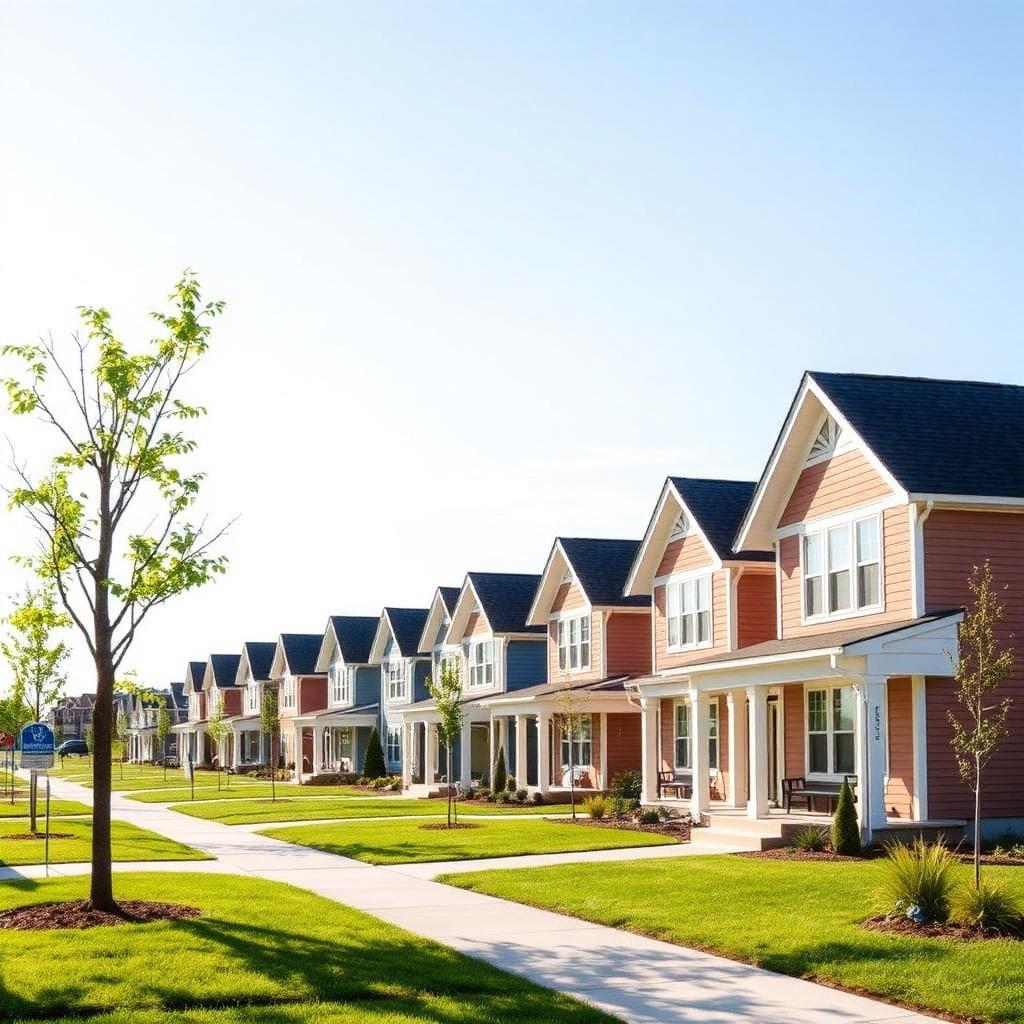
Purpose-built rental neighborhoods are filling a gap traditional apartments and for-sale homes both miss.
For a long time, the American housing market offered renters two choices: an apartment building or someone else's old house. Either you accepted shared walls, a leasing office, and a parking lot, or you signed a lease on a property that was originally built to be sold and had drifted into the rental market when the previous owner moved on. Both options have served generations of renters reasonably well. Neither was designed, from the ground up, for the way many households actually want to live today. Build-to-rent — the practice of constructing entire neighborhoods of single-family or small-attached homes specifically for the rental market, owned and operated by a single landlord for the long term — is the third option, and it is reshaping suburban Northeast Ohio faster than most observers realize.
The clearest way to understand build-to-rent is to walk one. A well-executed build-to-rent community in Stark, Summit & Cuyahoga Counties does not look like an apartment complex with detached buildings. It looks like a neighborhood. Streets are real streets, with sidewalks and trees and on-street parking. Homes have front porches that face the public realm. Each unit has its own driveway, its own garage, its own back yard with a privacy fence, and its own front door at grade. There is no shared lobby, no leasing office disguised as a clubhouse, no central mailbox cluster. From the outside, a stranger driving through cannot tell the difference between a build-to-rent community and a for-sale subdivision of the same vintage. That is the point.
The demand we are seeing is being driven by three distinct groups, each arriving at build-to-rent from a different direction. Young families are the largest. These are couples in their late twenties and thirties who could, in theory, qualify for a mortgage but are not ready to commit to a specific neighborhood, a specific school district, or a specific employer for the next decade. They want the experience of a single-family home — a yard the kids can play in, a garage for the bikes, space for a dog — without the weight of homeownership. They want to be able to move in eighteen months if a job changes, without having to sell. A build-to-rent home gives them everything the for-sale version offers, minus the closing costs, the roof replacement, and the equity. Many of them eventually buy. Some of them buy the home they have been renting from us. That is fine. The lease did its job.
The second group is downsizing empty nesters. These are couples whose kids have left, whose four-bedroom colonial has become both too big and too much work, and who are not yet ready for a condominium or an active-adult community. They want a smaller home — typically three bedrooms, two baths, single story or with a primary suite on the main floor — in a neighborhood where they can walk to coffee and a park. They do not want to mow. They do not want to call a roofer. They want predictable monthly costs and a landlord who handles the things they used to handle themselves. Build-to-rent fits that profile precisely, and we have been surprised by how quickly this demographic has become a meaningful share of our applicant pool.
The third group is relocating professionals. The post-pandemic job market has produced an unusual amount of mid-career movement, and Northeast Ohio is increasingly on the receiving end of that movement. A family relocating from Chicago or Pittsburgh or Charlotte for a new job often arrives without the time to buy a home thoughtfully. They need to be in a real neighborhood within thirty days, often with kids enrolling in school the following week. Renting an apartment feels like a step backward. Renting someone's secondary home feels uncertain. A professionally managed, brand-new single-family home in a build-to-rent community is, for this household, the answer to a question no one was previously asking.
Design discipline is what separates a build-to-rent community that will hold its value for thirty years from one that will deteriorate into a problem property by year seven. We design our communities the same way we design our for-sale neighborhoods, with one major difference: every choice we make has to survive the wear and tear of multiple tenancies, not just a single owner. That changes the specification in dozens of small ways. Flooring is luxury vinyl plank rather than hardwood, because it can absorb a decade of dogs and toddlers without complaint. Countertops are quartz, because the cleanability is forgiving and the appearance does not date. Plumbing fixtures are commercial-grade. Mechanical systems are oversized by a tier, because they will be operated by tenants who do not always change the filter on schedule. Landscaping is hardy and low-maintenance, because the long-term landscape budget is part of our operating pro forma, not the tenant's.
What we do not compromise on is the experience of living in the home. Front porches are real porches, deep enough to hold two chairs and a small table. Kitchens have islands large enough for stools. Primary bathrooms have double vanities. Closets are walk-in. Garages are full two-car. The yard is fully fenced, with a patio off the back. These are the features that make a renter feel like a homeowner — and that make a homeowner who has chosen to rent feel like they did not give anything up.
Operationally, the build-to-rent model only works because the entire community is owned and managed by a single landlord with a long-term horizon. Maintenance requests are answered within twenty-four hours by an in-house team that does not need to coordinate with an absentee owner. Snow is plowed by the same crew on every street. Lawn care is consistent. When a unit turns, it is repainted, deep-cleaned, and inspected to a standard that an individual landlord with a single property could rarely match. Tenants notice. Our renewal rates run substantially higher than the market average for comparable single-family rentals, and the cost of that consistency is more than offset by the reduced vacancy and turnover.
Affordability is a more nuanced conversation in build-to-rent than it is in for-sale housing. The headline rent on a new three-bedroom build-to-rent home in Stark, Summit & Cuyahoga Counties is meaningfully higher than the rent on a comparable thirty-year-old single-family rental down the street. What that headline misses is the total monthly cost. The build-to-rent home is dramatically more energy-efficient, with utility bills that often run 40 to 50 percent lower than the older comparable. Maintenance costs are zero. Lawn and snow are included. When you add those numbers together, the all-in monthly cost is competitive with the older inventory, and the quality of the home is in a different category entirely.
Build-to-rent has its critics, and some of the criticisms are worth engaging with directly. The most common is that institutional ownership of single-family homes removes inventory from the for-sale market and contributes to affordability problems for would-be buyers. That critique has more force when applied to investors who buy existing homes off the resale market — a practice that does remove supply — than it does to build-to-rent developers who are adding new homes that would not otherwise exist. Our build-to-rent communities are net additions to the housing stock of the region. The lot was a soybean field eighteen months ago. The home did not exist. We did not displace a single first-time buyer to bring it online.
A second critique is that long-term institutional ownership concentrates housing wealth and denies tenants the equity-building potential of homeownership. That concern is real, and we take it seriously enough that we have started offering structured rent-to-own pathways on a subset of our build-to-rent inventory. A tenant who has rented from us for two years in good standing can elect to enter a five-year purchase agreement at a pre-set price, with a portion of each month's rent credited toward the down payment. It is not the right path for every renter, but for those who want it, the option closes the gap between renting and owning in a way that the previous generation of rental housing never did.
Looking ahead, we expect build-to-rent to continue claiming a larger share of new construction in Northeast Ohio over the next several years. The underlying demand is durable, the operational model has matured, and the for-sale market continues to struggle with affordability at the entry level. As long as those conditions hold, the third option will keep growing. The communities being built now will define how a meaningful share of suburban Ohioans live for the next thirty years. That is a responsibility we take seriously, one porch, one yard, and one front door at a time.
Next up
Stark, Summit & Cuyahoga Counties: Mid-2026 Market Snapshot
Developing the future of Northeast Ohio — one neighborhood at a time.
© 2026 Lime Companies LLC. All rights reserved.
Built in Northeast Ohio.