
Affordable Housing
Inside Our Partnership With the Stark County Land Bank
By Derek Anders • April 2, 2026 • 7 min read
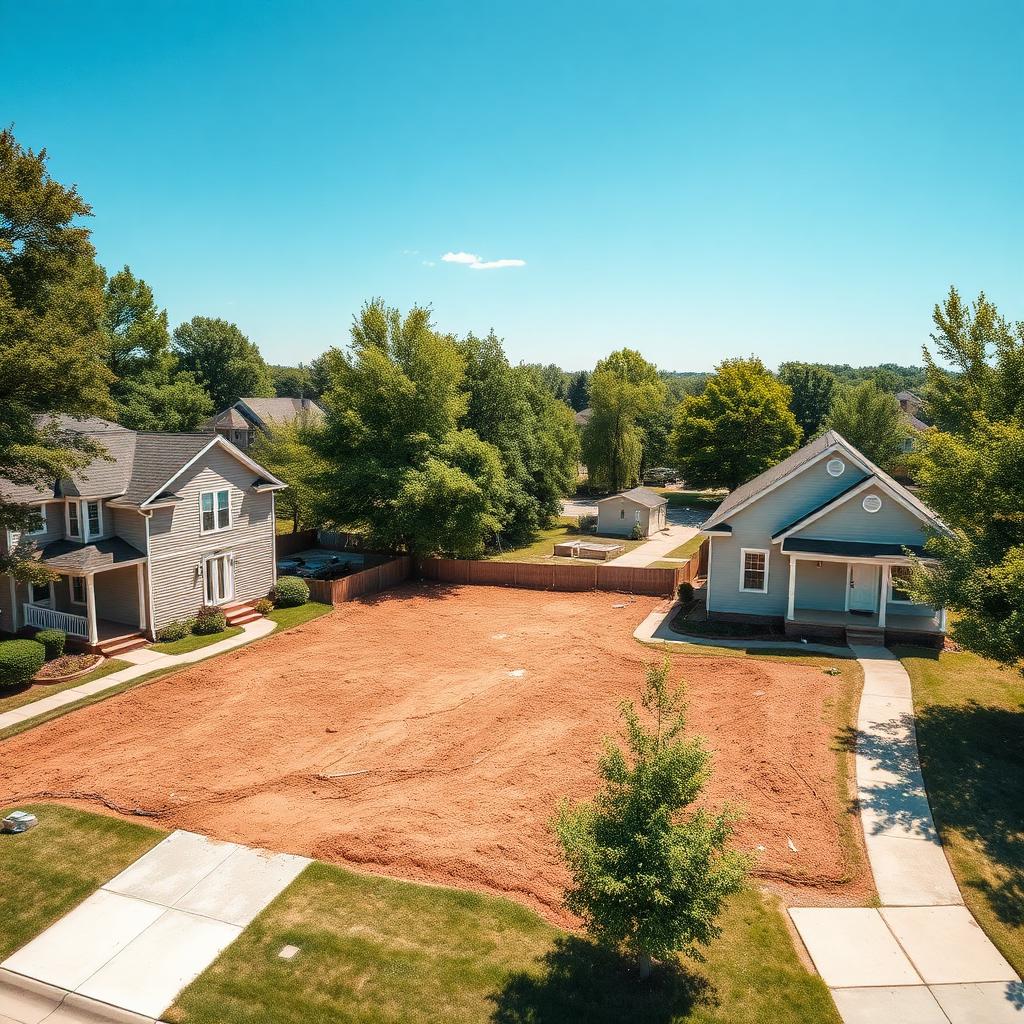
How a steady pipeline of land-bank lots turns into new owner-occupied homes.
The relationship between a private developer and a public land bank is often misunderstood as a simple real estate transaction, but in Stark County, it functions more like a precision manufacturing line. When we look at a vacant lot on a street like Gibbs Avenue or inside the city limits of Alliance, we aren't just seeing a patch of grass that needs mowing. We are looking at a liability that the county is tired of carrying and a neighborhood that is tired of looking at. The Stark County Land Bank acts as the primary filter for these properties, clearing the clouded titles and resolving the back taxes that make private acquisition impossible for the average builder. By the time a property reaches my desk at Lime Companies, the legal heavy lifting is finished, which allows us to focus entirely on the vertical construction costs and the logistical hurdles of infill development.
People ask me why we bother with scattered-site infill when we could just go out to Jackson Township or North Canton and clear-cut a dozen acres for a subdivision. The reality is that the infrastructure is already there in the city cores, and the land bank makes the entry price low enough to offset the increased risks of building in established neighborhoods. In Canton, we deal with tighter setbacks and older utility hookups that haven't been touched since the Truman administration. The land bank understands this trade-off, so they provide us with a predictable pipeline of inventory that lets us keep our crews moving from one site to the next without waiting six months for a title search to clear. It is a volume game where the margin is thin, but the cumulative impact on a single block is massive when you replace three vacant eyesores with three brand-new front porches.
Success in this arena requires a blunt understanding of what a neighborhood can actually support in terms of price points. We aren't building luxury townhomes with rooftop decks in these areas because the appraisal gap would kill the project before the foundation is poured. Instead, we work with the land bank to identify lots where a modest, high-quality three-bedroom home fits the existing character of the street. In places like the Vassar Park area or near Aultman Hospital, there is a desperate need for workforce housing that doesn't come with a hundred years of deferred maintenance. Our partnership allows us to build a product that matches the monthly payment of a local school teacher or a nurse, which is the only way to ensure these homes actually sell to owner-occupants rather than becoming more fuel for the out-of-state rental burner.
Building in Cuyahoga and Summit Counties presents different hurdles, but Stark County has a specific rhythm that works because the communication lines are short. If I run into an issue with a specific parcel near the fairgrounds, I know exactly who to call to get a straight answer. This transparency is rare in urban development, where bureaucracy usually acts as a deterrent. We treat the land bank as a strategic partner because they have a vested interest in seeing these parcels back on the tax rolls. Every time we finish a house and a new family moves in, the county stops spending money on weed abatement and trash removal, and they start collecting property taxes again. It is a pragmatic win for the local government and a necessary stabilizer for the housing market in Canton’s older wards.
The physical construction on these lots is rarely straightforward, and that is where most developers lose their nerve. You might dig a footer and find an old cistern or a buried foundation from a house that burned down in 1940. These are the hidden costs of reclaiming the urban core that you just don't deal with in a greenfield development out in the suburbs. Because our acquisition costs are stabilized through the land bank program, we can absorb those site-condition surprises without compromising the quality of the finishes inside the home. We use durable materials that will last another century because the goal isn't just to flip a property and leave, but to create a permanent fixture that raises the property values of the four houses next to it.
We have a light opinion on what constitutes affordable housing, and it usually involves moving away from the voucher-dependency model and toward true homeownership. The Stark County Land Bank houses we build are designed for people who have been squeezed out of the market by rising interest rates and a lack of inventory. By focusing on infill, we are putting people closer to their jobs and the existing bus lines, which reduces the total cost of living beyond just the mortgage payment. I have seen too many developers try to overcomplicate this with fancy architectural statements that don't belong in a working-class neighborhood. We build simple, sturdy, and efficient homes that look like they belong in Northeast Ohio, which is exactly what the land bank wants to see on their inventory list.
There is a psychological component to this work that often goes unrecognized by the spreadsheets. When a neighbor who has lived on a street for thirty years sees a new foundation being poured on a lot that has been a dumping ground for a decade, it changes their outlook on their own property. They start painting their trim or fixing their fence because they finally see an investment being made in their backyard. The land bank enables this ripple effect by cluster-funding demolitions and then seeking us out to fill the gaps. It isn't just about one house; it is about changing the trajectory of an entire block in the southeast or northeast quadrants of the city.
In Summit County, the process is similar but faces different density pressures around Akron. We take the lessons we learned in Stark and apply them to the hills and varying topography of neighborhoods like Kenmore or Goodyear Heights. The land bank model is the only reason these areas are seeing new construction at all. Without the ability to acquire land for a nominal fee, the numbers would never work for a private builder to take on the risk of an aging neighborhood. We have to be meticulous with our budgets and aggressive with our timelines to make it viable. Every day a house sits unfinished is a day that our capital is tied up, so we operate with a sense of urgency that matches the housing crisis we are trying to solve.
Looking ahead, the partnership with Stark County will only become more vital as the cost of materials continues to fluctuate. Having a reliable source of land means we can plan our builds a year in advance, securing lumber and windows when prices are favorable. We don't have to hunt for deals on the open market where we would be competing with hedge funds or speculators who have no intention of building anything. The land bank ensures that the land goes to people who are actually going to put a shovel in the ground. This creates a level of certainty that allows Lime Companies to stay lean and focused on the actual craft of building rather than the gamesmanship of land speculation.
The critics of land bank programs often claim that the government shouldn't be involved in real estate, but those people aren't standing in the middle of a vacant lot in Alliance at seven in the morning. They don't see the systemic failure of the private market to address these blighted parcels on its own. Private owners often sit on these lots for years, waiting for a payday that never comes while the neighborhood rots around them. The land bank breaks that cycle by force, using legal tools to reclaim the land and put it into the hands of someone who will actually do something with it. I am happy to be that someone, provided we can keep the common-sense approach that has defined our work in Stark County so far.
Ultimately, our goal at Lime Companies is to prove that you can build high-quality, new homes in the heart of our cities and make it a sustainable business. We aren't a non-profit, and we don't pretend to be. We are a for-profit developer that has found a way to align our bottom line with the public good of neighborhood revitalization. The Stark County Land Bank is the primary engine behind that alignment, and as long as they keep clearing the path, we will keep building the houses. It is a blue-collar approach to real estate that values results over rhetoric, and it is the only way we are going to fix the housing shortage in Northeast Ohio one lot at a time.
Everything comes down to the finished product and the person who signs the deed at the end of the process. When I see a family moving into a home we built on a former land bank lot, I don't see a miracle; I see the result of a very deliberate, very difficult process that worked exactly as intended. We have built a reputation in Canton and beyond as a firm that follows through on its promises, and that trust is the currency that keeps the partnership moving. We aren't just building houses in Stark County; we are reclaiming the urban fabric and making sure that the next generation of Ohioans has a place to call home that doesn't require a forty-minute commute or a lifetime of renovation stress.
Next up
A Plain-English Playbook for First-Time Buyers in NE Ohio
Developing the future of Northeast Ohio — one neighborhood at a time.
© 2026 Lime Companies LLC. All rights reserved.
Built in Northeast Ohio.