
Market Update
Why Northeast Ohio Is Quietly Becoming a Builder's Market
By Derek Anders • April 30, 2026 • 9 min read
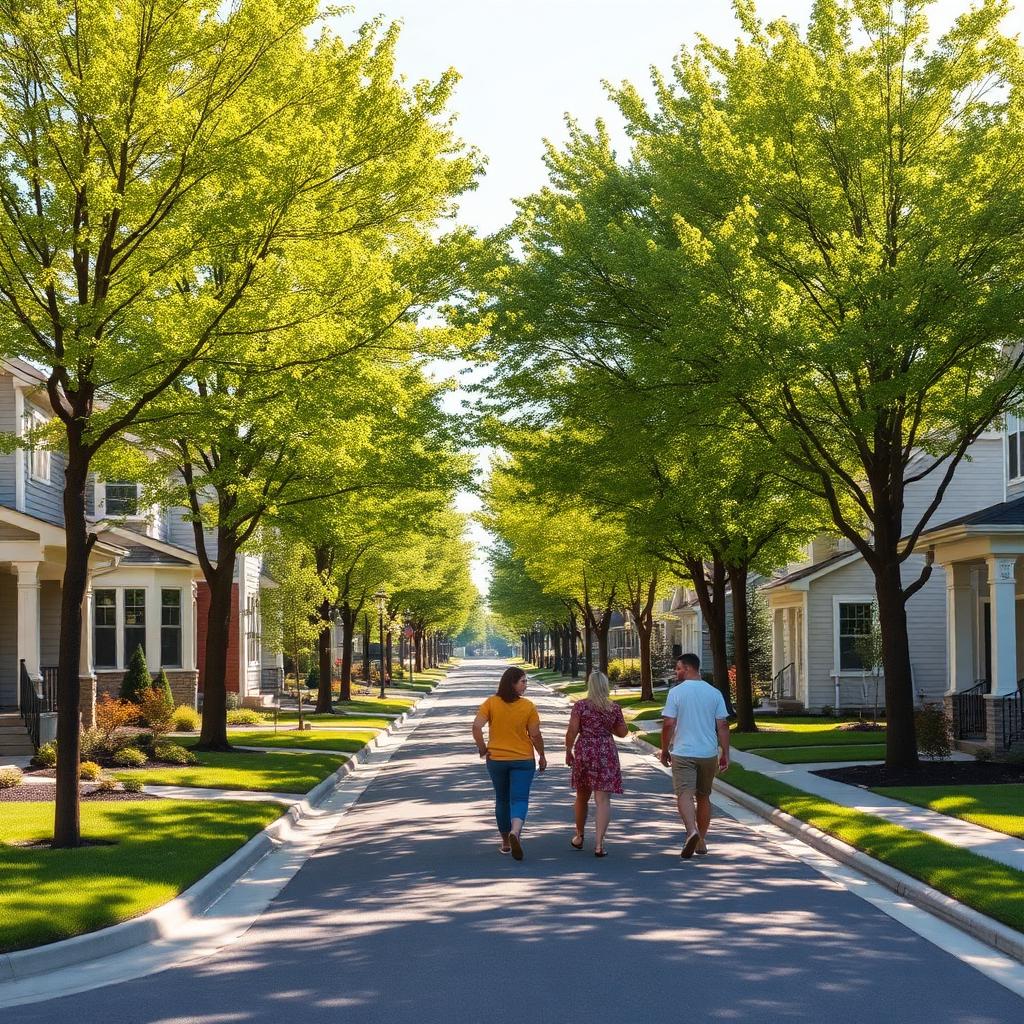
Affordability, infrastructure, and a deep skilled-trades bench are turning Stark, Summit & Cuyahoga Counties into one of the country's most resilient housing markets.
National housing headlines have spent most of the past five years chasing the Sun Belt. The boom in Phoenix, the migration to Nashville, the price spikes in Boise, the apartment-construction wave in Charlotte — that is the story that filled the trade publications, the cable-news segments, and the venture-capital pitch decks. Meanwhile, several thousand miles to the northeast, a different kind of housing market was quietly building itself. Northeast Ohio — and specifically the corridor running from Cleveland through Akron to Canton, anchored by Cuyahoga, Summit, and Stark Counties — has been delivering the most balanced housing fundamentals in the country, and almost nobody outside the region has noticed. As a builder with all of our work concentrated here, we have a front-row seat, and the view is increasingly compelling.
Three forces are at work, and each of them is durable in ways the Sun Belt boom never was.
The first is land. Genuinely affordable, well-located land remains available across the three-county region in a way that is no longer possible in most of the metropolitan markets where housing demand is concentrated. A buildable infill lot in an established Cleveland neighborhood can still be acquired for a few thousand dollars through the county land bank. A small-lot subdivision parcel in Stark County, with utilities at the road and a reasonable approval pathway, prices in a range that allows for actual affordable single-family construction without exotic subsidy. Greenfield land in the suburban inner ring of Summit County, while no longer cheap, prices at a fraction of what comparable parcels command in Charlotte or Nashville. Land cost is the foundation of every housing pro forma, and when land prices are reasonable, the rest of the math has a chance to work.
The second is infrastructure. This is the force that most outside observers miss, because it does not show up in the migration data and does not produce the kind of growth chart that excites investors. But it matters enormously. The water systems, sewer systems, road networks, hospitals, universities, and electrical grid serving Cuyahoga, Summit, and Stark Counties were all built to support a population substantially larger than the current one. That oversizing, which for decades was treated as a stranded cost of population loss, is now an enormous strategic asset. There is real capacity to grow without the expensive, slow, politically fraught process of expanding the underlying systems. A new subdivision in the suburban inner ring can typically connect to existing sewer and water without paying for a treatment-plant expansion. A new commercial facility in the Akron-Canton industrial corridor can get the electrical service it needs without waiting on a substation build-out. That latent capacity is one of the quietest competitive advantages a region can have, and Northeast Ohio has it in abundance.
The third is the skilled-trades bench. Framers, electricians, plumbers, masons, HVAC technicians, sheet-metal workers, drywall finishers, roofers — the workforce that actually builds and maintains the housing stock is deeper here than almost anywhere else in the country. Many of those tradespeople grew up in the region, learned the trade from a parent or an apprenticeship that traces back to the manufacturing economy of the twentieth century, and are still in the prime of their careers. The training pipeline through local technical schools, community colleges, and union apprenticeship programs continues to produce new entrants at a rate that, while not sufficient to fully replace retiring workers, is meaningfully better than what most fast-growing Sun Belt markets can claim. We can staff a project here in a timeframe that builders in Phoenix or Tampa would find enviable, and the quality of the work, in our experience, is among the best in the country.
Add a few quieter advantages — reasonable insurance costs, four real seasons, a cost of living that lets a family on a single skilled-trades or teaching income breathe rather than scramble, and a regional culture that still treats the act of buying a home as a normal life milestone rather than a financial impossibility — and the picture starts to look like something the rest of the country will eventually catch up to.
There are headwinds worth naming honestly. Population growth across the three counties remains slow. Some neighborhoods, particularly in the urban core of Cleveland, continue to face the difficult work of recovering from decades of disinvestment, and that recovery is uneven. The skilled-trades bench, while still deep, is not refilling as fast as it is retiring, and that gap will become a more serious constraint over the next decade if the trades-education pipeline is not expanded. Public-school performance is mixed across the region, and the differential between strong and weak school districts is a real consideration for families choosing where to buy. None of these challenges is unique to Northeast Ohio, and several of them are less severe here than in the Sun Belt markets that dominate national coverage. But they are real, and pretending otherwise does not serve buyers or sellers.
What makes the region a builder's market specifically, rather than just a generally interesting housing market, is the combination of those three forces with the demand patterns that have emerged post-pandemic. Buyers and renters across the country, including across the country in places that experienced the wildest price growth of the early 2020s, have started to recalibrate around affordability, stability, and quality of life. The cohort that moved to Boise or Austin in 2021 and is now looking at a five-thousand-dollar property tax bill, a homeowners-insurance renewal that has tripled, and a commute that is no shorter than it would have been in the Midwest is, in meaningful numbers, looking at a return move. Some of those families are moving back to the regions they came from. Some are discovering the Midwest for the first time, often through a family or college connection that brought them here for a visit. Either way, the inbound migration to Northeast Ohio remains modest in aggregate but increasingly serious in profile — a higher share of professionals, dual-income families, and remote workers who can underwrite a mortgage at the local price points without strain.
For a builder, that demand environment, combined with the supply environment we described above, produces an unusually attractive operating reality. We can buy land at prices that allow real construction value to be delivered to the buyer. We can build at a pace that the local trades base can actually support. We can sell or rent to households who can afford the homes we build without exotic financing. We can hold rental properties for the long term because the operating economics work without continuous rent increases. We can plan a five-year development pipeline with reasonable confidence that the macro conditions will not vaporize under us. That stability, frankly, is rare in American housing right now, and it is the single biggest reason we have concentrated our work here and intend to keep doing so.
We are not the only builder noticing. Several national builders have quietly added Northeast Ohio to their land-acquisition pipelines over the past eighteen months. Out-of-state capital is showing up on the bid sheet for portfolios that would not have attracted national attention three years ago. The build-to-rent operators who spent the last cycle competing for parcels in Phoenix and Atlanta are starting to look seriously at Stark and Summit. None of this is yet a wave. It is the early phase of what we expect to become a meaningful re-rating of the region's housing market over the next decade.
For local buyers, renters, and homeowners, the implications are mixed. Renewed interest in the region will, over time, support stronger appreciation and a healthier rental market than the area has seen in a long time. It will also, if not managed carefully, recreate some of the affordability pressure that the Sun Belt has spent the last several years complaining about. The work to prevent that — through a steady pipeline of new construction, intentional support for affordable housing, and policies that encourage owner-occupancy alongside well-operated rental — is work that has to happen now, not after the prices start to move.
We are bullish on this region. We are putting our shovels where our mouth is. Every dollar we have invested in pre-development, in land, in trades partnerships, and in the infrastructure of our own company over the past three years has been a bet on the long-term trajectory of Stark, Summit & Cuyahoga Counties. The fundamentals are there. The talent is there. The capacity is there. The story is starting to get out, and we expect the next chapter — quietly, then suddenly — to be the most interesting one Northeast Ohio's housing market has written in a generation. We intend to be part of it.
Next up
Building the Next Generation of Northeast Ohio's Trades
Developing the future of Northeast Ohio — one neighborhood at a time.
© 2026 Lime Companies LLC. All rights reserved.
Built in Northeast Ohio.