
Construction
How We Build Through an Ohio Winter
By Derek Anders • December 18, 2025 • 7 min read
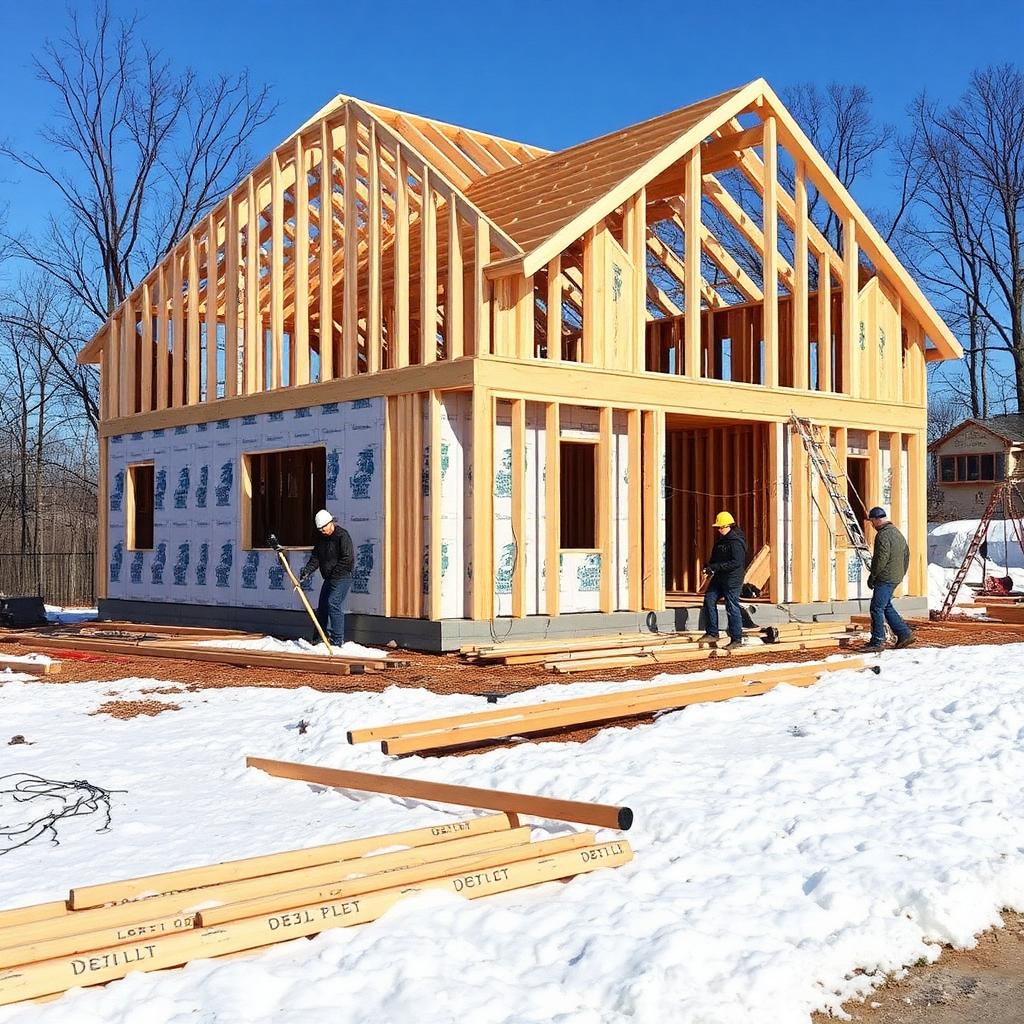
Cold-weather concrete, framing schedules, and protecting the work between trades.
Construction in Northeast Ohio does not stop when the lake effect snow starts blowing off Lake Erie into Cuyahoga County or when the ground turns to iron in the fields of southern Stark County. There is a persistent myth among casual observers that our builds hibernate between November and April. If we operated that way, our overhead would swallow our margins and our housing delivery schedules would be a complete fiction. Building through a Great Lakes winter is entirely possible, but it requires a fundamental shift in how we manage the sequence of trades and a willingness to spend money upfront to save time on the back end. We plan our year around the frost line, ensuring that every foundation from Massillon to Cleveland is poured and backfilled before the hard freeze makes excavation a nightmare of broken hydraulic lines and expensive ground thawing equipment.
The most critical technical hurdle we face during the transition into winter is concrete placement. You cannot simply pour a slab on frozen subgrade and expect it to hold up over a twenty-year mortgage. When we are working on a build-to-rent project in a neighborhood like North Hill in Akron, we monitor the five-day forecast with the intensity of a storm chaser. We use chemical accelerators like non-chloride calcium to speed up the set time, and we deploy heavy-duty insulated curing blankets the moment the finishers step off the pad. If the ambient temperature drops below twenty degrees, we factor in the cost of ground heaters or propane-fired hydronic systems. This adds three to four percent to the vertical construction cost, but that is a bargain compared to the alternative of sitting idle for four months while interest carries on our construction loans.
Once we move from the ground into framing, the challenges shift from chemistry to sheer physical endurance and site safety. Plywood becomes a skating rink after a light dusting of sleet, and the wind off the Cuyahoga Valley can turn a sheets of zip system into a sail that pulls a crew member off a ladder. We focus heavily on keeping the interior of the structure dry as early as possible. This means we prioritize getting the roof sheathed and felted within forty-eight hours of the rafters going up. Even if the shingles aren't on yet, getting that water-resistant barrier in place prevents the subflooring from swelling. A saturated subfloor in a Stow or Hudson job site will take weeks to dry out enough to accept hardwood or LVP, which can derail the entire interior finish schedule come February.
Temporary heat is where many inexperienced developers in our region lose their shirts. There is a specific art to heating a skeleton of a house in Slavic Village without causing moisture problems that lead to mold or drywall failure. We avoid open-flame propane "torpedo" heaters once the drywall phase begins because they exhaust incredible amounts of water vapor into the air. If you use those indoors without massive ventilation, you will see water literally running down the studs. Instead, we transition to indirect-fired heaters which keep the combustion gases outside and pump dry, warm air into the house. This dry air is essential for the taping and mudding process, as drywall compound needs consistent evaporation to cure properly without cracking. We keep the thermostat at a steady fifty-five degrees, which is the sweet spot for the material without being wasteful.
Logistics in Northeast Ohio also get complicated by the simple reality of mud and salt. A job site in a developing part of Canton can quickly turn into a swamp that swallows delivery trucks if the stone base isn't thick enough. We over-engineer our temporary driveways and staging areas with extra loads of #4 limestone to ensure that lumber drops don't end up stuck at the curb. We also have to account for the reliability of the supply chain during heavy snow events. When a lake effect band hits the 271 corridor, our window deliveries and truss shipments will be delayed. We build a three-day "snow buffer" into every milestone in our project management software from December through March. This prevents the domino effect where a plumber shows up to a site that hasn't been closed in yet.
Protecting the work between trades is arguably the most overlooked part of winter building. When we are renovating older stock for sober living homes or affordable housing in Akron, we often deal with cracked foundations or porous masonry that hasn't been touched in eighty years. Winter is unforgiving to an open structure. We use heavy-duty reinforced poly sheeting to seal every window and door opening the moment the demo is done. This isn't just about comfort for the electricians and plumbers; it is about maintaining a stable environment for the existing timber. Old-growth oak and pine in these historic homes will move and groan as the humidity drops. We keep the building shells buttoned up tight to prevent the shock of the cold from causing new structural shifts while we are trying to plumb the walls.
Communication with municipal inspectors in places like Cuyahoga Falls or the City of Cleveland also changes in the winter. We have to be proactive about scheduling inspections because snow days can shut down city hall or pull inspectors off their routes. We make it a point to have our sites shoveled and salted before the inspector arrives. It seems like a small detail, but an inspector who has to hike through knee-deep slush just to see a rough-in is not going to be in a focused mindset. Showing respect for the inspector’s safety and time by maintaining a clean, accessible site goes a long way in keeping the project moving toward a certificate of occupancy. We treat the exterior maintenance of the site as seriously as we treat the quality of the miter joints on the interior trim.
The mental toll on our crews and subcontractors is the final piece of the puzzle. Working a ten-hour shift in sub-zero wind chills on a roof in Massillon is taxing in a way that people in warmer climates don't understand. We make sure our sites have a designated heated break area, usually a finished basement or a conditioned garage space, where guys can actually get their core temperature back up. A cold crew is a slow crew, and a slow crew eventually becomes a careless one. By investing in the comfort and safety of the people swinging the hammers, we maintain a level of craftsmanship that doesn't dip just because the weather did. We take pride in the fact that our homes are built with the same precision in January as they are in July.
Ultimately, building through the Ohio winter is an exercise in risk management and aggressive scheduling. We take the "done is better than perfect" mantra and flip it; we insist on "dry and tight is better than fast." If we can't get the roof on before a major ice storm, we don't start the framing that week. We pivot to interior work on other projects or focus on shop drawings and procurement. Being an operator in this region means having the humility to respect the weather but the technical competence to overcome it. We don't see the winter as an obstacle; we see it as a seasonal shift in the variables we have to solve for. Every home we finish in the spring is a testament to the planning we did during the previous autumn.
We also have to look closely at the long-term performance of the materials we install during these months. Exterior siding, for example, can be brittle in extreme cold. If a crew is nailing up vinyl or fiber cement in ten-degree weather, they have to be incredibly careful with their nail guns to avoid shattering the material. We often hold off on final exterior finishes until we get a break in the weather, choosing instead to leave the house wrapped in high-quality weather barrier for an extra few weeks. This ensures that the building envelope is truly sealed and that the aesthetics of the home aren't compromised by rushed cold-weather installation. This level of intentionality is what separates a professional development firm from a "tailgate contractor" who is just trying to get paid and move on.
As we look toward the future of housing in Northeast Ohio, the ability to build year-round becomes even more vital. With the housing shortage in Summit and Stark Counties reaching critical levels, we cannot afford to lose half the year to the elements. By mastering the science of cold-weather concrete, perfecting our temporary heating strategies, and maintaining a culture of site safety, Lime Companies continues to deliver high-quality residential units regardless of the thermometer. We believe that a robust local economy requires a construction sector that is resilient and adaptable. Whether we are working on a build-to-rent community or a specialized sober living facility, our commitment to build through the snow is part of our commitment to the region we call home.
Next up
Giving Back in 2025: Where Lime Companies Showed Up
Developing the future of Northeast Ohio — one neighborhood at a time.
© 2026 Lime Companies LLC. All rights reserved.
Built in Northeast Ohio.