
Affordable Housing
LIHTC in Northeast Ohio: What It Funds and What It Doesn't
By Derek Anders • July 17, 2025 • 8 min read
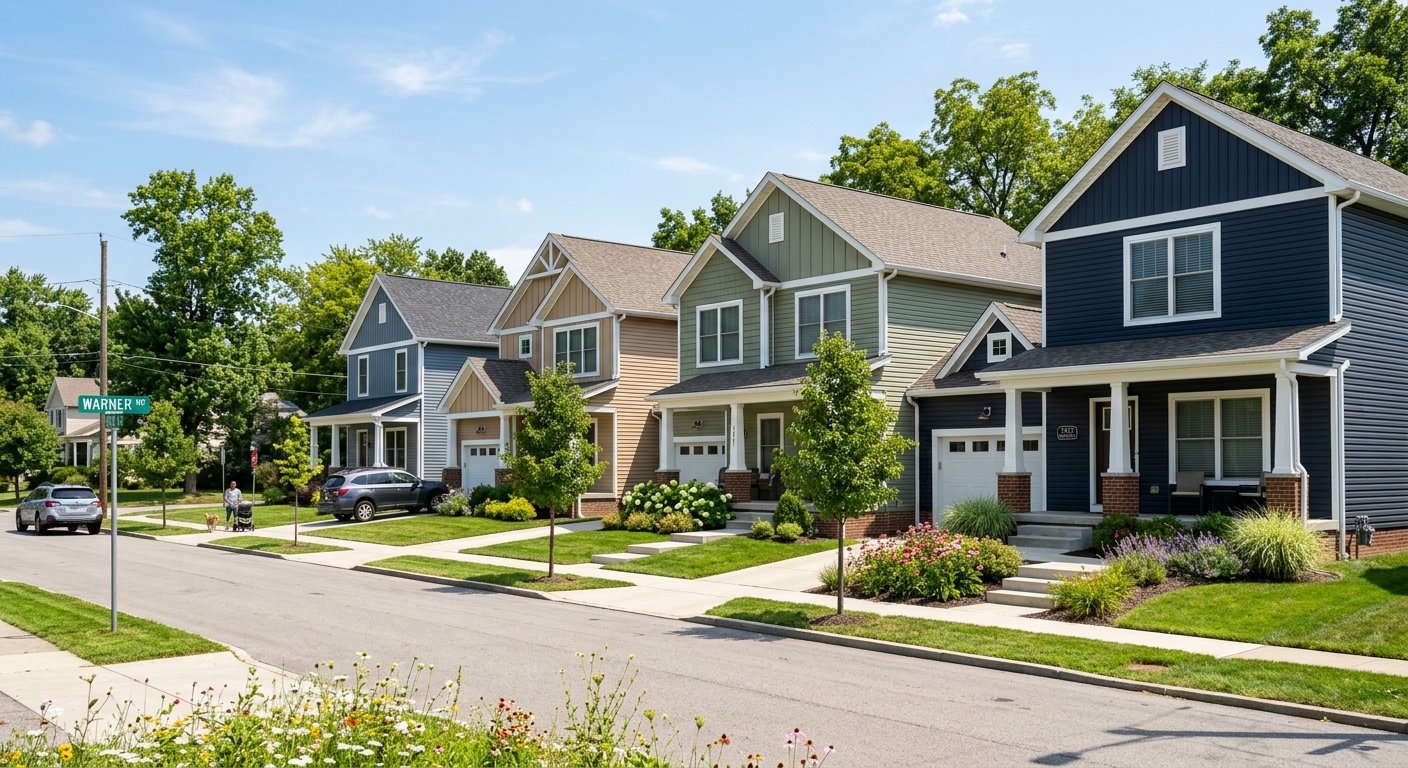
A technical look at how we navigate the LIHTC program in Ohio, balancing tax credit financing with our own private models for housing across the region.
When I look at the physical landscape of neighborhoods like Slavic Village in Cleveland or the North Hill area of Akron, I see the visible intersection of policy and real estate. Most of the affordable housing being built in these corridors relies heavily on the Low Income Housing Tax Credit, or LIHTC. This is a federal program administered by the Ohio Housing Finance Agency that provides private investors a dollar-for-dollar reduction in their federal taxes in exchange for providing equity to develop affordable rental housing. At Lime Companies, we track these allocations closely because they dictate the velocity of development in our focus counties. However, there is often a disconnect between what the public thinks these credits do and how they actually function on a balance sheet. LIHTC is not a grant and it is not a simple subsidy; it is a complex financial tool that requires a massive amount of legal and accounting overhead to execute successfully in Northeast Ohio.
The standard LIHTC model currently drives the majority of urban-infill affordable housing across Cuyahoga and Summit Counties. For a developer to make a project work at sixty percent of the Area Median Income, the numbers usually do not pencil out with conventional bank debt alone. The rent levels required to keep a unit affordable often cannot cover the debt service required to build a modern, code-compliant structure from the ground up. The tax credits fill that gap by bringing in equity partners who essentially buy the credits to offset their own tax liabilities. This allows us to build with less permanent debt, which in turn allows for lower rents. But this equity comes with significant strings attached, including a thirty-year affordability covenant. In places like Canton or Akron, where market rents are already relatively low, the spread between a LIHTC unit and a market-rate unit can be surprisingly thin, making the administrative burden of the program a heavy lift for smaller developers.
At Lime, we utilize these credits selectively, but we also intentionally bypass them for several of our core focus areas. One of the primary reasons we opt out of LIHTC for certain urban-infill projects is the sheer cost of compliance and the rigid design standards required by the state. When you take state money or tax credit equity, you are often forced into a specific building typology that might not fit the specific fabric of a neighborhood like Highland Square or Ohio City. We find that for smaller scale infill—built on single or double city lots—the legal fees and the cost of the application process can eat up the very savings the credits are supposed to provide. In those cases, we prefer to use private capital and efficient construction methods to reach a similar rent point without the decade-long reporting requirements that come with federal oversight. This allows us more flexibility in how we build.
Our sober living houses represent a segment where LIHTC is almost never the right fit. Recovery housing requires an environment that is nimble and often transitions between different levels of care and oversight. The LIHTC program is designed for long-term, stable residential tenancies with standard leases. In our sober living properties throughout Northeast Ohio, we focus on creating safe, high-quality environments for men and women in various stages of recovery. Because these houses often operate under a different regulatory framework than traditional apartments, and because we prioritize a community-based living model, the rigid unit-by-unit compliance of tax credit financing would be a hindrance. Instead, we fund these through internal capital and private partnerships, ensuring that the mission of the house remains the priority rather than satisfying a state auditor’s checklist regarding tenant income certifications every twelve months. It is about choosing the right tool for the job.
Then there is the Lime Neighborhoods build-to-rent model, which is another area where we typically diverge from the LIHTC path. Build-to-rent is often misunderstood as a purely luxury play, but in Stark and Summit Counties, we see it as a way to provide high-quality housing for the missing middle. These are people who earn too much to qualify for LIHTC units but find themselves priced out of the modern semi-custom home market. By using private financing for these developments, we can move faster and build with a focus on long-term durability and township-specific aesthetics. LIHTC projects are often subject to a competitive scoring process that favors certain geographical areas or project sizes. By staying outside of that system for our build-to-rent communities, we can build where the demand is highest, rather than where the state’s QAP—Qualified Allocation Plan—says we should build for that specific year.
I often get asked why we still build semi-custom homes if our goal is affordability and neighborhood stabilization. The reality of the Northeast Ohio market is that you need a diversity of housing types to keep a neighborhood healthy. If you only build subsidized housing, you risk creating pockets of concentrated poverty; if you only build luxury, you price out the workforce. Our semi-custom residential builds in areas like West Akron or the fringes of Cuyahoga Falls provide an avenue for homeownership that doesn't rely on tax credits. These homes are financed through traditional construction-to-perm loans. By staying active in the high-end residential space, we keep our crews sharp and our supply chains robust, which actually helps us lower the per-square-foot cost when we pivot back to our affordable urban-infill projects. The knowledge we gain from high-performance residential building carries over into how we insulate and ventilate our more modest rental units.
One of the technical hurdles with LIHTC in our region is the 'basis boost' and how it impacts the total development cost. In many of the census tracts we target in Cleveland or Canton, the projects are located in Difficult Development Areas or Qualified Census Tracts. This allows the project to generate thirty percent more credits than it otherwise would. While this sounds like a win, it often leads to what I call 'budget creep.' Because the subsidy is available, architects and consultants often design projects that are unnecessarily expensive, knowing the credits will cover the overage. At Lime, we try to fight that instinct. Even when we are working within a tax credit framework, we push for a lean, technical approach to construction. We want to see how much quality we can deliver per dollar, rather than how much credit we can squeeze out of a single project. maximizing efficiency is the only way to scale.
The application cycle for these credits is also a major factor in our strategic planning. In Ohio, you generally have one shot a year to apply for the primary nine-percent credit. If your project isn't funded, you've essentially wasted twelve months of holding costs and pre-development expenses. For a developer focused on speed and neighborhood impact, that timeline is often unacceptable. This is why we maintain a dual-track strategy. We will pursue tax credits for larger, sixty-unit-plus developments where the economy of scale makes the wait worthwhile. But for the four-unit or six-unit buildings that fill the gaps in our urban streetscapes, we rely on our own proprietary funding models. This allows Lime to keep moving regardless of what the state's budget looks like or how the political winds are shifting in Columbus during an election year. Consistency is more important than a single big win.
The compliance period for LIHTC is another technical detail that most people overlook. For fifteen years, and often an additional fifteen-year extended use period, every single tenant’s income must be verified and documented at move-in. For a small team, the administrative work required to manage a LIHTC portfolio is massive. This is why you often see these buildings managed by large, national firms that specialize in compliance rather than local guys who know the neighborhood. We strive to maintain a local presence in everything we do. By using private capital for a significant portion of our portfolio, we keep our management overhead low and our connection to the tenants high. We aren't just checking boxes for a federal reporting form; we are making sure the roof doesn't leak and the landscaping in the city right-of-way looks clean for the neighbors.
In the context of Northeast Ohio, the LIHTC program is also competing with the rising cost of materials and labor. Five years ago, the credit went a lot further than it does today. Now, we are seeing a 'gap' in the 'gap'—where even the tax credits aren't enough to make the project viable, requiring developers to seek additional soft funds from the city or county. This is where things get bogged down in local politics. At Lime, we try to avoid getting stuck in that trap. If a project requires more than two or three layers of public subsidy, it's usually a sign that the underlying economics are flawed. We would rather redesign the building, change the materials, or shift the density to make it work with a cleaner capital stack. Our goal is to build units that can stand on their own financial feet.
Ultimately, the decision to use or not use LIHTC comes down to the specific goals for the site. If we are looking at a distressed piece of land in a neighborhood that has seen zero investment for three decades, LIHTC is often the only way to break ground. It acts as the anchor that can stabilize an entire block. But if we are looking to build a few semi-custom homes or a build-to-rent cluster in a growing suburb, the tax credit is more of a burden than a benefit. We treat LIHTC as one tool in a much larger toolbox that includes conventional debt, private equity, and our own reinvested profits. This hybrid approach is what allows Lime Companies to remain active across Stark, Summit, and Cuyahoga counties simultaneously, regardless of whether the federal government is expanding or contracting the tax credit programs.
Looking ahead, I see a need for more innovation in how we fund affordable housing in Ohio that doesn't involve the LIHTC at all. We are experimenting with modular designs and high-efficiency building envelopes that reduce long-term operating costs. If we can lower the utility bills for our tenants, that is a form of affordability that doesn't require a government subsidy. We’re also looking at how our build-to-rent neighborhoods can provide a path to equity for long-term residents. The housing crisis in our region won't be solved by one single program. It requires developers who are willing to do the hard work of balancing technical financial structures with the practical realities of construction and property management. That is where Lime thrives, and that is how we will continue to approach every lot we purchase and every home we build.
Next up
Designing Homes That Work for Three Generations
Developing the future of Northeast Ohio — one neighborhood at a time.
© 2026 Lime Companies LLC. All rights reserved.
Built in Northeast Ohio.