
Market
Akron's North Hill: A Neighborhood Worth the Investment
By Derek Anders • August 14, 2025 • 8 min read
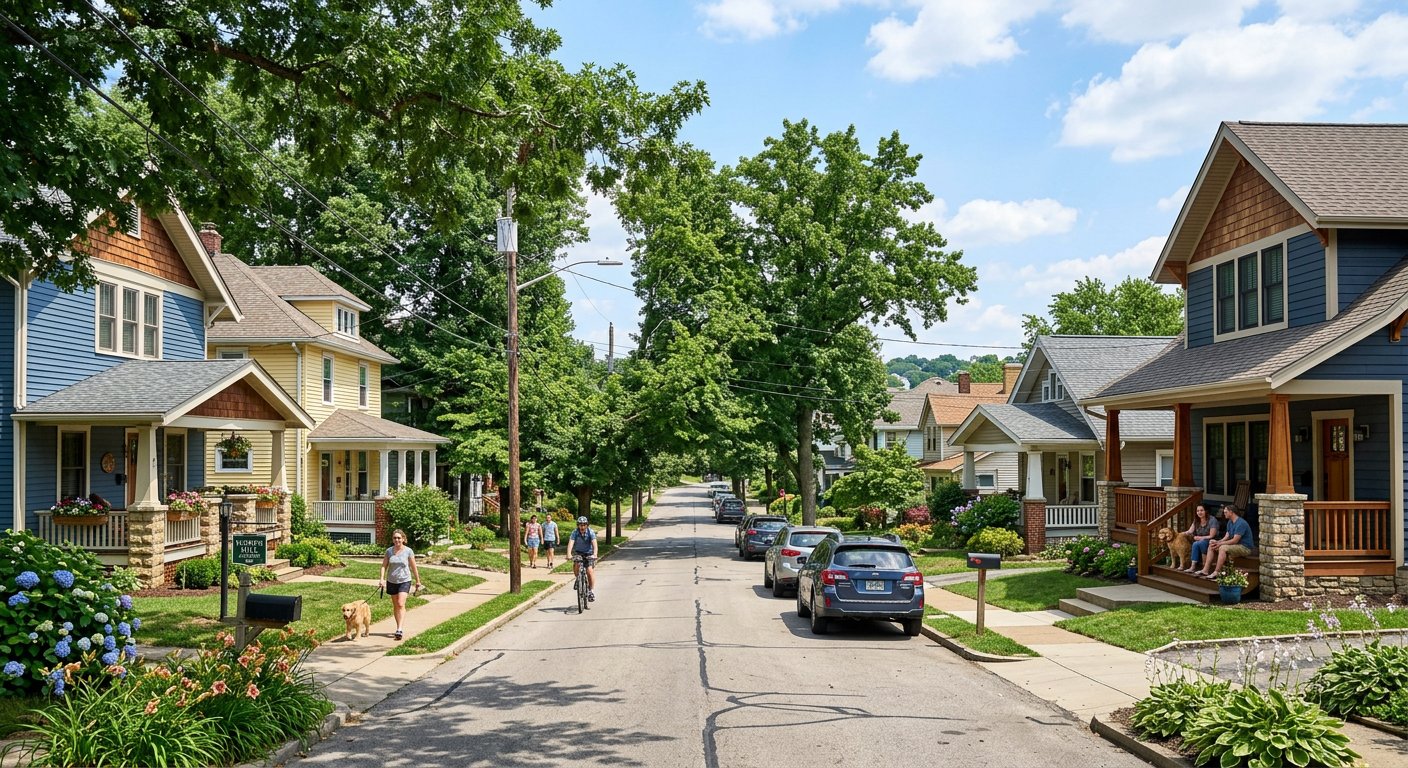
Derek Anders discusses why Akron’s North Hill is a prime target for Lime Companies' urban-infill and sober living projects due to its density and diversity.
I have spent a significant amount of time walking the streets of North Hill lately, and it confirms my belief that this pocket of Akron is one of the most misunderstood yet viable investment submarkets in Northeast Ohio. As the head of Lime Companies, my focus is strictly on the technical fundamentals of real estate—density, transit connectivity, and the long-term viability of the housing stock. North Hill sits on a bluff overlooking the Cuyahoga Valley, providing a geographic separation from the downtown core while remaining inextricably linked to the city's labor market. We are currently looking at several parcels here for our urban-infill affordable housing initiative because the grid system allows for high-efficiency builds that maximize square footage without ballooning the site utility costs that often plague suburban developments. The infrastructure is aged, certainly, but the bones of the neighborhood are resilient enough to support the aggressive infill strategies we are planning for the coming 24 months.
The primary driver of value in North Hill right now isn't some abstract trend; it is the tangible influx of international entrepreneurship, specifically within the Bhutanese and Nepali communities. In my experience across Summit and Cuyahoga counties, nothing stabilizes a neighborhood faster than high owner-occupancy rates and localized commercial investment. When you drive down North Main Street, you see a level of storefront activation that simply does not exist in other parts of the city. These are not speculative ventures backed by venture capital; they are family-owned grocery stores, pharmacies, and service centers that provide a built-in economic base for the surrounding residential streets. For a developer like Lime, this creates a secondary layer of security. When the neighborhood economy is self-contained and growing, the demand for our semi-custom homes and renovated rental units increases naturally without us having to rely on external market forces or fickle municipal subsidies to keep our pro formas in the black.
One technical aspect of North Hill that I find particularly compelling is the specific typology of the housing stock. We see a high concentration of early 20th-century colonials and bungalows that are ideally suited for our sober living house model. These structures were built with dimensional lumber and masonry foundations that, despite decades of deferred maintenance in some cases, remain structurally superior to the light-gauge stick framing found in modern suburban tracts. For our sober living facilities, we require robust layouts that can accommodate communal living while maintaining individual privacy. The wide floor plans found on streets like Thayer and Tallmadge Avenue allow us to retroactively install modern HVAC and electrical systems without compromising the structural integrity of the building. We focus on these older assets because the cost per square foot for acquisition and gut-rehab still beats the cost of new horizontal development when you account for the existing sewer and water tie-ins.
Connectivity is another factor that many developers overlook, but at Lime, we bake transit access into every site selection. North Hill is a transit-rich environment where the METRO RTA lines are frequent and reliable. For our build-to-rent projects under the Lime Neighborhoods banner, proximity to a reliable bus line is non-negotiable. Many of our residents are working-class professionals who need consistent access to the downtown Akron transit center or the industrial corridors of the southern suburbs. By placing our developments within three blocks of the Main Street corridor, we provide our tenants with a logistical advantage that reduces their total cost of living. This increases our retention rates, which is the most critical metric for long-term portfolio stability. We aren't just looking for cheap dirt; we are looking for locations that work for the people living in them, and North Hill’s urban layout is essentially a textbook example of functional transit-oriented density.
When we discuss urban-infill affordable housing, we have to talk about the school system and local community assets. North Hill serves as a microcosm of the Akron Public Schools system, with North High School acting as a focal point for the neighborhood’s diverse population. While a lot of suburban-focused developers shy away from urban districts, I see the local school infrastructure as a stabilizing force. The presence of the International Institute of Akron in the neighborhood provides a unique support system for new residents, which in turn creates a steady stream of new households looking for quality rental housing. This localized support network reduces the friction of tenant turnover. At Lime, we value the predictability of a neighborhood where social services and educational institutions are deeply integrated into the residential fabric. This institutional presence mitigates a lot of the risk traditionally associated with urban redevelopment and makes North Hill a primary target for our long-term equity.
The topographical nuances of North Hill also provide some interesting opportunities for our semi-custom home builds. Many of the vacant lots we are eyeing have significant elevation changes that would walk-out beautifully toward the valley. From a technical standpoint, managing the drainage and foundation engineering on these lots requires more expertise than a flat suburban lot, but the payoff is a product that stands out in a crowded market. We use specialized foundation pours and retaining wall systems to reclaim these difficult sites, turning a liability into a unique selling point for a buyer who wants an urban feel with a view. By focusing on these fringe parcels that other developers ignore because of the site prep complexity, we are able to maintain a lower land basis while delivering a high-end architectural product that elevates the entire block’s property value.
In terms of our Lime Neighborhoods build-to-rent strategy, we are prioritizing the acquisition of contiguous lots. North Hill still has pockets where we can assemble three or four adjacent parcels, allowing us to build standardized, high-efficiency duplexes or small-scale multi-family units. This allows for economies of scale in construction that are usually reserved for large-scale apartment complexes. By standardizing our floor plans—using the same cabinetry, flooring, and mechanical specs across multiple builds—we can drive down our hard costs and pass those savings on to the tenant while still hitting our internal rate of return. The zoning hurdles in Akron are manageable compared to some of the more restrictive suburbs in Cuyahoga County, and the city’s building department has shown a willingness to work with developers who are actually putting hammers to nails rather than just flipping paper.
Sober living is a core pillar of what we do at Lime, and the social environment of North Hill is conducive to the success of our residents. A successful recovery environment requires more than just a roof; it requires access to employment, community resources, and public spaces like the local parks and the library branch. North Hill offers all of these within walking distance. We aren't just dumping a house in a neighborhood; we are integrating a service into a community that already has the infrastructure to support it. The walkability of the neighborhood means our residents aren't isolated, which is a critical factor in preventing relapse. We look at the technical layout of the neighborhood—the sidewalks, the lighting, the proximity to the grocery store—and we see a landscape that supports the specific operational needs of a sober living facility better than almost any other area in Summit County.
I often get asked why I am so bullish on Akron when the headlines focus on Cleveland’s downtown resurgence. The answer is simple: the math works better here. In North Hill, the spread between acquisition costs and stabilized value is healthy enough to allow for high-quality finishes without over-leveraging the property. When I look at our four focus areas, North Hill touches every single one. We can do an urban-infill project on one street, a sober living house on the next, and a semi-custom build on a overlook lot three blocks away. This geographical concentration allows our crews to move between sites with minimal downtime, effectively turning three separate projects into one large job site. This operational efficiency is how Lime manages to stay profitable in a high-interest-rate environment where other developers are hitting the pause button on their pipelines.
The resilience of North Hill is evidenced by its history as a gateway for immigrants, from the Italians and Irish decades ago to the current international population. This history has left behind a physical footprint that is incredibly dense and versatile. The commercial corridor along North Main Street serves as the spine of the community, and the residential streets branch off in a way that minimizes through-traffic, creating quiet pockets right in the middle of the city. We look for these structural characteristics when planning our build-to-rent clusters. If we can control four corners of an intersection, we can essentially curate the micro-environment for our tenants. This level of control is harder to achieve in more fragmented neighborhoods, which is why we are concentrating our capital in North Hill throughout the upcoming fiscal year.
Looking ahead, the infrastructure improvements planned for the North Main Street corridor will likely serve as a catalyst for further appreciation. We aren't speculative developers, but we do pay attention to municipal planning. The city's focus on improving the pedestrian experience and modernizing the utility lines along the main thoroughfare aligns with our own goals. As these public investments materialize, the value of our nearby residential holdings will naturally increase. Our goal at Lime is to be ahead of that curve by establishing our footprint now. We are currently finalizing the blueprints for a series of small-footprint, high-efficiency homes that will fill the gaps left by the demolition of blighted structures. These new builds will utilize the existing street frontage while providing modern amenities like high-efficiency heat pumps and open-concept living spaces that the original 1920s homes lack.
Ultimately, my commitment to North Hill is based on the idea that affordable housing and quality development are not mutually exclusive. By applying our technical expertise to this specific neighborhood, we are proving that you can build new, durable housing in an urban environment and still make the numbers pencil out. Whether it is a sober living house or a semi-custom home, our approach remains the same: focus on the bones of the neighborhood, leverage the existing infrastructure, and build for the long haul. North Hill has the density, the diversity, and the geographic advantages that make it a cornerstone of Lime’s strategy in Northeast Ohio. We aren't looking for quick exits; we are looking to build a portfolio that stands as a testament to the viability of Akron’s urban core for decades to come.
Next up
Building the Next Generation of Ohio Tradespeople
Developing the future of Northeast Ohio — one neighborhood at a time.
© 2026 Lime Companies LLC. All rights reserved.
Built in Northeast Ohio.