
Workforce
Building the Next Generation of Ohio Tradespeople
By Derek Anders • August 7, 2025 • 10 min read
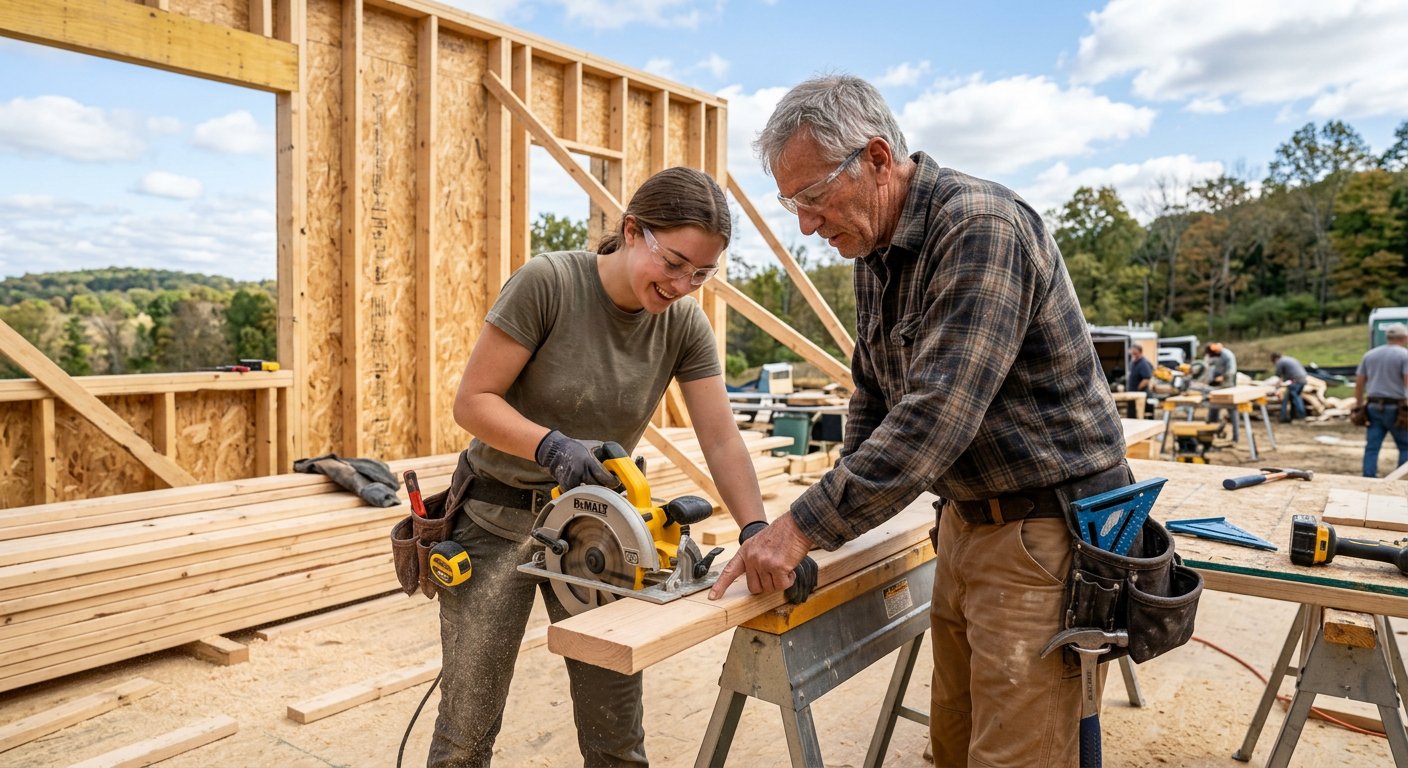
Derek Anders of Lime Companies discusses how local vocational partnerships and on-site apprenticeships are bridging the skilled trades gap in Northeast Ohio.
I spend most of my mornings on job sites in places like Highland Square or the Near West Side of Cleveland, and the conversation usually gravitates toward the same bottleneck. We have the capital, we have the permits, and we certainly have the demand for housing, but the physical capacity to move dirt and hang drywall is stretched thin. The skilled trades shortage in Northeast Ohio isn't some theoretical economic concept to me; it is a daily logistical hurdle that dictates how fast we can deliver a sober living house or an urban-infill affordable unit. For years, the industry relied on a workforce that is now hitting retirement age, and the pipeline behind them was diverted toward four-year degrees that often left young people with debt rather than a marketable skill set. At Lime Companies, we have realized that complaining about the labor market doesn't build houses, so we have shifted our focus toward direct involvement with vocational schools and apprenticeship programs.
Our approach to building the next generation of tradespeople is rooted in the specific technical needs of our four business silos. Whether we are framing a semi-custom home in a suburb of Summit County or retrofitting an older structure for a Lime Neighborhoods build-to-rent project, the required precision is high. We can't just wait for a finished carpenter or a licensed electrician to show up looking for work. We have to be part of the educational ecosystem that produces them. This means showing up to vocational career days in Stark County and explaining that a career in the trades is more than just manual labor. It is a path toward business ownership and technical mastery. We are looking for the kids who like to solve puzzles and work with their hands, and we are showing them that their backyard in Northeast Ohio is a massive canvas for their future careers. We want to bridge that gap between the classroom and the job site.
One of the most effective ways we have addressed this is through structured apprenticeship programs on our urban-infill projects. When we take on a project in a neighborhood like Slavic Village, we make it a point to bring on junior installers and laborers who are currently enrolled in local trade programs. It is one thing to learn how to wire a three-way switch on a practice board in a lab, but it is another thing entirely to troubleshoot the eccentricities of a century-old home that is being converted into affordable housing. By placing these students under the wing of our veteran site leads, we provide a feedback loop that the classroom simply cannot replicate. The students see the real-world consequences of a bad measurement or a poorly routed pipe, and they learn the pace required to turn a profit in this business. We are not just teaching them how to swing a hammer; we are teaching them how a job site breathes and how different trades must coordinate.
We have found that our sober living house projects offer a unique training ground for those entering the trades. These projects often require a high level of durability and specific layouts that challenge a young tradesperson to think about the end-user experience. When we partner with vocational schools for these builds, we explain the mission behind the walls. A student working on a Lime sober living project in Canton isn't just installing trim; they are participating in the creation of a recovery environment that will save lives. This sense of purpose tends to stick with younger workers. It moves the needle from "just a job" to a craft. We see a much higher retention rate when apprentices understand the social impact of the infrastructure they are building. It builds a sense of pride in their local community that is often missing from larger, corporate construction projects where the laborer is just a number on a spreadsheet.
The build-to-rent model under Lime Neighborhoods also provides a steady, predictable environment for apprentices to hone their skills. Unlike the one-off complexities of a custom home, our build-to-rent units often utilize standardized materials and layouts that allow a novice to gain confidence through repetition. If an apprentice installs the same flooring system across ten units in a new neighborhood development, they reach a level of muscle memory and efficiency that is foundational to their career. We use these projects as a sort of proving ground. Once a young person mastered the basics on a build-to-rent site, we can start moving them into the more technical, high-stakes environments of our semi-custom homes. This tiered approach allows us to manage risk while providing a clear career ladder for the people we are training. It gives them a visible path from an entry-level apprentice to a lead foreman or even a project manager.
Vocalizing our support for local vocational schools like those in the Akron and Cleveland systems is part of our long-term strategy. These institutions are the backbone of the Northeast Ohio economy, yet they are often overlooked in the broader discussion about economic development. I make it a point to talk to instructors and administrators about what we are seeing in the field. If we are starting to use more energy-efficient building envelopes or new types of pex piping, we want the schools to know so they can adjust their curriculum accordingly. The lag time between a new technology hitting the market and it appearing in a textbook is often too long. By maintaining a direct line of communication, we ensure that the graduates coming out of these programs are ready to contribute on day one. We want to eliminate the "unlearning" phase that often happens when a new hire gets to their first real job site.
Technical proficiency is only half of the equation we look for in our partnerships. We also emphasize the business side of the trades. I often tell our apprentices that if they learn the craft and the management side, they will never be without work in Ohio. We show them the back-end of a Lime project—how we estimate costs, how we schedule sub-contractors, and how we manage a budget. This transparency demystifies the development process. We aren't afraid of training our future competition; in fact, we welcome it. If we can help a young plumber from Cuyahoga County eventually start their own shop, that is a win for the entire region. The housing shortage is so severe that we need more builders, not fewer. By empowering these workers with business literacy, we are strengthening the local economy and ensuring that the money spent on our projects stays within the neighborhood.
The geographical focus of Lime Companies allows for a very localized approach to recruitment. We are deeply committed to Stark, Summit, and Cuyahoga Counties, and we want our workforce to reflect those areas. There is something powerful about a young person working on a house a few blocks from where they grew up. It changes their relationship with the neighborhood. They aren't just commuting to a site; they are invested in the quality of the work because they have to drive past it every day. We’ve seen this firsthand in our Akron projects. When an apprentice sees their work contributing to the stabilization of a block, it creates a feedback loop of accountability. This localism is a key part of our pitch to vocational students. We tell them they don't have to leave Ohio to find high-paying, meaningful work. The opportunities are right here in their own zip codes if they are willing to put in the effort.
Dealing with the skilled trades shortage also means reassessing how we value experience versus potential. In our semi-custom home division, we often pair an older master craftsman with a younger apprentice from a local technical college. This mentorship model is old-fashioned, but it works better than any modern HR initiative I’ve seen. There are nuances to finishing a kitchen or setting a foundation that you can only learn by watching a veteran who has done it ten thousand times. We prioritize these pairings because they preserve the institutional knowledge of the Northeast Ohio building community. Many of the techniques used to build the historic homes in Cleveland Heights are being lost as older workers retire. By facilitating this knowledge transfer, we ensure that Lime can continue to deliver high-quality, durable housing that respects the architectural heritage of our region while meeting modern building codes.
We are also seeing a shift in the demographics of who is entering the trades, and we are working hard to support that diversity. Our urban-infill affordable housing projects often draw interest from local residents who want to learn how to improve their own communities. We’ve been working to create pathways for people who might have been sidelined by the traditional economy. Whether it is a veteran looking for a second career or a young woman interested in electrical engineering, we want Lime to be a place where they can get their hands dirty and build a future. Our focus on sober living houses also gives us a unique perspective on second-chance employment. We know that stable work is a cornerstone of recovery, and we often find that individuals in our programs are among the most dedicated and hard-working people on the site once they are given a fair shot and proper training.
The financial reality for a young tradesperson in Ohio right now is actually quite strong, and we try to be very transparent about that in our vocational outreach. When you look at the cost of living in Portage or Medina County compared to the wages of a journeyman pipefitter or lead framer, the math makes a lot of sense. You can own a home, raise a family, and have a secure retirement without the debt burden of a traditional university. We show them the numbers. We show them what a lead on a Lime project makes and what their trajectory looks like over five or ten years. By framing the trades as a viable, middle-class career path, we are fighting against the stigma that has hampered the industry for decades. We need to stop treating the trades as a backup plan and start treating them as the primary engine of our regional growth.
Looking forward, Lime Companies is exploring how to further institutionalize our training efforts. We are looking at creating more formal internship rotations across our four business areas so that a student can see the full spectrum of residential development. They might spend a month on a heavy renovation for a sober living house, then move to a ground-up build-to-rent site, and then finish their rotation helping with the high-end finishes on a semi-custom home. This cross-training makes for a more versatile worker who understands how each component of a house interacts with the others. It also helps them identify which specific trade they might want to specialize in later. This holistic view is what will define the next generation of builders in Northeast Ohio. We aren't just looking for specialized laborers; we are looking for well-rounded builders who understand the "why" behind the "how."
Ultimately, our investment in vocational partnerships is an investment in the stability of Lime Companies and the communities we serve. Without a vibrant, skilled workforce, our goals for affordable housing and neighborhood revitalization are just pipe dreams. We need the boots on the ground to be as sharp as the plans on the table. By being proactive instead of reactive, we are building a labor pipeline that can withstand market fluctuations. When the next building boom hits, we won't be scrambling for help; we will have a roster of talented, locally-trained tradespeople who have been with us since they were in school. It takes more time and more effort than just hiring from a temp agency, but the quality of the final product and the health of our local economy are worth every bit of it. We are building more than houses; we are building careers and the future of Northeast Ohio.
The work we do in Cleveland, Akron, and Canton is fundamentally about people. Every time we finish a project, I look at the names on the permit wrap and the people who actually did the heavy lifting. My goal is to see more and more of those names belonging to young men and women from our local vocational schools. If we can continue to foster these partnerships and provide a clear, dignified path into the trades, we will solve the housing crisis one block at a time. The skilled trades shortage is a solvable problem, but it requires developers like us to get out of the office and onto the shop floors of our local schools. We have to be willing to teach, to mentor, and to invest in the human capital that makes our business possible. That is how we build a better Ohio, and that is how Lime Companies will continue to grow.
Next up
How the 2024 Energy Code Changes Are Reshaping What We Build
Developing the future of Northeast Ohio — one neighborhood at a time.
© 2026 Lime Companies LLC. All rights reserved.
Built in Northeast Ohio.