
Affordable Housing
The Appraisal Gap: An Honest Conversation
By Derek Anders • October 23, 2025 • 8 min read
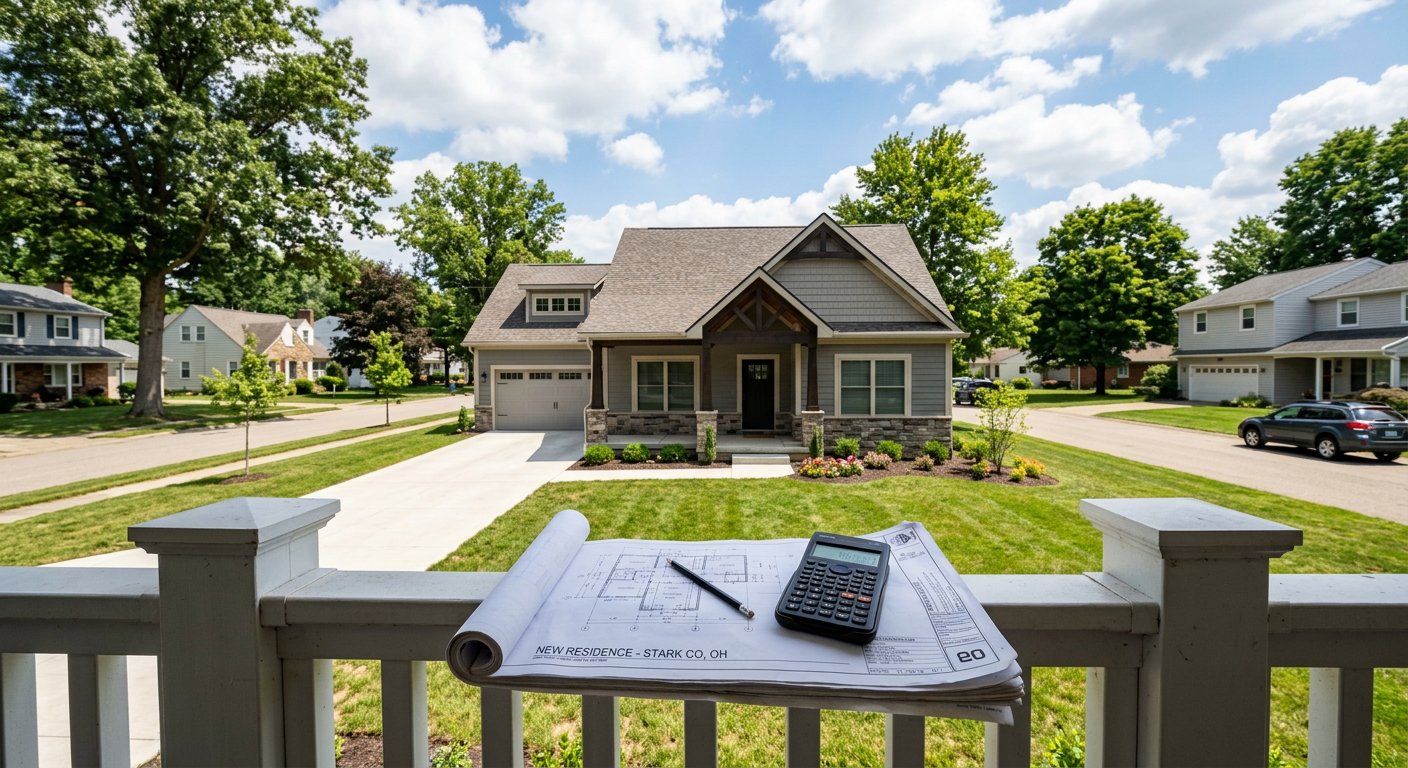
I discuss the technical reality of the appraisal gap in Northeast Ohio and how Lime Companies uses patient capital to rebuild legacy neighborhoods.
The math of real estate development in Northeast Ohio is often at odds with the physical reality of our neighborhoods. When I sit down to look at a new urban-infill project in a place like South Akron or the Vane Avenue area of Akron, the first hurdle isn't the zoning or the labor—it is the appraisal gap. This is a technical term that describes a simple, frustrating problem where the cost to build a high-quality, modern home exceeds what an appraiser says that home is worth the day it is finished. In many of our legacy neighborhoods across Summit and Stark Counties, you can spend three hundred thousand dollars building a code-compliant, energy-efficient house, but because the surrounding houses sold for eighty thousand dollars last year, the bank will only value your new build at two hundred thousand. That hundred-thousand-dollar vacuum is the gap that stops most residential development in its tracks before the first shovel even hits the dirt.
At Lime Companies, we deal with this reality every day across our four core focus areas. Whether we are planning urban-infill affordable housing in Canton or developing a sober living house in a residential pocket of Cuyahoga County, we have to account for the fact that the market is currently broken in these specific geographies. Traditional lenders rely on comparable sales, or comps, from the immediate vicinity over the last six months to determine value. In neighborhoods that have seen decades of disinvestment, those comps represent the lowest common denominator of aging, often dilapidated housing stock. Bringing a brand-new, semi-custom home into that environment creates an immediate friction point. The appraiser sees three bedrooms and two baths, but they cannot easily quantify the long-term value of new mechanicals, modern insulation, and zero-deferred maintenance when the neighbor’s house is a hundred years old and falling apart. We are essentially fighting against a history of decline that the appraisal process is designed to reinforce rather than reverse.
The reason we focus so heavily on our Lime Neighborhoods build-to-rent model in these areas is that it allows us to stabilize a block through scale. If we build one house in a struggling neighborhood, the appraisal gap kills the deal. If we build ten, we start to create our own market. However, even with scale, the initial capital requirement is massive. This is where the distinction between speculative capital and patient capital becomes vital for the survival of Cleveland and Akron neighborhoods. Speculative investors want a high return in a short window, which is why they flock to the outer suburbs where appraisals always hit. We choose to operate in the urban core because we view the gap as an investment in future equity. We are betting that by putting a quality roof over someone’s head in an area like Glenville or North Hill, we are anchoring the neighborhood and eventually, the appraisals will catch up to the actual cost of construction.
Subsidies are often discussed as if they are a handout to developers, but in the context of the appraisal gap in Northeast Ohio, they are a necessary tool for basic infrastructure. When we work on affordable housing in Alliance or Massillon, we are often utilizing state or local grants to fill that hole created by the appraisal. Without these funds, the houses simply would not exist because no rational bank would lend more than the appraised value. We use these subsidies to bridge the difference between the hard costs—which are the same whether you build in a wealthy suburb or a distressed urban block—and the current market ceiling. It is a technical fix for a systemic market failure. We have to be incredibly disciplined with our numbers because even with a subsidy, our margins are razor-thin. We aren’t looking for a windfall; we are looking for a way to make the project survive the closing table without bankrupting the company.
When we talk about semi-custom homes in cities like Cuyahoga Falls or near the university in Akron, we see a slightly different version of this problem. Here, buyers want modern amenities and open floor plans that their parents didn't have, but they want to stay in the city. The cost of labor and materials has skyrocketed over the last three years, and our subcontractors are charging the same rates regardless of the zip code where the lumber is being dropped. A kitchen renovation or a new slab pour costs the same in West Park as it does in a high-end township. However, the finished value of that home varies wildly. We have to explain to our partners and clients that the price of the home reflects the reality of current construction costs, while the appraisal reflects the reality of the past. Closing that gap requires a combination of cash reserves and a long-term hold strategy that many smaller developers simply cannot maintain.
Sober living houses present another layer of complexity within the appraisal gap conversation. These projects are vital to the recovery community in Northeast Ohio, but they often face higher scrutiny from lenders and appraisers who don't know how to value a property that functions as both a residence and a mission-driven facility. We focus on putting these homes in stable, quiet neighborhoods across Stark and Summit Counties because environment matters for recovery. But because we are often renovating older structures to a high standard, we run into the same issue where the cost of the renovation plus the purchase price exceeds the appraised value. We have to lean on patient capital—investors who are willing to wait years for their returns—to make these projects viable. They understand that the social return of a successful sober living house eventually translates into a more stable neighborhood, which in turn leads to higher property values over a decade-long horizon.
The struggle with urban-infill affordable housing is that the standards for building have increased while the ability of the neighborhood to support those costs has lagged behind. We are building homes that are meant to last fifty to seventy-five years, with energy-efficient envelopes and high-quality HVAC systems. These are things that do not always show up on a standard appraisal form, which treats a thirty-year-old furnace and a brand-new high-efficiency unit with surprising similarity if they both provide heat. This tech-debt in our housing stock is what we are trying to solve. By building in Cuyahoga County neighborhoods that have been overlooked, we are essentially paying a premium to fix the market. Every time we complete a project and get it through the appraisal process, even with a gap, we are providing a new data point for the next appraiser to look at, slowly dragging the market toward reality.
Our Lime Neighborhoods build-to-rent strategy is specifically designed to bypass some of the immediate pressures of the sales appraisal gap by focusing on long-term cash flow. By holding these properties in our own portfolio, we aren't as vulnerable to the immediate fluctuation of the sales market in a single block of Akron or Canton. We can look at the total yield over twenty years. This allows us to invest more into the property than a flip-developer would. We care about the quality of the siding and the lifespan of the roof because we are the ones who will be maintaining them. This long-term perspective is the only way to justify the cost of new construction in legacy neighborhoods. It requires a significant amount of equity up front because you cannot leverage these projects to the same degree you could in a booming suburban market where the appraisal matches the cost.
I think it’s important to be honest about why more developers aren't doing this work in Northeast Ohio. It is much easier to go to a greenfield in a surrounding township, buy a flat piece of dirt, and build a house where the appraisal will likely come in five percent above your cost. That is the path of least resistance. Working in the urban core means dealing with old foundations, outdated utility connections, and the ever-present appraisal gap. We choose this path at Lime Companies because we believe the existing infrastructure of our cities is our greatest asset. We have the streets, the sewers, and the proximity to jobs. What we lack is a financing environment that recognizes the true cost of rebuilding. Until the appraisal process evolves to consider the replacement cost more heavily than the distressed sales nearby, the gap will remain our primary adversary.
We often find ourselves in technical discussions with municipal leaders in places like Cleveland or Canton about tax abatement and how it fits into this puzzle. Tax abatement is one of the few tools that actually helps a buyer overcome the appraisal gap by lowering their monthly carry cost. If a house appraises for less than it cost to build, but the buyer doesn't have to pay property taxes on the improvements for fifteen years, the bank is more likely to overlook the valuation gap because the buyer’s debt-to-income ratio is improved. It is a roundabout way to solve a math problem, but in the absence of a total overhaul of the national appraisal system, it is what we have. We use these incentives as a bridge to make our semi-custom and affordable housing products accessible to the people who actually live and work in these counties.
Patient capital is the final piece of the bridge. This refers to money that isn't looking for a quick exit. In my experience running Lime Companies, I have found that the most successful projects in legacy neighborhoods are those funded by people who understand the history of Northeast Ohio. They know that places like South Akron or the near-west side of Cleveland have intrinsic value that isn't currently reflected in the comps. They are willing to accept a lower immediate return in exchange for playing a role in the stabilization of a community. This capital allows us to ignore the temporary noise of a low appraisal and focus on the physical quality of the build. We are essentially self-insuring against the gap by holding higher levels of equity in our projects, which is a luxury that many smaller, mission-driven developers unfortunately do not have.
There is no simple fix for the appraisal gap, but admitting it exists is the first step toward better policy and development. We are going to continue building in Summit, Stark, and Cuyahoga Counties because we believe in the long-term viability of our urban centers. Whether it is a sober living facility that provides a safe haven for someone in recovery or a new infill home for a young family in Canton, the goal is the same: to create high-quality housing that stands the test of time. We will keep navigating the gaps, utilizing the subsidies, and deploying patient capital because the alternative is to let our neighborhoods continue to erode. The technical challenges are significant, and the math is often discouraging, but the physical results on the ground are what matter most to us at the end of the day.
Next up
What First-Time Buyers in Stark County Are Asking in 2025
Developing the future of Northeast Ohio — one neighborhood at a time.
© 2026 Lime Companies LLC. All rights reserved.
Built in Northeast Ohio.