
Semi-Custom Homes
What First-Time Buyers in Stark County Are Asking in 2025
By Derek Anders • October 16, 2025 • 8 min read
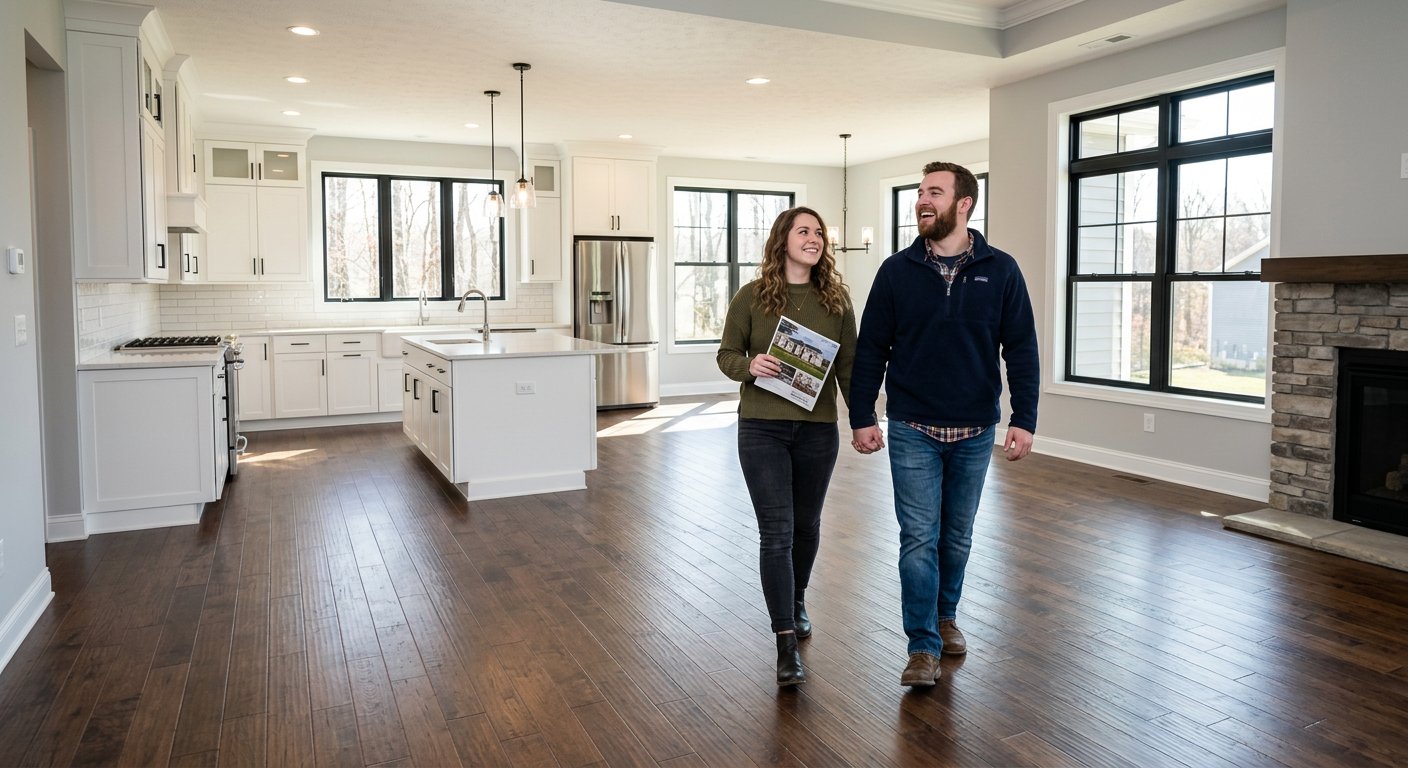
Derek Anders discusses the 2025 Stark County market, answering common questions on financing, semi-custom builds, sobriety housing, and long-term warranties.
The phone rings differently toward the start of 2025 than it used to. In Stark County, from the older streets of Plain Township to the areas around Massillon, first-time buyers are coming to the table with more technical knowledge but also more anxiety about the mechanics of the deal. At Lime Companies, we spend a lot of time sitting in front of people who are trying to reconcile the high cost of existing inventory with the feasibility of new construction. The most frequent question I get right now is whether a first-time buyer can even afford to build on an infill lot in places like Canton. We focus heavily on urban-infill affordable housing because that is where the infrastructure already exists, but the financing side is what keeps people up at night. They want to know if the sticker price they see on a semi-custom home is actually the price they will pay at the closing table when the dust finally settles.
When we talk about financing in Northeast Ohio, most buyers are looking at FHA or USDA products, depending on how far out into the county they are looking. A common misconception I have to clear up is that new construction requires a massive cash injection upfront. For our Lime Neighborhoods build-to-rent projects, the math is different, but for a family looking to own a semi-custom home, we often guide them toward construction-to-permanent loans. This allows them to lock in their rate early and transition into a traditional mortgage once we secure the certificate of occupancy. People ask if the appraisal will hold up in a neighborhood that has seen years of disinvestment. My answer is usually found in the specs. By sticking to a rigid, high-quality building envelope, we create value that appraisers in Summit and Stark Counties are starting to recognize as the new standard for the region.
Customization is the next big hurdle in our conversations. First-time buyers see the word semi-custom and assume they can move every interior wall or change the pitch of the roof on a whim. I have to be blunt about how we keep costs down. At Lime, we operate on a specific set of floor plans designed for efficiency and durability. We allow buyers to choose finishes, flooring, and cabinet layouts, but structural changes are limited. This is how we keep a three-bedroom ranch in a neighborhood like Perry Township within a reachable price point. If we allowed total architectural freedom, the labor costs in this current Stark County market would push the home out of the affordable category. We find that once buyers understand that our focus is on the thermal envelope and mechanical longevity, they care less about moving a non-load-bearing wall.
The timeline for building a house in 2025 has become a point of contention because everyone remembers the supply chain chaos of a few years ago. Buyers ask me exactly how many days it takes from the time we break ground to the day they get their keys. In the Cuyahoga and Summit County markets, permitting can drag things out, but Stark County is generally more streamlined. We tell our clients to expect a six-month window once the foundation is poured. This includes the time needed for our specialized subcontractors to handle the framing and the specialized HVAC systems we install. I tell people that we aren't the fastest builders in Northeast Ohio, but we are the most predictable. We don't overpromise on a four-month build just to have the buyer sitting in a hotel for eight weeks because the siding didn't arrive on a Tuesday.
We also get a lot of questions about our sober living houses, which is a core part of what we do at Lime. Families often ask how these properties affect the broader neighborhood or if they can buy a home near one. My response is always focused on the technical management of these sites. These are high-quality, well-maintained properties that are indistinguishable from any other well-kept home in a residential block. In Canton and Akron, there is a desperate need for stable, sober environments, and we build them to the same high standards as our semi-custom homes. We see our role as providing the physical infrastructure for recovery, which in turn stabilizes the neighborhood property values. Integrating these homes into our urban-infill strategy is part of a long-term plan to ensure Northeast Ohio remains a diverse and resilient place to live for everyone.
Warranty and long-term maintenance are areas where first-time buyers are rightfully skeptical. They’ve heard horror stories about builders disappearing as soon as the check clears. At Lime, we provide a structured one-year workmanship warranty and a ten-year structural warranty on everything we build. I tell buyers in Stark County that they should be asking about the specific components of their home, not just the overall guarantee. For example, we use specific waterproofing membranes on our foundations that exceed the local building code requirements. When a buyer asks what happens if their basement leaks in 2028, I can point to the specific technical specs of our drainage systems. We want our buyers to understand how their home works—from the R-value of the insulation in the attic to the way the local soil impacts their footer drains.
Another common topic is the build-to-rent model under our Lime Neighborhoods brand. Many people who call us aren't ready to buy yet, or they are looking for a transition while they save for a down payment. They ask why we are building rental clusters in areas traditionally dominated by single-family ownership. I explain that the market in Northeast Ohio is changing; not everyone wants the debt load of a mortgage right now, but they still want a yard and a sense of community. Our build-to-rent projects in Stark County are designed to look and feel like a traditional neighborhood. These aren't cheaply built apartments; they are high-performance homes that just happen to be professionally managed. This diversification allows Lime to stay active in the market even when interest rates fluctuate, ensuring that our crews stay busy and our material costs remain stable.
I often get asked about the specific neighborhood selections we make for our infill projects. People want to know why we choose a lot in a specific part of Canton rather than going out into a greenfield in a more rural part of the county. The answer is usually tied to existing utility infrastructure and proximity to services. Developing a raw piece of land requires massive investment in sewers and roads, which eventually gets passed on to the buyer. By focusing on urban-infill, we can leverage the existing grid. This allows us to put more money into the actual structure of the house—better windows, more efficient furnaces, and more durable siding—rather than buried pipes. First-time buyers in 2025 are starting to realize that a home in a walkable, established neighborhood has more long-term value than a house in a remote subdivision.
Technical performance is where I tend to lose some people, but it is the most important part of our builds. Buyers ask about energy bills almost immediately. In Northeast Ohio, with our erratic winters and humid summers, the mechanical systems are the heart of the home. We use a whole-house approach to air sealing and ventilation. People ask if we use heat pumps or traditional gas furnaces, and the answer is usually a hybrid system adapted for the Stark County climate. We show buyers the actual data from our previous builds to demonstrate how a properly insulated modern home can save them hundreds of dollars a month compared to an unrenovated 1950s bungalow. This isn't marketing fluff; it’s thermodynamics. A tighter house is a more affordable house over its lifetime, and that is a major selling point for someone on a budget.
The question of resale value always comes up, usually framed as what happens if I need to move in five years. I tell buyers that the Northeast Ohio market is generally stable but localized. In Stark County, a new construction home in an established neighborhood tends to hold its value better than almost anything else because the supply is so limited. We focus on timeless designs rather than chasing interior design trends that will look dated by 2030. When we build a semi-custom home, we stick to neutral, high-quality materials that appeal to a broad range of future buyers. Our goal is for the buyer to build equity through the quality of the asset itself, rather than relying solely on market appreciation, which can be fickle depending on the broader economic environment.
Labor shortages are a reality that buyers are curious about, specifically if it will affect the quality of their home. They ask how we find good tradespeople in a market where everyone is hiring. We treat our subcontractors as part of the Lime family, many of whom have worked with us across Cuyahoga and Summit Counties before moving into our Stark County projects. Because we have a consistent pipeline of work through our affordable housing and sober living projects, our crews don't jump ship for a slightly higher hourly rate on a one-off project. This consistency means the guy who framed your house is the same guy who has framed dozens of ours, leading to fewer errors and a more cohesive building process that directly benefits the final product for the first-time buyer.
One of the more nuanced questions I hear relates to the environmental impact of our builds. While we aren't necessarily marketing ourselves as a green builder, our focus on urban-infill and high-performance envelopes naturally aligns with sustainable practices. Buyers in 2025 are more conscious of their footprint, and they ask about the materials we use. We prioritize durable materials that don't need to be replaced every decade. We talk about the importance of managing stormwater on-site and the use of low-VOC finishes to ensure indoor air quality. These technical details matter to the young professionals and residents looking to plant roots in Canton or Akron. They want a home that is healthy for their family and the environment without paying a premium for a boutique label that doesn't add actual functional value.
Finally, people ask me why I do this. Why focus on affordable housing and sober living when we could just build luxury estates? The answer is that the middle of the market is where the real need is in Northeast Ohio. We want to be the firm that makes it possible for a first-time buyer in Stark County to stop renting and start building wealth. Whether it’s through a semi-custom home or providing a stable environment in one of our sober living houses, the goal is the same: creating a high-quality physical environment that serves the person living in it. We deal in concrete, lumber, and steel, but the end result is a stabilized community. That is what Lime Companies is about, and that is the perspective I bring to every phone call and every site visit as we move through this year.
Next up
House Rules That Actually Work in Sober Living
Developing the future of Northeast Ohio — one neighborhood at a time.
© 2026 Lime Companies LLC. All rights reserved.
Built in Northeast Ohio.