
Affordable Housing
Closing the Appraisal Gap on Infill Construction
By Derek Anders • January 15, 2026 • 7 min read
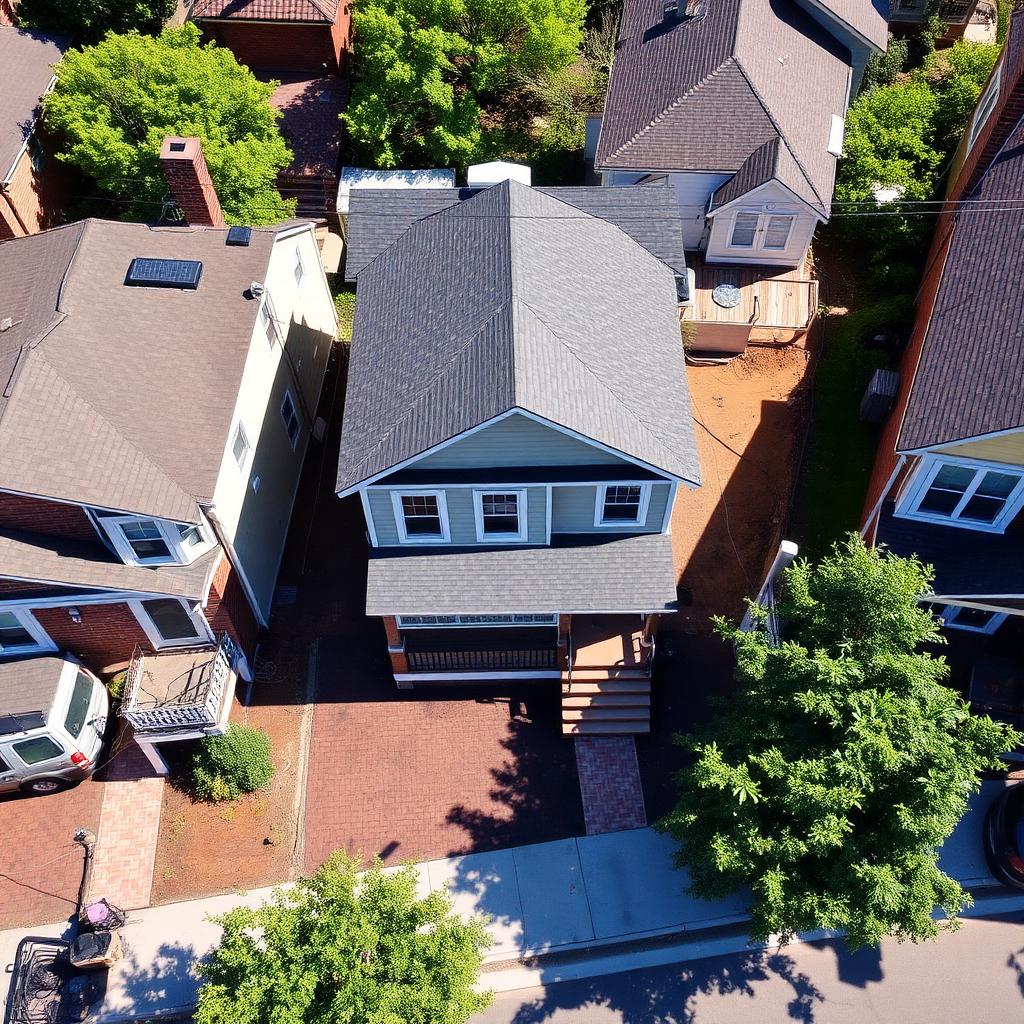
The single biggest financial obstacle to urban infill — and how we get past it.
The hardest part of building a new house in a secondary market like Akron or Canton isn't the zoning department or the rising cost of pressure-treated lumber. It is the simple, stubborn reality of the appraisal gap. You can design a beautiful, energy-efficient three-bedroom home on an empty lot in North Hill or Massillon and spend two hundred and fifty thousand dollars to bring it into existence. But when the appraiser arrives to value the finished product, they look at the distressed sales and century-old bungalows three blocks over. If those comps suggest the neighborhood value is capped at one hundred and eighty thousand dollars, the bank will not lend a penny more. This seventy-thousand-dollar deficit is the appraisal gap, and it is why so many vacant urban lots stay vacant while suburban sprawl continues to eat up green space in places like Hudson or Green.
To understand why this happens, you have to look at the mechanics of risk and historical data. Appraisers are bound by strict guidelines that favor looking backward rather than forward. In neighborhoods that have suffered from decades of disinvestment, like parts of Slavic Village in Cleveland or the southwest side of Canton, the backward-looking data is bleak. The market value is determined by what people have paid for existing, often dilapidated housing stock. It does not account for the intrinsic value of new mechanical systems, modern insulation, or the psychological benefit of being the first person to live in a home. The appraiser sees three bedrooms and two baths, compares it to a house built in 1920 with a cracked foundation, and assigns a value that ignores the fifty-year lifespan of the new asset being created.
This creates a paradox where it is financially "safer" to build a five-hundred-thousand-dollar home in a cul-de-sac in Stow than it is to build a modest starter home in an urban core. In the suburb, the market data supports the cost of construction. In the city, the more you invest in quality, the more money you theoretically lose on the day of completion. This gap effectively kills private-sector investment in affordable housing because no rational developer wants to bring seventy thousand dollars of their own cash to the closing table just to break even. This is the primary reason why we see massive "donuts" of vacant land in our regional cities. The land is cheap, the need for housing is desperate, but the math simply does not work for traditional lenders or builders.
Solving this requires a coordinated approach that blends private-sector efficiency with public-sector patient capital. At Lime Companies, we track these gaps across Summit and Stark counties specifically because each municipality has different tools to bridge the divide. Some cities use Community Development Block Grant funds to provide "soft seconds" or forgivable loans that cover the difference between construction cost and appraised value. Others utilize tax abatements to make the monthly payment more attractive to a buyer, which can eventually nudge the market value upward as more people compete for the homes. But these subsidies are often cumbersome and wrapped in red tape that slows down the construction cycle. We need more streamlined capital stacks that treat the appraisal gap as a predictable infrastructure cost rather than an unexpected tragedy.
We also have to look at the specific construction methods that can bring the "cost" side of the equation down toward the "appraisal" side. In Northeast Ohio, our labor market is tight but our land costs are among the lowest in the country. If we can standardize floor plans and utilize panelized or modular components, we can shave weeks off the build schedule. Reducing time on site reduces interest carry and overhead, which are the silent killers of infill projects. We have seen success in using durable but cost-effective materials that satisfy the appraiser's requirement for quality without breaking the bank. It is about being ruthless with the floor plan—eliminating wasted square footage and focusing the budget on high-impact areas like kitchens and energy envelopes that lower the total cost of ownership for the resident.
The appraisal gap isn't just a hurdle for developers; it is a structural barrier to wealth creation for residents in these neighborhoods. When we don't build new homes, the existing housing stock continues to age and deteriorate, which further depresses neighborhood values. This creates a downward spiral where the only buyers capable of entering the market are out-of-state investors looking for cheap rentals. By tackling the gap and building new, owner-occupied infill, we reset the comps for the entire block. One new house at a realistic price point can lift the appraised value of every neighbor's home. It is a form of community-wide equity building that is far more permanent than any one-off grant or beautification project. We are essentially manufacturing stability one lot at a time.
There is also a significant role for local community banks and credit unions who understand the Northeast Ohio landscape better than the national mortgage giants. A bank based in Canton or Akron is more likely to understand the nuances of a neighborhood like Highland Square or the Aultman area. They can sometimes be more flexible with their internal valuations or more willing to hold the "gap" portion of a loan on their own books rather than selling it to the secondary market. Building these relationships is the "secret sauce" of urban development. You need a lender who sees the vision of what a street can become in five years, rather than just what a spreadsheet says it was five years ago. This localized knowledge is what allows us to move dirt when the big banks are still shaking their heads at the appraisal report.
We also have to be honest about the types of housing we are building. The build-to-rent model and sober living facilities offer different ways to navigate these financial hurdles. For a sober living home in a neighborhood like West Akron, the value is determined more by the cash flow and the social utility of the project than just the raw real estate comp. When the property is part of a larger operational strategy, the appraisal gap becomes less of a roadblock and more of a manageable line item in a long-term business plan. This is where specialized housing providers have an advantage. They aren't just selling a box; they are providing a service that has its own inherent value, which can help justify the investment in higher-quality construction that a traditional "spec" builder couldn't touch.
Looking forward, the state of Ohio has introduced new tax credits and programs aimed specifically at this issue, but the implementation is where the battle is won or lost. We need to move toward a model where infill construction is treated with the same urgency as large-scale industrial projects. If a city is willing to give millions in incentives to attract a warehouse on the outskirts of town, they should be just as willing to provide the few thousand dollars per lot needed to close an appraisal gap in an existing residential neighborhood. The infrastructure—the roads, the sewers, the power lines—is already there and paid for. Filling those gaps is the most fiscally responsible way for a city like Cleveland or Massillon to grow its tax base and provide high-quality housing for its workforce.
Ultimately, closing the appraisal gap is about trust. It is about trusting that our urban neighborhoods have a future that is brighter than their recent past. It requires developers to be smarter about their build costs and cities to be more creative with their financing tools. At Lime Companies, we don't look at a vacant lot in Cuyahoga County and see a problem; we see a math equation that hasn't been solved yet. Once you understand the variables—the cost of materials, the local comps, and the available gap financing—you can start building in places that others have written off. It isn't easy, and it certainly isn't as fast as building on a greenfield site, but the impact it has on the fabric of Northeast Ohio is worth every extra hour spent at the closing table.
The goal is to reach a tipping point where the gap disappears. In a healthy market, the cost to build a new home is roughly equal to its market value. We won't get there by waiting for the market to fix itself. We get there by strategically pushing into neighborhoods, proving the value through successful builds, and slowly shifting the data that appraisers use. When we build the fifth or sixth new house on a street in North Hill, the appraiser finally has enough "new" data to justify the price. The gap closes, the private capital flows in without subsidies, and a neighborhood is reborn. That is the long game we are playing in the Northeast Ohio market, and it is the only way to truly solve the affordable housing crisis in our region.
Next up
Primary Suite Trends That Actually Hold Up
Developing the future of Northeast Ohio — one neighborhood at a time.
© 2026 Lime Companies LLC. All rights reserved.
Built in Northeast Ohio.