
Semi-Custom Homes
Finished Basements: Where the ROI Actually Lives
By Derek Anders • April 16, 2026 • 6 min read
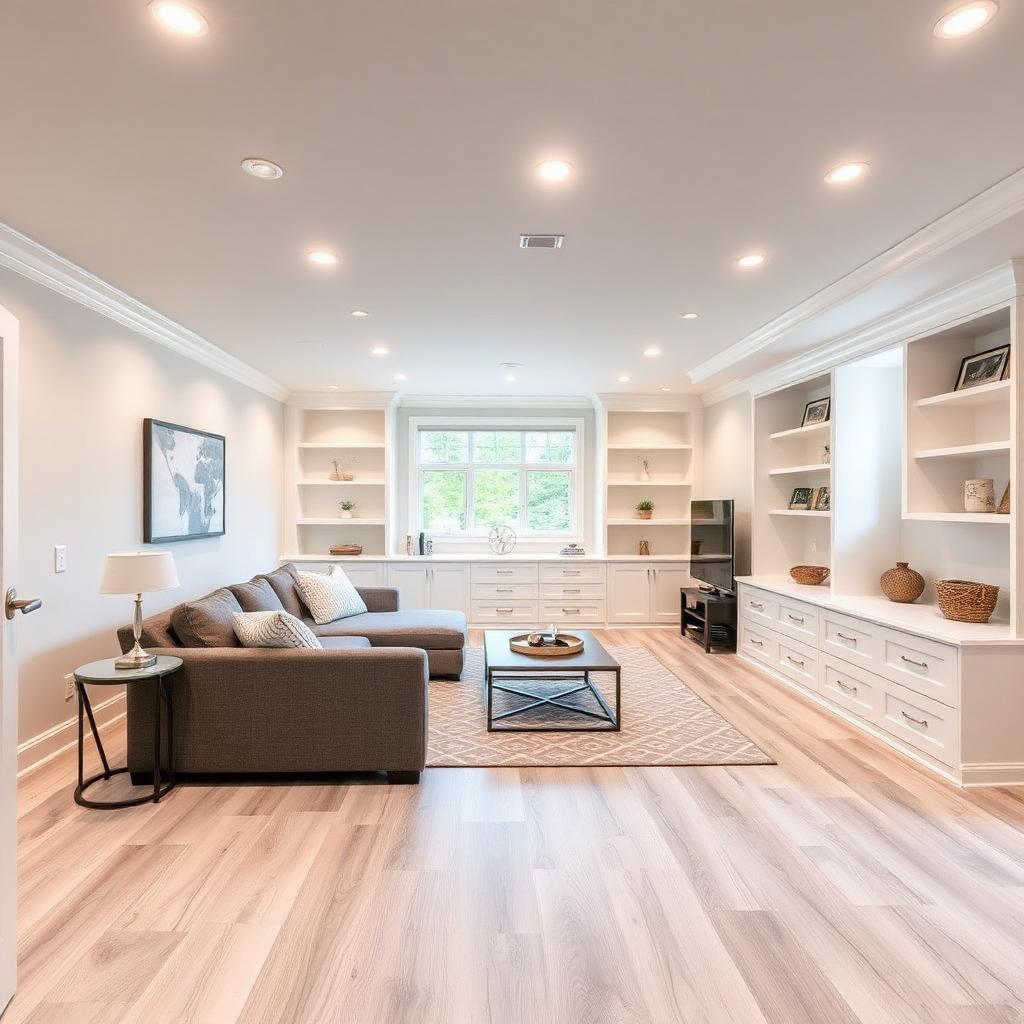
A practical look at which basement finishes pay back at resale and which never do.
When you look at the raw cost of finishing a basement in a place like Jackson Township or Hudson, the numbers can be jarring. Most homeowners approach this as a simple math problem of square footage versus appraised value, but that is a trap that ignores the specific topographical and cultural landscape of Northeast Ohio. We live in a region where heavy clay soils and high water tables make the foundation a living, breathing part of the house. If you spend fifty thousand dollars on drywall and luxury vinyl plank flooring without first addressing the hydrostatic pressure against your block walls, your return on investment is effectively zero the moment the first spring thaw hits. The true value of a basement finish starts with the infrastructure and the waterproofing because no buyer in Cuyahoga County is going to pay a premium for a finished space that smells like a damp gym locker.
I tell my clients that a basement should be treated as a secondary living zone rather than a primary one, which means you have to be disciplined about where you spend your money. The biggest mistake I see in Summit County developments is the over-engineered basement theater. People sink thirty thousand dollars into built-in projectors and soundproofed walls that become obsolete the moment a new screen technology hits the market. Most buyers today aren't looking for a darkened cave to watch movies. They want a flexible, open environment where they can host a Sunday afternoon Browns game or give their kids a place to burn off energy during a Lake County blizzard. An open floor plan with high-quality lighting and a simple, durable floor will almost always fetch a better price than a cramped room dedicated to a single hobby.
Natural light is the most undervalued asset in a Northeast Ohio basement. If you are building semi-custom in a place like Bath or Richfield, you often have the advantage of grade changes that allow for true walk-outs or at least larger daylight windows. If you find yourself stuck with a standard deep-hole foundation, your ROI lives in the window wells. Spending the extra money to install oversized Egress windows or even a tiered stone window well does more for the resale value than any quartz countertop ever could. It changes the psychological profile of the space from a cellar to a lower level. When a prospective buyer walks down those stairs and sees actual sunlight hitting the floor, the perceived value of that square footage jumps by twenty percent immediately.
The mechanical room is another area where people try to save money, usually to their own detriment. If you are finishing a basement in an older neighborhood like Cleveland Heights or Westlake, you are dealing with tight quarters and aging systems. I always advocate for a dedicated, oversized mechanical closet that is fully finished and organized. When a home inspector walks into a basement and sees a clean, accessible high-efficiency furnace and a properly labeled electrical panel, it sends a signal that the entire home has been maintained with precision. It reduces the friction of the sale. Conversely, if your beautiful new entertainment room is interrupted by a series of exposed PVC pipes and a jarringly loud sump pump, the "luxury" feel is destroyed instantly.
We have to talk about the wet bar because it is the most requested feature and the most misunderstood. In our market, a full kitchen in the basement is almost always a waste of capital unless you are specifically building a multi-generational suite for an aging parent. A simple, well-executed beverage center with a sink, a high-end refrigerator drawer, and durable cabinetry is the sweet spot. It provides the utility people want for entertaining without the plumbing and appliance overhead that never quite pays back. In Stark County, where basement entertaining is practically a lifestyle, a clean bar area that connects visually to the rest of the room acts as a focal point. It anchors the space and gives it a purpose that resonates during an open house.
The choice of flooring in a basement is where I see the most wasted potential. Carpet was the standard for decades because it was cheap and hid uneven slabs, but in our climate, it is a liability. Even a minor mechanical failure or a heavy rainstorm can ruin three thousand square feet of carpet in an afternoon. I pivot all my projects toward luxury vinyl plank or polished concrete with high-quality area rugs. These materials are nearly indestructible and provide a modern, clean aesthetic that appeals to younger buyers moving into the suburbs from Ohio City or Tremont. They want the industrial-lite look combined with the practicality of something that can be mopped if the kids spill a gallon of juice.
Bathrooms in the basement are non-negotiable for ROI, but the level of finish should be strategic. You do not need a custom tiled walk-in shower with a rain head for a basement that primarily serves as a playroom or a home gym. A clean, functional three-piece bath with a standard fiberglass insert and a nice vanity is more than sufficient. The value is in the existence of the plumbing, not the extravagance of the fixtures. Having that third or fourth bathroom is what allows a home to compete in the higher price brackets of the Summit County market. It turns a finished basement from an "extra" into a functional living floor that justifies a higher appraisal.
Storage is the silent killer of basement ROI. People get so excited about finishing every square inch that they forget where they are going to put their Christmas decorations and patio furniture. A basement that is one hundred percent finished is actually a deterrent for many buyers in Northeast Ohio because we don't have the massive detached outbuildings common in more rural areas. I always recommend leaving at least twenty percent of the footprint unfinished, specifically in a corner near the stairs. If you frame out a clean, organized storage room with sturdy shelving, you are solving a massive pain point for the buyer. It shows that you understand the practicalities of living in a four-season climate where seasonal gear is a reality.
The ceiling height is the one thing you can't easily change later, which is why it is the most critical decision in the framing stage. In my builds, I push for nine-foot foundation pours whenever the budget allows. If you are stuck with a standard eight-foot pour, the way you handle the ductwork and plumbing runs will dictate your return. Dropped soffits are a necessary evil, but they should be designed to follow the perimeter of the room rather than cutting through the center and making the ceiling feel like it is collapsing. A clever contractor can often tuck those lines between the joists or create a tray ceiling effect that looks intentional rather than reactive. If the basement feels tall, the buyer feels better about spending time there.
Lastly, never underestimate the power of a dedicated home office space that isn't just a desk in a corner. With the shift in work culture over the last few years, a quiet, walled-off room in the basement has become a high-value asset in towns like Solon and Strongsville. It provides the separation between professional and personal life that people are desperate for. If you can market a home as having a quiet, garden-level office with high-speed internet wiring and plenty of outlets, you are speaking directly to a massive segment of the buyer pool. This is a much better use of capital than a wine cellar or a built-in sauna which might only appeal to one out of every fifty visitors.
Northeast Ohio real estate is about pragmatism and durability. We aren't building for a magazine shoot; we are building for families who have to deal with slushy boots and grey February afternoons. When you approach a basement finish through that lens, you realize that the ROI lives in the things that make the house more livable and less stressful. Proper drainage, smart lighting, durable floors, and flexible layouts are the drivers of value. Everything else is just noise. If you focus on the bones and the light, the market will reward you every time you list. Focus on the gimmicks, and you will find yourself sitting on the market while your neighbors move on to their next investment.
Next up
Cold-Climate Heat Pumps Are Finally Ready for Ohio Winters
Developing the future of Northeast Ohio — one neighborhood at a time.
© 2026 Lime Companies LLC. All rights reserved.
Built in Northeast Ohio.