
Building Science
Cold-Climate Heat Pumps Are Finally Ready for Ohio Winters
By Derek Anders • April 9, 2026 • 6 min read
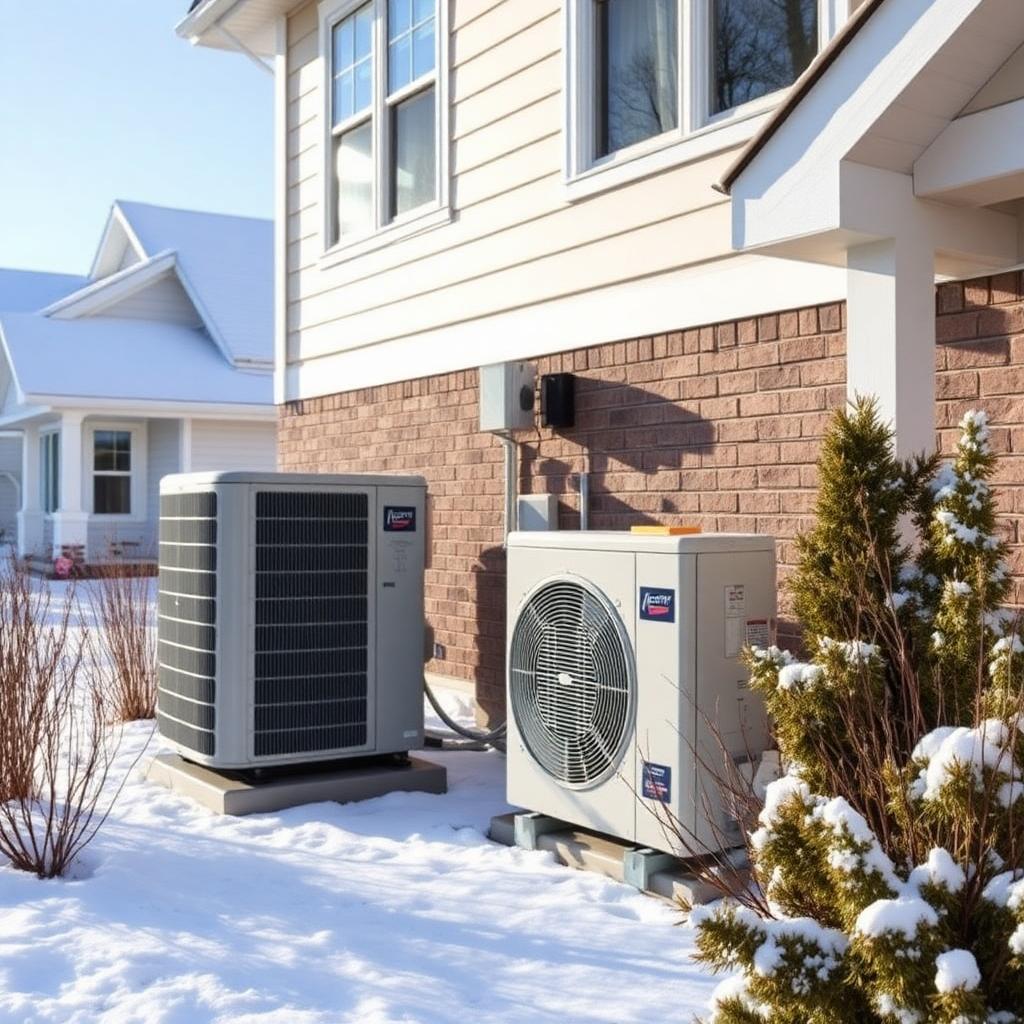
The technology has caught up to our climate — here is what we install and why.
For a long time, the advice given to property owners in Northeast Ohio regarding electric heating was simple and dismissive. If you were renovating a duplex in North Hill or fixing up a rental in Massillon, you stayed with natural gas or you accepted the reality of exorbitant electric bills and shivering tenants. The early generations of air-source heat pumps were essentially designed for the Carolinas or Georgia, losing their capacity to move heat once the thermometer dipped below forty degrees. When the lake effect machine kicked in and temperatures dropped into the single digits, those old units would switch over to resistive electric backup coils. Those coils are effectively giant toasters hidden inside your ductwork, and they consume electricity at a rate that can bankrupt a workforce housing project in a single January.
We have reached a legitimate tipping point in building science where that old logic no longer applies to our regional weather patterns. The current generation of cold-climate heat pumps, specifically those utilizing vapor injection and variable-speed inverters, can now pull usable heat out of the air even when it is negative fifteen degrees outside. At Lime Companies, we started monitoring the performance of these units in our own portfolio across Stark and Summit Counties to see if the marketing matched the reality of a Cleveland winter. What we found was that the technology is finally robust enough to handle our climate without the constant crutch of a gas furnace. This transition is not about being trendy or chasing green subsidies, but about the long-term operational efficiency and simplified maintenance of a single-fuel property.
In places like the Slavic Village or the older neighborhoods of Akron, many of the homes we acquire have aging, oversized gas furnaces and ancient central air units that are nearing the end of their mechanical life. Replacing both systems with a high-efficiency heat pump simplifies the entire mechanical footprint of the house. By removing the need for a gas line to the furnace, we eliminate a potential point of failure and a recurring monthly meter fee for the tenant. When you are developing affordable housing or sober living environments, reducing the number of utility accounts and the complexity of the venting systems makes a massive difference in the long-term viability of the building. We no longer have to worry about chimney liners or sidewall venting for high-efficiency gas exhaust in a cramped century home.
The specific hardware we are seeing success with involves brands like Mitsubishi with their Hyper-Heat line or the newer units from Daikin and Fujitsu. These systems are significantly more sophisticated than the old-school single-stage compressors that most local HVAC contractors are used to installing in suburban developments. These modern units operate more like a dimmer switch than a standard light switch, constantly modulating their output to match the exact heating or cooling load of the house. In a typical Hudson or Stow bungalow, this means the system runs for longer periods at lower speeds, which improves dehumidification in the summer and provides a much more consistent temperature profile in the winter. You lose that blast of hot air followed by twenty minutes of silence, replaced by a steady, quiet flow of tempered air.
One of the nuances of deploying this tech in Northeast Ohio is the defrost cycle, which is where many cheaper units fail to perform in our damp, heavy-snow environment. When moisture in the air freezes on the outdoor coils, the unit has to temporarily reverse itself to melt that ice away. Older or lower-quality units would often struggle during these cycles in a heavy Cuyahoga County snowstorm, leading to ice buildup that eventually choked the unit completely. The newer cold-climate models have sophisticated sensors and base pan heaters that prevent ice from accumulating around the fan. We have found that as long as the outdoor unit is mounted on a stand at least eighteen inches off the ground to clear the snow line, these systems can run through a polar vortex without intervention.
The economics of this shift are becoming more attractive as natural gas infrastructure costs continue to rise and federal tax incentives for electrification become more accessible. While the upfront cost for a cold-climate heat pump is higher than a builder-grade gas furnace, the gap is closing when you factor in the cost of a separate air conditioning unit and the labor for gas piping. In our larger build-to-rent projects, the mechanical simplification allows us to allocate those savings into better insulation and air sealing. If the envelope of the house is tight, even a modest heat pump can keep the interior at seventy degrees when it is blowing snow off Lake Erie. We are finding that the "cost to heat" is becoming competitive with natural gas, especially as gas prices fluctuate and electric rates become more predictable through aggregation programs.
We also have to consider the long-term resilience of the housing stock in cities like Canton and Cleveland. As we see more volatility in energy markets, having a house that is essentially a high-efficiency sealed box powered by electricity offers more flexibility for the future. Whether that power comes from the grid, localized solar, or future battery storage, the heat pump is the engine that makes it possible. We have moved away from the mindset that these are "alternative" systems; they are now the primary recommendation for our renovations. Our maintenance crews prefer them because there are fewer combustion-related issues like cracked heat exchangers or faulty gas valves to troubleshoot in the middle of a blizzard.
The biggest hurdle remaining isn't the technology itself, but the familiarity of the local labor force with these advanced systems. Most of the HVAC technicians working in Northeast Ohio have spent thirty years installing gas furnaces, and there is a natural skepticism toward anything that claims to work without a flame. We spend a significant amount of time vetting our subcontractors to ensure they understand how to properly size these units using Manual J calculations rather than just guessing based on square footage. An oversized heat pump is just as bad as an undersized one because it will cycle too frequently and fail prematurely. In a market where every dollar of a renovation budget counts, getting the engineering right on the front end is the difference between a successful project and a decade of tenant complaints.
Another practical benefit we see in our sober living homes and multi-family units is the improved indoor air quality. By removing combustion from the living space, we eliminate the risk of carbon monoxide leaks and reduce the amount of nitrogen dioxide being introduced into the home. For our residents who may already have underlying health issues, providing a cleaner environment is a core part of our mission at Lime Companies. It is rewarding to see that the most technologically sound decision for the building's longevity also happens to be the best decision for the people living inside it. We are no longer making a trade-off between efficiency and comfort; the modern heat pump delivers both in a way that handles the harshest parts of an Ohio winter.
As we look toward future developments in the region, the integration of heat pumps with smart thermostats and load management systems will only increase. We are already experimenting with systems that allow us to monitor the performance of our mechanicals remotely across different sites in the Cuyahoga Valley. If a unit in a Lakewood apartment begins to lose efficiency, we know about it before the tenant even notices a temp drop. This proactive approach to property management is only possible with modern, electronically controlled heat pumps. The days of the "dumb" furnace are numbered, and we are happy to see it go in favor of systems that are quieter, safer, and finally capable of handling the cold.
Ultimately, our commitment to using this technology across Northeast Ohio comes down to a belief in building things that last. We are not interested in the cheapest possible fix that will need to be replaced in ten years. By investing in cold-climate heat pump technology now, we are future-proofing our assets against rising energy costs and changing building codes. We are proving every day in Canton, Akron, and Cleveland that you don't need a gas line to stay warm. The technology is here, the performance data is in, and it is time for the regional real estate market to catch up to the reality of what a modern home should be.
Next up
Inside Our Partnership With the Stark County Land Bank
Developing the future of Northeast Ohio — one neighborhood at a time.
© 2026 Lime Companies LLC. All rights reserved.
Built in Northeast Ohio.