
Affordable Housing
Why Cleveland's Brick Streets Matter When We Build
By Derek Anders • October 30, 2025 • 10 min read
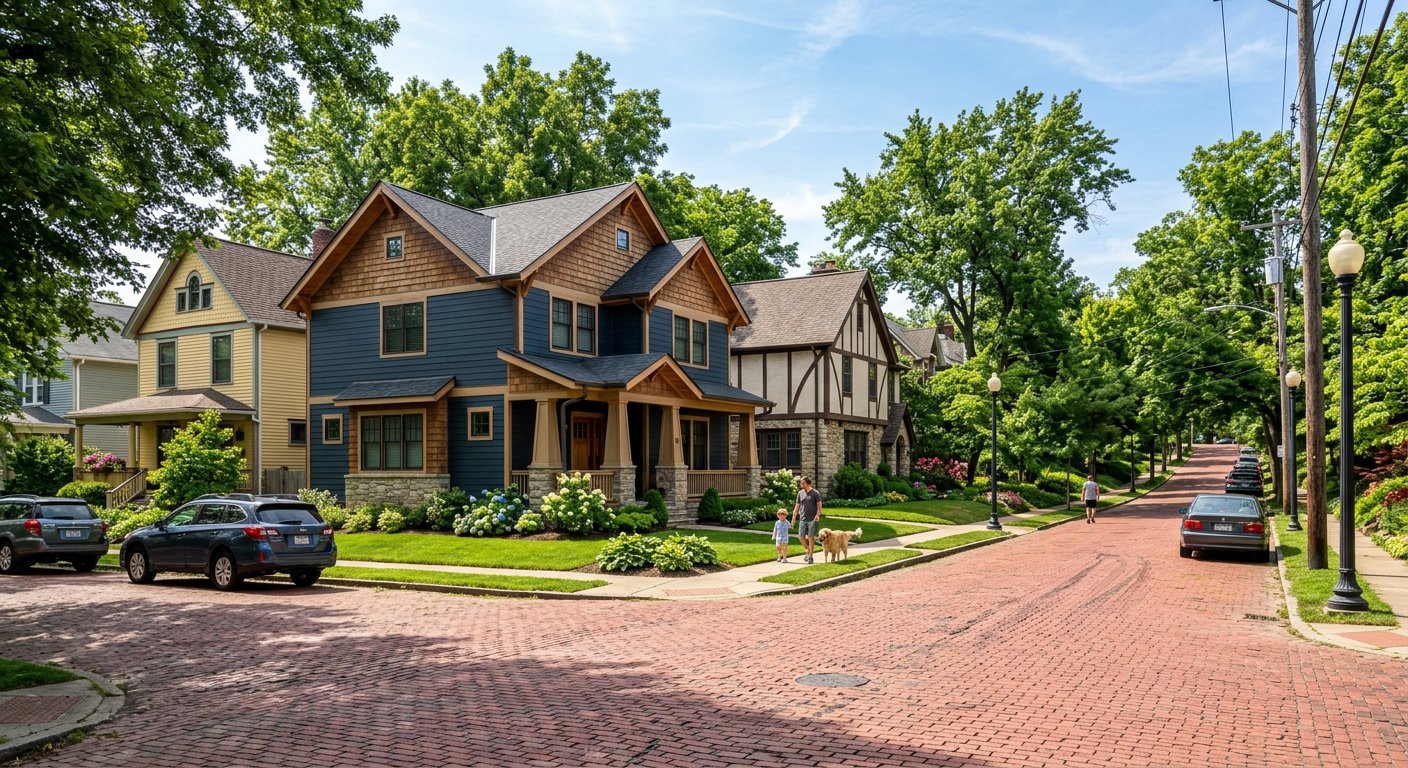
Derek Anders discusses the engineering durability and community value of Cleveland's historic brick streets within Lime Companies' urban infill development sites.
I spend a lot of my time walking vacant lots in neighborhoods like Hough or Slavic Village, and the first thing I usually notice isn't the overgrown brush, but the condition of the street. In Northeast Ohio, particularly in Cleveland and Akron, you find these stretches of vitrified brick that have outlasted every asphalt patch job by fifty years. At Lime Companies, we specialize in urban-infill affordable housing and semi-custom homes, and the streetscape dictates the engineering of the entire site. Those bricks aren't just a relic of the industrial age; they are a masterclass in civil engineering that modern pavers struggle to replicate. When we pull permits for a new single-family residence in a neighborhood with original brickwork, my first priority is ensuring we don't compromise that structural foundation. We are building for the long term, and you cannot find a more durable surface for the heavy equipment used in modern construction than a historical street that was originally designed to support iron-wheeled wagons and early industrial transit without shifting under pressure.
From a technical standpoint, the vitrified bricks found throughout Cuyahoga County were baked at extremely high temperatures to the point of fusion, making them nearly impervious to moisture. This is critical in our climate, where the freeze-thaw cycle wreaks havoc on traditional concrete and asphalt. When we build one of our semi-custom homes on a historic street, we are essentially building next to a self-draining system. The sand-set joints between these bricks allow for minor movement and water infiltration that prevents the massive shifting and cracking common in solid-slab pavement. If an asphalt street in Akron develops a pothole, it becomes a structural failure of the entire top layer. If a brick on a street in Cleveland heights settles, you can technically lift it, regrade the base, and drop it back in. That level of modular maintenance is exactly how we approach our sober living houses. We want infrastructure that can be repaired without needing a million-dollar municipal budget every decade, ensuring the surrounding property values remain stable through thoughtful preservation of the original street engineering.
Whenever we start a project for Lime Neighborhoods, our build-to-rent arm, we look for areas where the historic infrastructure is still intact because it provides an immediate sense of permanence. In Northeast Ohio, the perception of a neighborhood is often tied to its tactile quality. There is a psychological weight to driving over a brick street that forces a natural reduction in traffic speed without the need for intrusive speed bumps. This creates a safer environment for the families moving into our affordable housing units. If I am developing a cluster of homes in a neighborhood like Old Brooklyn, the presence of those bricks tells a story of longevity. It tells the residents that this area was built to last centuries, not just the duration of a primary mortgage. We treat the street as the first floor of our development. If the street is built with 19th-century craftsmanship, our structures need to meet that same standard of durability or they will look like temporary additions to a permanent landscape.
The engineering legacy of these streets also impacts how we handle stormwater management on our infill lots. Modern urban development often struggles with runoff because we have paved over so much permeable surface. While a brick street isn't fully permeable, the micro-gaps between the pavers offer a degree of drainage that asphalt simply cannot match. When Lime Companies designs a site plan for a new semi-custom home, we have to calculate the runoff into the city’s sewer system. Having a historic brick street often means less standing water at the curb and a more predictable flow toward the catch basins. It is a subtle technical advantage that many developers overlook because they are focused on the cost of the house itself. I view the house and the street as a single ecosystem. If the street fails, the utility of the house is diminished. By preserving the brickwork during the heavy phase of our construction, we ensure that the finished product feels integrated into the city’s existing drainage and transit grid.
There is a specific challenge when we bring heavy machinery into these neighborhoods. Most modern contractors want to treat every street like a disposable surface. They’ll drive a loaded concrete mixer over a curb or park a heavy excavator on a shoulder without thinking twice. At Lime, we have to be more disciplined. When we are working on a sober living house in a dense Summit County neighborhood, we use protective plating or specific entry points to ensure we don't dislodge the historic paving pattern. It takes more time and coordination, but the end result is a home that looks like it has always belonged there. If we were to tear up the bricks and replace them with a patch of blacktop, we would be stripping the character and the thermal mass of the street. Bricks retain and release heat differently than asphalt, which helps with snow melt in our harsh Ohio winters, providing a marginal but real benefit to the walkability of the neighborhood.
I often hear from city planners and residents who are worried that new development will destroy the 'soul' of their block. That soul is often rooted in the materials under their feet. In our urban-infill affordable housing projects, we aren't just trying to put a roof over someone's head; we are trying to anchor them to a community. Using the existing historic street as a design anchor allows our new builds to feel established on day one. In many parts of Cleveland, these bricks were manufactured locally using clay from the very region we are building in. There is a circularity to that which I find deeply compelling as a developer. We are literally building on the foundations laid by the generations of craftsmen who built this city's industrial backbone. To rip that out for the sake of a smoother ride for a two-ton SUV is a shortsighted trade-off that ignores the long-term maintenance savings of the original masonry.
From the perspective of our build-to-rent portfolio under Lime Neighborhoods, the durability of brick streets translates directly to lower long-term overhead. When we manage properties, we have to think about the lifespan of every asset. If the city doesn't have to repave the street every seven years because the 100-year-old bricks are still holding strong, that is less construction noise, less dust, and less disruption for our tenants. This stability makes the neighborhood more attractive to long-term renters who want a consistent living environment. We see this specifically in areas of Stark County where older infrastructure has been maintained. The neighborhoods feel more solid. There is a distinct audible difference when you drive on brick, a low hum that signals you have arrived in a residential zone. It acts as a natural traffic-calming device, which is essential when we are designing homes for families who want their kids to be able to play safely in the front yard.
The technicality of the 'crown' of a brick street is also something we study when grading our lots. These streets were designed with a specific curvature to shed water to the sides. When we are doing the excavating work for a new semi-custom build, we have to ensure our lead-walks and driveways meet that historic grade perfectly. If you get it wrong, you end up with puddling at the edge of the property that can eventually lead to foundation dampness. It requires a surveyor with a real eye for historical grades. Most modern developments are flat and boring, but the topography of an old Cleveland street has character that we try to mimic in our own landscaping and site drainage. It is a more rigorous way to build, but it results in a better-performing home. We aren't interested in the easy way out; we are interested in the Cleveland way, which has always been about building things to survive the elements and the passage of time.
In our sober living housing projects, the environment plays a massive role in the recovery process. We want our residents to feel like they are part of a dignity-filled, historic, and stable community. A street paved with hand-laid brick conveys a sense of value that a cracked asphalt road doesn't. It suggests that the place they are living is worth preserving, which reinforces the work they are doing on themselves. We choose our locations in Cuyahoga and Summit Counties specifically because these neighborhoods have a 'bones' that you can't fake. When we renovate a house or build a new one in these areas, we make sure the masonry on the house echoes the masonry on the street. It creates a visual continuity that makes the entire block feel like a single, cohesive unit. This isn't about nostalgia; it's about the technical application of high-quality materials to create a lasting sense of place.
When we talk about affordable housing, the conversation usually centers on the cost of the square footage. But at Lime Companies, we also look at the 'cost of place.' Developing on a historic brick street might have higher upfront logistical costs due to the care needed for the infrastructure, but it lowers the social cost. You are building in a place that already has an identity. In neighborhoods like Detroit-Shoreway or Ohio City, the brick streets are part of the value proposition. Even if we are building a more modest, affordable unit, being on a well-preserved historic street increases the tenant’s pride of ownership or residency. No one wants to live in a vacuum. By respecting the engineering of the past, we are providing our residents with a connection to the city’s history. The bricks are a reminder that Cleveland was once the center of the manufacturing world, and that same quality of work is what we strive for in every project.
I’ve seen plenty of examples where developers come into a neighborhood and treat the street like an afterthought, only to realize later that the infrastructure wasn't meant for the way they staged their materials. They end up causing thousands of dollars in damage to the municipal right-of-way. We avoid that by treating the street as a protected asset from day one of the build. In our semi-custom home builds, we often incorporate reclaimed brick elements into the hardscaping of the property to tie back to the street. It’s a subtle nod to the engineering that makes the neighborhood work. If the street has survived for a century, there is no reason our homes shouldn't do the same. We use high-grade materials that match the resilience of those vitrified pavers because anything less would be an insult to the grit of the neighborhoods where we operate.
The future of Lime Neighborhoods is built on the idea that urban density is the most sustainable way to grow Northeast Ohio. That density works best when the foundational infrastructure is built for high volume and low maintenance. Brick streets are the gold standard for this. While modern municipalities often complain about the cost of repairing them, they forget that they haven't had to do any major work on those streets for decades. If you amortize the cost over a century, brick is actually the most affordable option. We apply that same logic to our build-to-rent models. We might spend more on the initial construction to ensure we have durable siding, high-efficiency systems, and solid foundations, but it pays off in the long run. We are building the next century of Cleveland’s housing stock, and we are doing it on the shoulders of the engineers who paved these streets in 1900.
Every time we finish a project in a neighborhood like West Park or near the University Circle area, I take a moment to look at the transition between our new construction and the old brick street. When the grades are right and the materials complement each other, you can’t tell where the old city ends and the new development begins. That is the goal of Lime Companies. Whether it is a sober living house, a semi-custom home, or a piece of our affordable housing initiative, we want our work to be a seamless addition to the Ohio landscape. The brick streets of Cleveland aren't just paths for cars; they are the bedrock of our urban fabric. They represent a time when we built things to last forever, and as long as I’m heading Lime, that is the only way we are going to build. We’re sticking to the bricks because they’ve already proven they can handle whatever the next hundred years throws at them.
Next up
The Appraisal Gap: An Honest Conversation
Developing the future of Northeast Ohio — one neighborhood at a time.
© 2026 Lime Companies LLC. All rights reserved.
Built in Northeast Ohio.