
Sober Living
How Sober Living Houses Actually Get Funded
By Derek Anders • August 28, 2025 • 8 min read
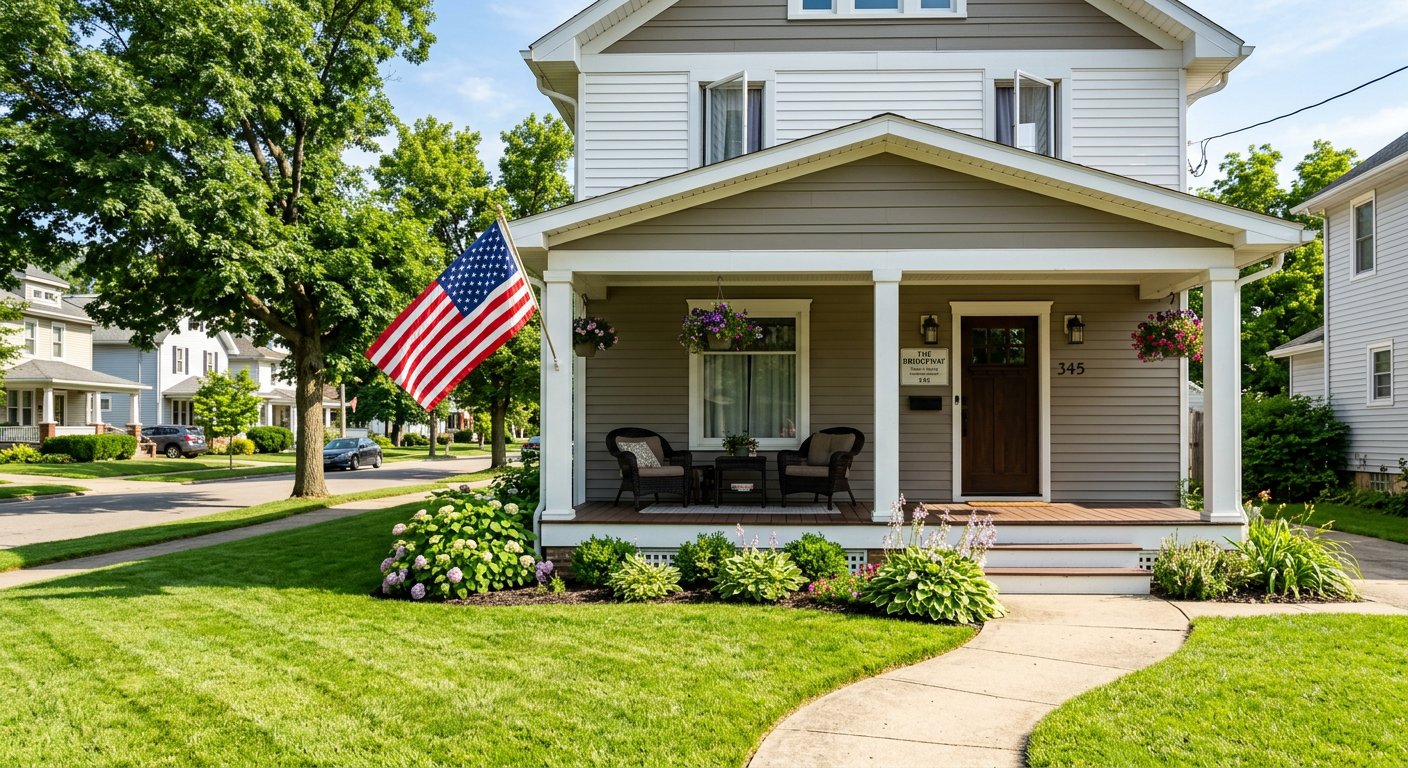
An inside look at the unconventional capital stacks and operational revenue models that fund recovery housing across Akron, Canton, and Northeast Ohio.
I get a lot of questions at Lime Companies about how we choose to allocate capital between our traditional urban-infill projects in Cleveland and our more specialized efforts like sober living houses in Summit and Stark Counties. Most developers shy away from recovery housing because the financing doesn't look like a standard multi-family play. You can’t just walk into a regional bank in downtown Akron and ask for a conventional construction loan for a Level II recovery residence without a very specific operating track record. The reality of funding these projects is a gritty, technical patchwork of private equity, performance-based grants, and a complex flow of resident fees. We look at these assets through a lens of community stability, but from a purely technical standpoint, they are high-intensity operational businesses wrapped in a real estate shell, requiring a much higher degree of capital sophistication than a standard rental or one of our semi-custom builds.
The initial acquisition of a property in neighborhoods like Kenmore or near the Aultman Hospital area in Canton usually starts with private capital or recycled equity from our other developments. When we identify a large, older single-family home that fits the footprint for a sober living environment, we aren't typically using institutional debt at the jump. Instead, we use internal funds to acquire the asset and perform the heavy lift of the renovation. These homes often require significant mechanical upgrades to accommodate high-density living, including commercial-grade fire suppression, updated plumbing for multiple bathrooms, and robust HVAC systems. Because the appraisal value of a single-family home often lags behind the cost of these specialized improvements, the developer has to be willing to carry a higher debt-to-value ratio in the short term, betting on the long-term operational cash flow rather than immediate property appreciation or a quick exit.
Once the physical structure is stabilized, the funding model shifts toward the operational revenue which is a mix of state-funded pass-throughs and private pay. In Ohio, specifically through organizations like the Ohio Department of Mental Health and Addiction Services, there are pathways for residents to receive support that helps cover the cost of stay. However, it is a common misconception that Medicaid pays directly for the 'rent' in a sober living house. Medicaid generally covers the clinical services provided by licensed professionals, but the room and board component is often funded through different buckets. In Summit County, we see a lot of success when operators coordinate with local Alcohol, Drug Addiction and Mental Health services boards. These boards often provide per-diem subsidies that bridge the gap for residents who are newly out of detox and haven't yet secured employment, ensuring the house remains solvent while the residents get back on their feet.
Resident fees are the backbone of the model but they are also the most volatile component of the cash flow. In our Lime Neighborhoods build-to-rent projects, we can forecast vacancy and collections with a high degree of certainty based on standard credit scores. In sober living, the financial underwriting of the resident is secondary to their commitment to recovery. We typically see fees ranging from one hundred to one hundred and fifty dollars per week for a shared room in a high-quality house. These fees cover the mortgage, utilities, and a live-in house manager. To make the math work, the house must maintain a high occupancy rate, which requires a close relationship with local judicial systems and treatment centers in towns like Barberton or Massillon who refer individuals ready for the next step in their continuum of care. Without a steady referral pipeline, the private pay model collapses under the weight of overhead.
Donations and philanthropic grants play a nuanced role in the capital stack, particularly for the non-profit operators we partner with to manage these facilities. While Lime Companies focuses on the development and ownership of the real estate, the operating entity often relies on community grants to fund the non-housing costs. This includes things like transportation for residents to reach jobs in the industrial corridors of South Akron or peer support training. For a project to be sustainable, we have to ensure the operator isn't just surviving on one-time donations. We look for a balanced budget where the resident fees cover the hard costs of the building, while the grants provide the 'wraparound' services that ensure the residents actually stay sober. This bifurcated funding model is what separates a successful recovery house from a standard boarding house which lacks the necessary oversight to be effective.
The technical challenge of these projects often involves navigating the zoning and building codes that vary wildly between a village like North Canton and the city limits of Akron. Funding is often tied to the certification level of the house according to Ohio Recovery Housing standards. A Level II residence, which is what we typically focus on, requires a certain amount of square footage per resident and specific common areas. If the building doesn’t meet these technical specifications, it cannot receive state-contracted funding or referrals from the court system. Therefore, the architectural phase of the project is actually a critical part of the financial strategy. We have to front-load the capital to ensure the building is fully compliant from day one, otherwise, we risk owning an over-improved asset that cannot legally operate at the density required to service the debt we put on it.
Private investment in this space is growing because the yield can be higher than traditional residential rentals if managed correctly, but the risk profile is unique. Investors in Northeast Ohio are starting to realize that sober living provides a recession-resistant asset class; addiction rates unfortunately do not drop during economic downturns, and the demand for quality housing remains constant. However, we have to be very transparent with our partners that this isn't passive income in the traditional sense. The management intensity is triple that of a standard apartment building. We are dealing with high turnover, rigorous house rules, and the constant need for property maintenance due to the high density of occupants. The funding we secure from private individuals is usually based on a 'social impact plus return' logic, where the investor is looking for a five to eight percent yield and a tangible benefit to the local community.
One of the most effective ways we’ve found to stabilize the funding of these houses is through the integration of employment programs. In Stark County, we’ve seen models where the sober living house is linked with local employers who are desperate for labor in the manufacturing sector. When a resident has a guaranteed job that pays a living wage, their ability to pay their weekly fee becomes predictable. Some forward-thinking employers are even willing to subsidize a portion of the housing cost as a recruitment and retention tool. This creates a virtuous cycle where private sector wages fund the recovery housing, reducing the reliance on government subsidies and making the entire project more resilient. As a developer, seeing that link between housing and the local economy in Canton is vital for our long-term underwriting of new sites.
The debt side of the equation is also evolving as more credit unions in Northeast Ohio become familiar with the sober living model. Early on, we had to rely almost exclusively on private notes, but we are now seeing more appetite for refinances once a house has twelve to twenty-four months of stable operating history. The key is presenting the bank with a professional profit and loss statement that clearly separates the 'service' income from the 'rental' income. Banks are much more comfortable lending against the rental portion. We often structure our leases between the property holding company and the non-profit operator as a triple-net lease. This allows the bank to see a fixed, guaranteed payment coming from the operator to the landlord, which looks a lot more like a traditional commercial real estate deal they can wrap their heads around.
We also utilize some of the proceeds from our more traditional urban-infill affordable housing and semi-custom projects to provide the flexible 'gap' financing needed for these houses. By having a diversified portfolio across Summit and Cuyahoga Counties, we can move capital to where it is needed most. Sometimes this means using the profits from a higher-margin renovation in Ohio City to fund the down payment on a recovery house in a more overlooked part of the region. This internal cross-subsidization is a core part of how Lime Companies operates. We don't wait for the perfect government program to come along; we use the tools we have in the private market to create the housing stock that we know is needed for a healthy, functioning neighborhood in the rust belt.
Looking forward, the funding landscape for sober living in Ohio is likely to become more formalized as the state continues to refine its certification processes. This is a good thing for professional developers because it raises the barrier to entry and weeds out the 'slumlords' who have historically given recovery housing a bad name. As the standards rise, the cost of development will also rise, which means the patchwork of funding will need to become even more robust. We are exploring the use of New Markets Tax Credits and other federal incentives that have traditionally been reserved for larger commercial projects, trying to see if they can be scaled down for residential recovery clusters. It requires a lot of legal and accounting overhead, but it is necessary to bring these projects to the scale required to meet the actual demand.
At the end of the day, funding a sober living house is about managing a complex set of relationships between the real estate, the operator, the resident, and the state. It isn't as simple as a build-to-rent project where you put a tenant in a house and collect a check once a month. It is a daily exercise in operational excellence and financial engineering. In Northeast Ohio, we have the advantage of a relatively low cost of entry for real estate, but that is balanced out by the high cost of providing quality, safe, and effective recovery environments. By staying focused on the technical aspects of the capital stack and ignoring the fluff, we are able to build houses that stay open and residents who stay sober, which is the only metric that truly matters in this sector.
Next up
Build-to-Rent Floor Plans Renters Actually Want
Developing the future of Northeast Ohio — one neighborhood at a time.
© 2026 Lime Companies LLC. All rights reserved.
Built in Northeast Ohio.