
Sober Living
Peer Mentors: The Backbone of Sober Living
By Derek Anders • May 15, 2025 • 8 min read
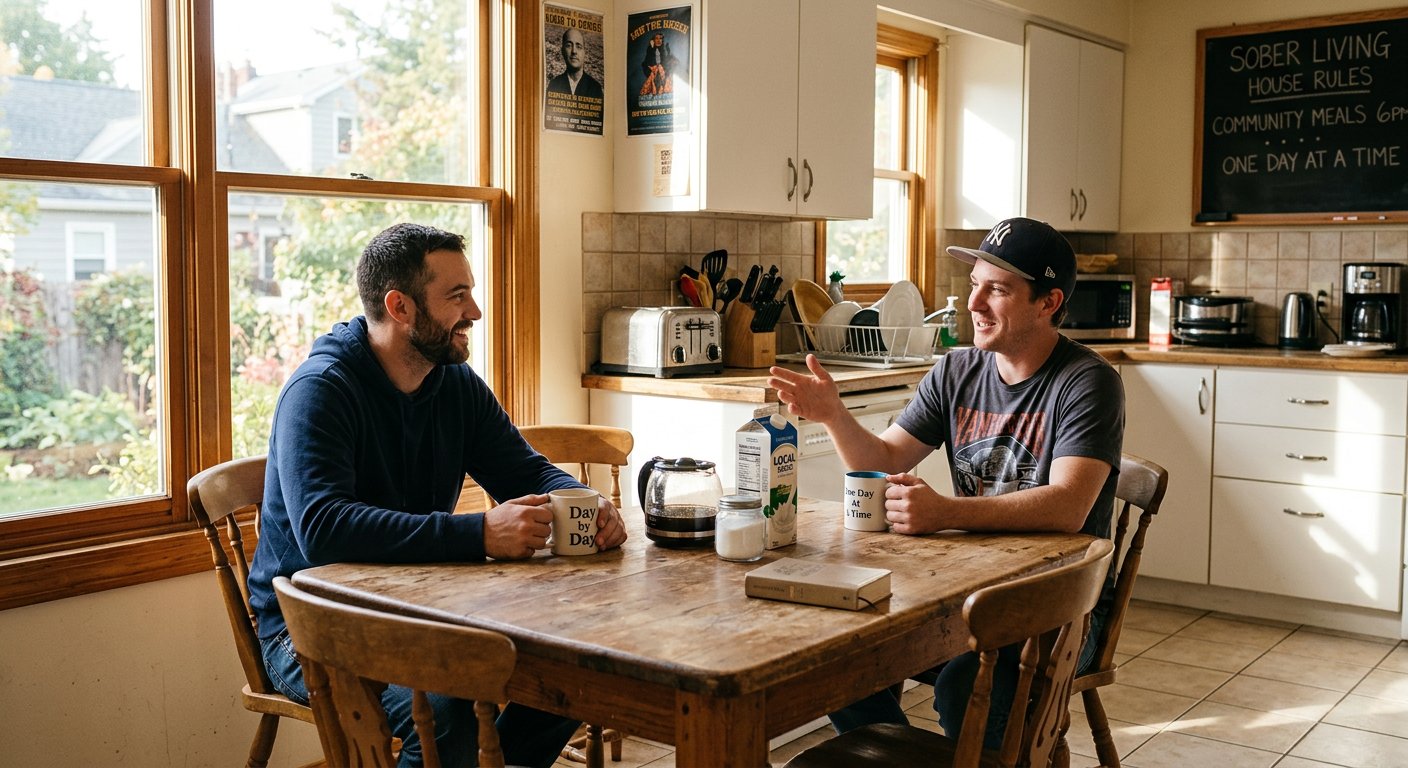
Exploring the technical and operational necessity of peer mentors in managing Lime's recovery housing portfolio across Akron, Canton, and Cleveland.
I spend a lot of my time looking at the technical data of real estate development in Northeast Ohio, specifically looking at infill lots in Akron or zoning variances in Cleveland. But when we talk about our sober living houses, the structural integrity of the building is secondary to the management structure inside those walls. At Lime Companies, we provide the physical infrastructure for recovery, but the actual operation depends entirely on the peer mentors and house managers who live on-site. These are individuals who have significant time in recovery themselves and understand the specific pressures of maintaining sobriety while reintegrating into the local workforce. We focus our sober living portfolio in areas like West Akron and North Canton because these neighborhoods offer the right balance of access to public transit and proximity to major employers. Without a strong peer manager on the ground, even the most well-renovated property in a prime location will fail to meet the recovery standards we require.
The role of a peer mentor is fundamentally different from that of a landlord or even a traditional social worker. In our Lime-supported houses, the manager is responsible for the daily technical oversight of the property, but they also serve as the primary accountability mechanism for the residents. They aren't just checking that the HVAC filters are changed or that the lawn is mowed to city code in Cuyahoga County; they are monitoring the temperature of the house’s social dynamics. They facilitate the standard weekly house meetings where residents review their progress and discuss conflicts. This level of oversight is what differentiates our sober living projects from our standard build-to-rent Lime Neighborhoods or our semi-custom homes. In those other focus areas, we want to be as hands-off as possible once the tenant moves in. In sober living, the success of the investment is tied directly to the quality of the peer leadership and their ability to enforce a strict set of house rules.
When we evaluate a new acquisition for recovery housing in a neighborhood like Old Brooklyn or Ellet, we have to consider the layout through the lens of a house manager’s operational needs. A peer mentor needs a clear line of sight into common areas and a private space that allows them to conduct one-on-one check-ins with residents. We look for properties where the floor plan supports communal living without creating bottlenecks that lead to frustration. The house manager is the person who ensures that the chores are distributed fairly and that the internal economy of the house remains stable. If the manager loses control of the kitchen cleanliness or the noise levels, the entire recovery environment degrades. My job as the developer is to provide a house that is durable and functional, but the manager is the one who turns that physical structure into a safe haven that can withstand the chaos that often accompanies early recovery.
Technical accountability in these houses often involves random drug screening and coordination with local outpatient programs. The peer mentor is the one on the front lines executing these tasks. In our Stark County properties, we often see residents who are working in the trades or service industry, and the house manager has to be savvy enough to recognize the signs of burnout or stress that lead to relapse. It’s a high-stakes job that requires a specific temperament. They have to be empathetic enough to support someone through a difficult day, but firm enough to ask a resident to leave if they violate the sobriety requirements of the house. That boundary is essential for the safety of the other ten or twelve men living in the building. We don't view this as a traditional tenant-landlord relationship because the goal isn't just occupancy; the goal is the successful transition of the resident back into independent living.
Northeast Ohio has a significant need for high-quality recovery housing, and Lime’s commitment to urban-infill affordable housing often overlaps with these projects. We find that putting these houses in established residential areas rather than isolated industrial zones helps with the reintegration process. However, this also means the house manager has a responsibility to the neighborhood. They are our primary liaison with the neighbors in places like Kenmore or South Euclid. If a neighbor has a concern about parking or noise, it’s the house manager who addresses it immediately. By maintaining a professional and quiet presence, these mentors prove that sober living houses are an asset to the community rather than a liability. This operational excellence is what allows us to keep expanding our footprint across Summit and Cuyahoga Counties without the friction that usually accompanies these types of zoning uses.
From a developer's perspective, the house manager also serves as a critical eyes-on-the-ground for maintenance issues. In our semi-custom homes, we expect the homeowner to handle minor issues, but in a sober living environment with high turnover and high density, wear and tear happen faster. The peer mentor identifies a leaking p-trap or a flickering breaker before it becomes a major capital expense. Because they are living there, they have a vested interest in the property’s condition. This feedback loop between the manager and our maintenance team at Lime allows us to keep the houses in top-tier condition despite the heavy usage. We invest more in the initial build-quality, using commercial-grade flooring and heavy-duty appliances, because we know these houses are working hard every single day. The mentor ensures those investments are respected by the residents, creating a culture of pride in their living environment.
Training for these peer mentors is another technical layer we have to get right. We don't just pick someone who has been sober for a long time and hand them the keys. They need to understand the legalities of the Fair Housing Act and the specific requirements of the Ohio Department of Mental Health and Addiction Services. In our Akron properties, we work closely with local agencies to ensure our managers are equipped with Narcan training and conflict resolution skills. This professionalization of the peer mentor role is what makes our model scalable. We are moving away from the old-school halfway house model and toward a professionalized peer-supported residential environment. It’s about creating a system where the manager has the tools they need to be successful, which in turn ensures the residents have the best possible chance at long-term recovery.
One of the biggest challenges for a peer mentor is managing the transition phase for residents. In our build-to-rent neighborhoods, a resident might stay for several years, but in sober living, the goal is often for the resident to move on to their own apartment within six to twelve months. The house manager helps the resident prepare for that next step, often acting as a reference or helping them navigate the complexities of a lease agreement. Because Lime also builds affordable infill housing, we sometimes see a pipeline where a resident moves from one of our sober living houses into an independent Lime-managed unit in a neighborhood like Slavic Village. The peer mentor is the one who can vouch for that resident’s readiness. This vertical integration of housing types is a core part of our strategy in Northeast Ohio, and it relies heavily on the honest assessment of the manager.
We also have to look at the financial sustainability of the peer mentor role. In many of our houses, the manager receives a stipend or a significant reduction in their own housing costs in exchange for their labor. This makes the position attractive to people who are looking to rebuild their own financial lives while giving back to others. It’s a symbiotic relationship that fits within the broader mission of Lime Companies. We are a for-profit real estate firm, but our focus areas are chosen because they solve real-world problems. Whether it's a semi-custom home in a quiet suburb or an urban-infill project in a dense city center, we want our properties to serve a purpose. In the case of sober living, that purpose is supported entirely by the labor of the peer mentor, who essentially acts as a localized site foreman for the human element of the property.
There is a specific technicality to the way we handle occupancy in these houses. We have to balance the need for social density—which studies show helps in recovery—with the physical limits of the plumbing and electrical systems common in older Cleveland-style doubles. The house manager is the one who monitors these systems and ensures that the resident count stays within safe, legal, and therapeutic limits. They manage the waitlists and conduct the initial interviews for potential new residents. This gatekeeping function is vital. If a manager brings in someone who isn't ready for the level of structure we provide, it can disrupt the entire house. It takes an experienced eye to look at a candidate and determine if they are going to be a contributor to the house culture or a detractor.
Ultimately, the success of our sober living houses in Summit and Stark Counties is measured by the stability of the residents and the lack of incidents. When we look at our quarterly reports, a house with a high retention rate and zero police calls is a house with a superior peer mentor. It doesn't happen by accident; it’s the result of constant, low-level intervention and mentorship. They are the ones who notice when a resident is isolating in their room or when a group of guys is starting to get restless. These are data points that I can’t see from my office in Akron, but they are the most important metrics we have. The peer mentor provides the human data that allows us to manage these properties effectively while fulfilling our commitment to providing high-quality, dignified housing for the recovery community.
Looking forward, we intend to keep expanding our sober living portfolio alongside our other focus areas like Lime Neighborhoods and our semi-custom builds. Each new property we buy in Northeast Ohio represents another opportunity to empower a peer mentor and provide a home for a dozen or more people in need. We are committed to this model because we've seen it work in neighborhoods from Barberton to Parma. The technical reality of real estate is that a building is just a shell; what happens inside that shell determines its value to society. By investing in the people who manage these houses, we are ensuring that our real estate remains a force for stability and growth in the region. The peer mentor isn't just a helper; they are the essential infrastructure that makes our recovery housing possible.
Next up
The Pre-Drywall Walk-Through: The Most Valuable Hour of Your Build
Developing the future of Northeast Ohio — one neighborhood at a time.
© 2026 Lime Companies LLC. All rights reserved.
Built in Northeast Ohio.