
Construction
Building a Real Safety Culture on a Residential Job Site
By Derek Anders • January 22, 2026 • 7 min read
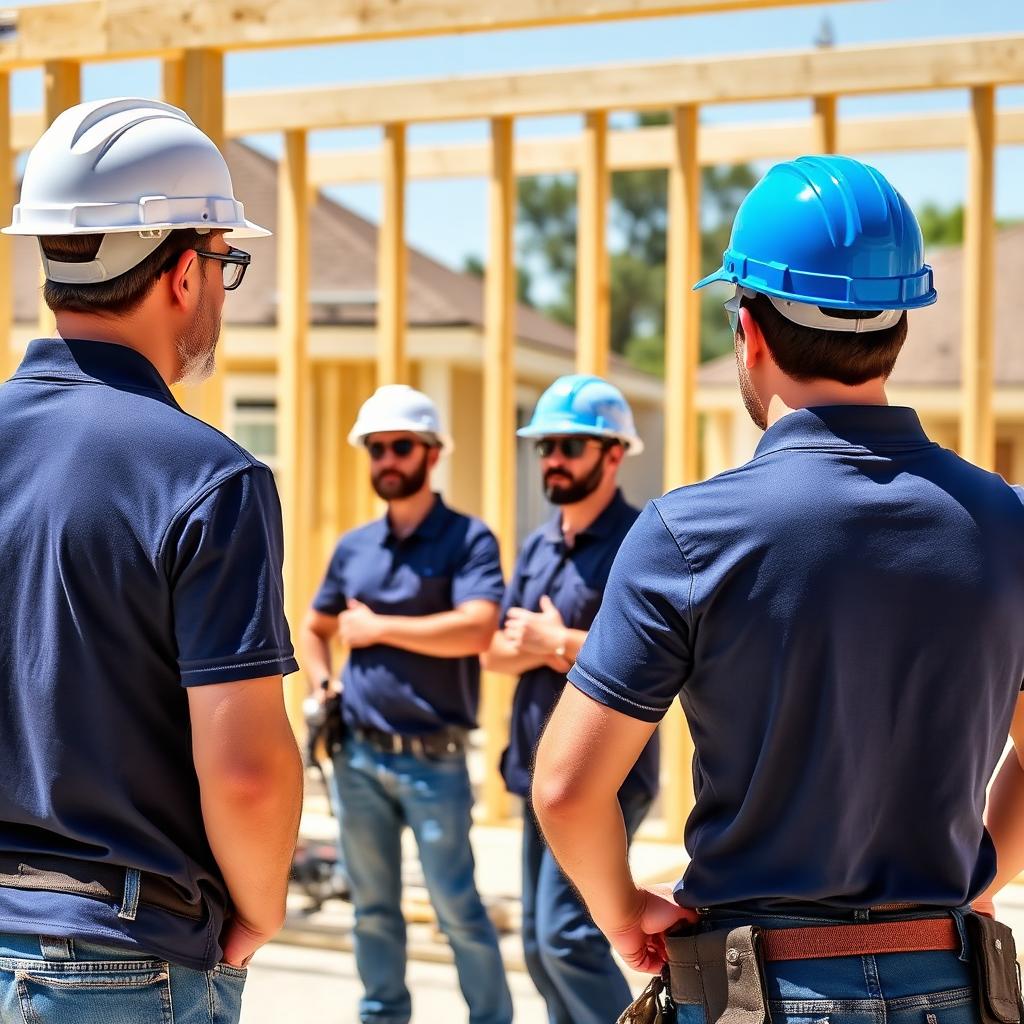
How we keep workers safe on framing, roofing, and foundation work.
Safety on a residential construction site in Northeast Ohio often feels like a checkbox exercise to the uninitiated, but anyone who has spent a February morning on a framing deck in Stow knows better. The reality of our industry is that we are operating in an environment where the stakes are literal life and limb, yet the culture is frequently defined by a stubborn brand of Midwestern stoicism. This stoicism is a double-edged sword because while it gets the house dried in during a lake-effect snowstorm, it also leads to a "rub some dirt on it" attitude toward fall protection and equipment maintenance. At Lime Companies, we have had to evolve past the idea that safety is just about wearing a hard hat when the inspector shows up. Real safety culture starts with the acknowledgment that every person on that site, from the master plumber to the eighteen-year-old carrying scrap wood in Massillon, is a finite resource that cannot be replaced by an insurance payout.
The transition from a compliance-based mindset to a value-based mindset is the hardest leap for a small to mid-sized developer in the Akron-Canton area. When you are pushing to get a roof on a build-to-rent project before the ground freezes, there is an immense internal pressure to cut corners on scaffold setup or to ignore a frayed extension cord. We combat this by making safety a logistical priority rather than a moral lecture. If the equipment needed to do the job safely is not on-site and operational, the job does not start. This means investing in high-quality fall arrest systems for our framers working on those steep-pitch gables in Hudson and ensuring that our foundation crews have the proper shoring even when the trench looks stable. It is easy to be safe when it is convenient, but the true test of a firm’s culture is how they handle the inconvenient moments when the schedule is slipping and the wind is picking up off Lake Erie.
Framing is where we see the most significant risks, particularly in the modern residential designs that favor high ceilings and complex rooflines. When we are building in places like North Hill or Slavic Village, where lots are tight and the staging area is nonexistent, the physical layout of the site becomes a primary safety hazard. We insist on a clean site policy that goes beyond aesthetics. A cluttered floor deck is a tripping hazard that becomes a falling hazard when you are two stories up. We train our leads to look for the "near-miss" culture where workers are jumping over gaps or balancing on top plates instead of using ladders. In our view, a builder who allows a disorganized site is a builder who has lost control of the project's risk profile. We treat the workspace with the same precision as the blueprints, ensuring that every cut station and material pile is positioned to minimize unnecessary movement and fatigue.
Roofing in Northeast Ohio presents a unique set of challenges because of our volatile weather patterns and the prevalence of older, steeper housing stock in the Cuyahoga County suburbs. We have seen too many subcontractors try to "cowboy" a roofing job on a breezy afternoon in Cleveland Heights without proper tie-offs because they think they are faster without the gear. Our policy is non-negotiable on this point because the physics of a fall do not care about a worker’s twenty years of experience. We mandate the use of roof anchors and harnesses on every slope, regardless of the height. This requires a constant dialogue with our trade partners to ensure they aren't just wearing the harness but are actually clipped in. We also monitor local weather data specifically for wind gusts, which can be unpredictable near the lake, and we have the authority to pull a crew off a roof the moment conditions become precarious.
Foundation work and excavation are often overlooked in safety discussions because the danger is below ground rather than in the air. However, the heavy clay soils common in Stark and Summit Counties can be incredibly treacherous after a period of heavy rain. A trench collapse happens in a fraction of a second, and the weight of that dirt is unforgiving. When we are digging footers for a new sober living home or a pocket neighborhood, we verify that the soil is being benched or shifted correctly. We also pay close attention to the proximity of heavy machinery to the edge of the excavation. It is common to see a skid steer or an excavator parked too close to a fresh cut, which puts unnecessary pressure on the soil walls. Our operators are trained to respect the "zone of influence" and to never assume that a trench is safe just because it was fine an hour ago.
The human element of safety is perhaps the most complex variable we manage as developers and builders. Construction is a physically demanding career that often leads to chronic pain, and we are acutely aware of the intersection between workplace injury and the broader opioid crisis that has hit communities like Canton and Akron particularly hard. By prioritizing ergonomic safety and proper lifting techniques, we are not just avoiding immediate injury; we are protecting the long-term health of our workforce. We encourage a culture where it is okay to ask for a second set of hands for a heavy load or to use a mechanical lift instead of man-handling a beam. This is especially important in our sober living projects, where we are often working with crews who are rebuilding their lives and deserve a workplace that values their physical integrity as much as their sobriety.
Equipment maintenance is the silent partner in any functional safety program. We have seen how a poorly maintained circular saw with a sticky guard or a forklift with a hydraulic leak can turn a routine Tuesday into a disaster. Our superintendents perform daily inspections on all company-owned equipment and we hold our subcontractors to the same standard. If a tool isn't right, it goes red-tagged and leaves the site immediately. This is not about being Difficult; it is about recognizing that "making do" with broken gear is a leading cause of preventable accidents. In the cold damp of an Ohio winter, metal becomes brittle and fluids thicken, making regular maintenance even more critical. We invest heavily in high-grade tools and parts because the cost of a replacement saw is a rounding error compared to the cost of a worker's compensation claim or, worse, a permanent disability.
Safety training at Lime Companies is an ongoing conversation rather than a once-a-year seminar. We use "toolbox talks" that are specific to the tasks at hand that day. If we are pouring concrete in a tight alley in Cleveland, the talk centers on transit safety and pinch points. If we are finishing interiors in a multi-unit build-to-rent project in Stow, we focus on silica dust inhalation and ladder safety. By keeping the information relevant and immediate, we avoid the "glaze-over" effect that happens with generic safety videos. We want our guys to be thinking about the specific hazards of the next three hours, not the abstract hazards of a fictional job site. This granular approach helps build a situational awareness that becomes second nature over time, allowing our teams to spot risks before they materialize into accidents.
Ultimately, building a real safety culture requires the leadership to be visible and consistent on the ground. I spend a significant amount of time walking our sites in Cuyahoga, Summit, and Stark counties, and I make it a point to check in on the safety protocols. If I walk onto a site without my own PPE, I am sending a message that the rules are optional, which is why I never do it. We empower everyone on the site to call a "stop work" if they see something dangerous. This level of transparency and flat hierarchy is unusual in some parts of the construction industry, but it is essential for us. A laborer should feel just as comfortable pointing out a safety violation as a project manager. When everyone feels responsible for the collective well-being of the team, the site becomes inherently more efficient and less prone to the chaotic interruptions that injuries cause.
The financial argument for safety is often used to convince stakeholders, but we prefer the ethical argument. Yes, a safe site is more profitable because it avoids delays, litigation, and rising insurance premiums. But more importantly, a safe site reflects the quality of the product we are delivering to the Northeast Ohio market. You cannot build high-quality affordable housing or durable build-to-rent communities on a foundation of crushed fingers and broken spirits. The precision we bring to our safety protocols is the same precision we bring to our trim carpentry and our mechanical systems. At the end of the day, my goal is for every person who steps onto a Lime Companies job site to return home in the same condition they arrived, if not a little more proud of the work they did. That is how we build a legacy in this region—one safe, well-constructed house at a time.
Next up
Closing the Appraisal Gap on Infill Construction
Developing the future of Northeast Ohio — one neighborhood at a time.
© 2026 Lime Companies LLC. All rights reserved.
Built in Northeast Ohio.