
Sober Living
Being a Good Neighbor: Sober Living Operations
By Derek Anders • July 3, 2025 • 8 min read
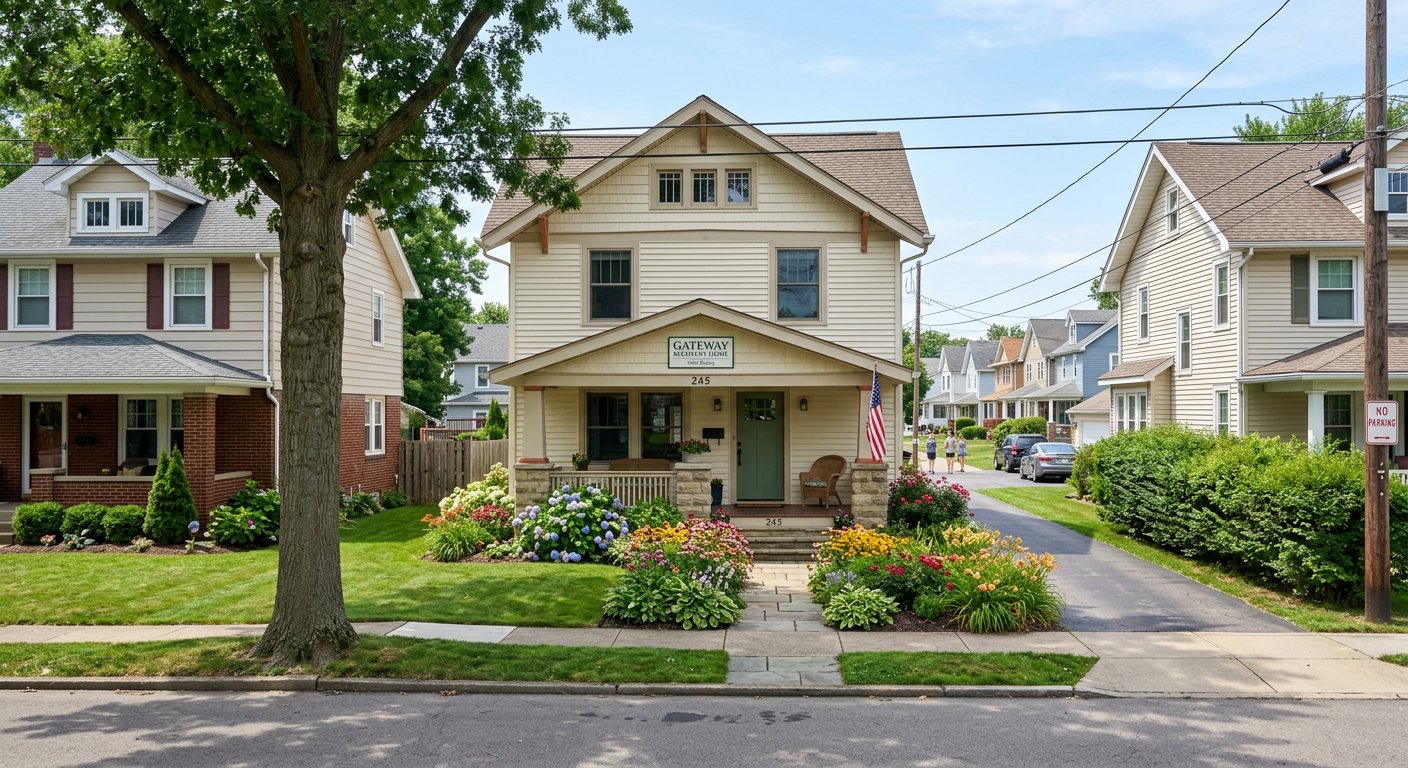
A technical look at how Lime Companies integrates sober living operations into Northeast Ohio neighborhoods through property management and site selection.
At Lime Companies, we approach real estate development through a very specific lens of utility and neighborhood impact across Stark, Summit, and Cuyahoga Counties. When we talk about our four pillars—urban-infill affordable housing, semi-custom builds, Lime Neighborhoods build-to-rent, and sober living houses—the last category often requires the most nuanced communication with the surrounding community. In cities like Akron and Canton, there is a historical anxiety regarding communal living environments. My goal as the head of Lime is to move past the emotional rhetoric and focus on the technical mechanics of property management that ensure these assets function as quiet, high-value neighbors. We do not view sober living as a peripheral social service but as a core component of our residential portfolio that must meet the same rigorous aesthetic and operational standards as our semi-custom homes in the suburbs. Establishing this professional baseline is the first step in being a good neighbor.
Being a good neighbor begins long before a tenant moves into a property; it starts during the site acquisition phase in neighborhoods like West Akron or the Vassar Park area of Canton. We look for specific physical profiles that allow for density without infringing on the privacy of adjacent owners. This means prioritizing deep lots and houses with structural layouts that naturally mitigate interior noise. When we identify a property for our sober living operations, we perform a full mechanical and envelope audit. We often upgrade windows to higher STC ratings and install reinforced thermal insulation, not just for energy efficiency, but to ensure that the increased occupancy of the home does not result in acoustic bleed into the yards of the people living next door. By investing in the physical infrastructure of the house upfront, we preemptively solve the friction points that typically arise when a single-family home transitions into a recovery residence.
The operational reality of a Lime sober living house is built on a framework of strict accountability that serves both the residents and the street at large. Unlike a standard rental, these properties are governed by a set of house rules that are strictly enforced through regular site visits and third-party monitoring. We handle landscaping and exterior maintenance with the same frequency as our build-to-rent communities, ensuring that the curb appeal never falters. A common complaint in urban residential zones involves deferred maintenance, which can lead to a sense of neighborhood decay. We counter this by over-maintaining our sober living sites. By keeping the lawn manicured, the gutters clean, and the paint fresh, we demonstrate to the neighborhood that the property is under active, professional management. This visual signal of care goes a long way in de-escalating concerns from neighbors who might be wary of the home’s specific use case.
A critical component of our strategy involves the logistics of parking and traffic flow, particularly in older neighborhoods where streets are narrow. When we renovate a property for sober living in a place like Highland Square, we carefully analyze the off-street parking capacity. We do not allow our properties to overflow onto the public street in a way that impedes the daily lives of long-term residents. If a site cannot support the necessary vehicle count on-site, we reduce the bed count or implement strict vehicle restrictions for our residents. This technical limitation is non-negotiable for us because we understand that one of the fastest ways to lose the trust of a community is to create a bottleneck on a residential block. Our residents are there to focus on their recovery and integration back into the workforce, and that process is hindered if they are in constant conflict with the people living across the street.
We communicate openly with the cities of Akron and Canton regarding our zoning and safety compliance because transparency is a prerequisite for being a good neighbor. Every one of our recovery residences is outfitted with commercial-grade fire suppression systems and monitored alarm networks that go beyond the basic requirements for a standard single-family home. This technical overhead is a cost we willingly shoulder because it ensures the safety of the occupants and protects the surrounding housing stock from fire hazards. When I speak with adjacent property owners, I explain that our houses are often the safest ones on the block because of these upgrades. We treat the building as a professional asset that requires specialized safety protocols. This level of rigor is what differentiates a Lime operation from a disorganized group home. We operate with a level of precision that mirrors our urban-infill affordable housing projects.
Integration into the fabric of Northeast Ohio requires us to be proactive about who is living in our homes. We screen for individuals who are committed to a structured lifestyle, which naturally leads to a more stable and quiet environment for the neighborhood. Our residents are often working in local industries or pursuing education, and their presence contributes to the local economy. We do not view our sober living houses as isolated islands; they are part of the larger ecosystem of our Lime Neighborhoods initiative where the goal is to create high-quality housing across the entire spectrum of need. By providing a stable, high-quality environment for those in recovery, we are actually stabilizing the neighborhood. A well-run recovery house is a far better neighbor than an abandoned, blighted property or a revolving-door rental with an absentee landlord who ignores structural and behavioral issues.
Maintenance requests and property issues are handled through the same centralized system we use for our semi-custom homes. If a neighbor has an issue, there is a direct line of communication to our management team, not a dead-end voicemail. Being a good neighbor means being responsive. If a fence needs repair or a tree limb is hanging over a neighbor’s garage, we address it with the same urgency as we would at one of our high-end developments. This responsiveness builds social capital. In Canton, specifically in areas where we are trying to revitalize the housing stock, our presence is often welcomed because they know we are a localized operator with skin in the game. We aren't an out-of-state investment fund; we are a Northeast Ohio company that cares about the long-term valuation of these neighborhoods because we own other assets in the same zip codes.
The relationship between a sober living house and its neighbors is also shaped by common-sense rules regarding exterior activity. Our properties have strictly enforced curfews and quiet hours that often exceed the local municipal ordinances. We recognize that in many of these dense urban areas, sound travels easily between houses that are only fifteen feet apart. Therefore, we prohibit large outdoor gatherings and ensure that the backyard spaces are used respectfully. By managing the exterior behavior of the tenants, we eliminate the primary source of neighbor complaints. It is about creating a predictable environment. Neighbors generally do not mind who live next door as long as their own peace and quiet are not disrupted. Our operational model is designed to ensure that the presence of eight or ten individuals in a home is no more disruptive than a typical family of four.
In our urban-infill affordable housing projects, we often see the same skepticism that we encounter with sober living. People are naturally protective of their largest financial asset—their home. I respect that. That is why we provide neighbors with the technical specs of how the house is run. We explain the staffing levels, the drug testing protocols, and the eviction policies for those who violate house rules. When people see that there is a system in place to handle problems immediately, their anxiety drops. In the real estate business, especially in the recovery space, your reputation is built on how you handle the outliers. If a resident fails to follow the program, they are removed. This decisiveness is necessary to protect the integrity of the house and the stability of the neighborhood. We do not tolerate behavior that compromises our standing with the community.
Another factor in being a good neighbor is our commitment to the aesthetic standards of the local neighborhood associations. If we are working in a historic district or a neighborhood with a specific architectural character, we make sure our renovations are sympathetic to that style. In our sober living houses, we don't just redo the interior; we ensure the masonry is pointed, the siding is high-quality, and the landscaping fits the local flora. This prevents the "institutional" look that many people fear when they hear about communal living. Our goal is for a passerby in Akron to be unable to distinguish one of our recovery residences from a well-kept semi-custom home. This seamless integration is the ultimate mark of success for our development team. We believe that quality housing should be accessible in every form, and that quality should never be sacrificed regardless of the tenant's background.
We also consider the economic impact on the neighborhood. Property values are a primary concern for homeowners, and there is a misconception that sober living houses drag down local prices. On the contrary, by taking a dilapidated property and performing a full structural and cosmetic renovation, we often set a new ceiling for what a renovated home in that specific block is worth. Our investment in these houses is significant, often exceeding the median home value for the immediate area after all the safety and mechanical upgrades are completed. We are bringing capital into neighborhoods in Stark and Summit Counties that have seen years of disinvestment. By raising the hardware standard of the property, we are rising the tide for all the surrounding owners, providing a technical lift to the local real estate market. My focus remains on the long-term viability of the asset.
Finally, being a good neighbor means being a part of the local solution for housing. In Northeast Ohio, the need for structured recovery environments is high, and by providing a professionally managed option, we prevent the neighborhood from being subjected to "shadow" operations that lack oversight. Lime Companies operates with a level of transparency that we believe should be the industry standard. We aren't just developers; we are stewards of the communities where we build and manage. Whether it is a new build-to-rent project or a sober living house in a repurposed Victorian, our commitment to technical excellence and neighborly conduct remains the same. We invite the scrutiny of our neighbors because we are confident in our processes and the quality of the individuals we house. We are building a stronger Ohio, one well-managed property at a time, keeping our focus on the ground level where the real work of community building happens.
Next up
The Amenities We Build — And the Ones We Skip
Developing the future of Northeast Ohio — one neighborhood at a time.
© 2026 Lime Companies LLC. All rights reserved.
Built in Northeast Ohio.