
Affordable Housing
Urban Infill in Canton: Rebuilding Block by Block
By Derek Anders • June 18, 2026 • 8 min read
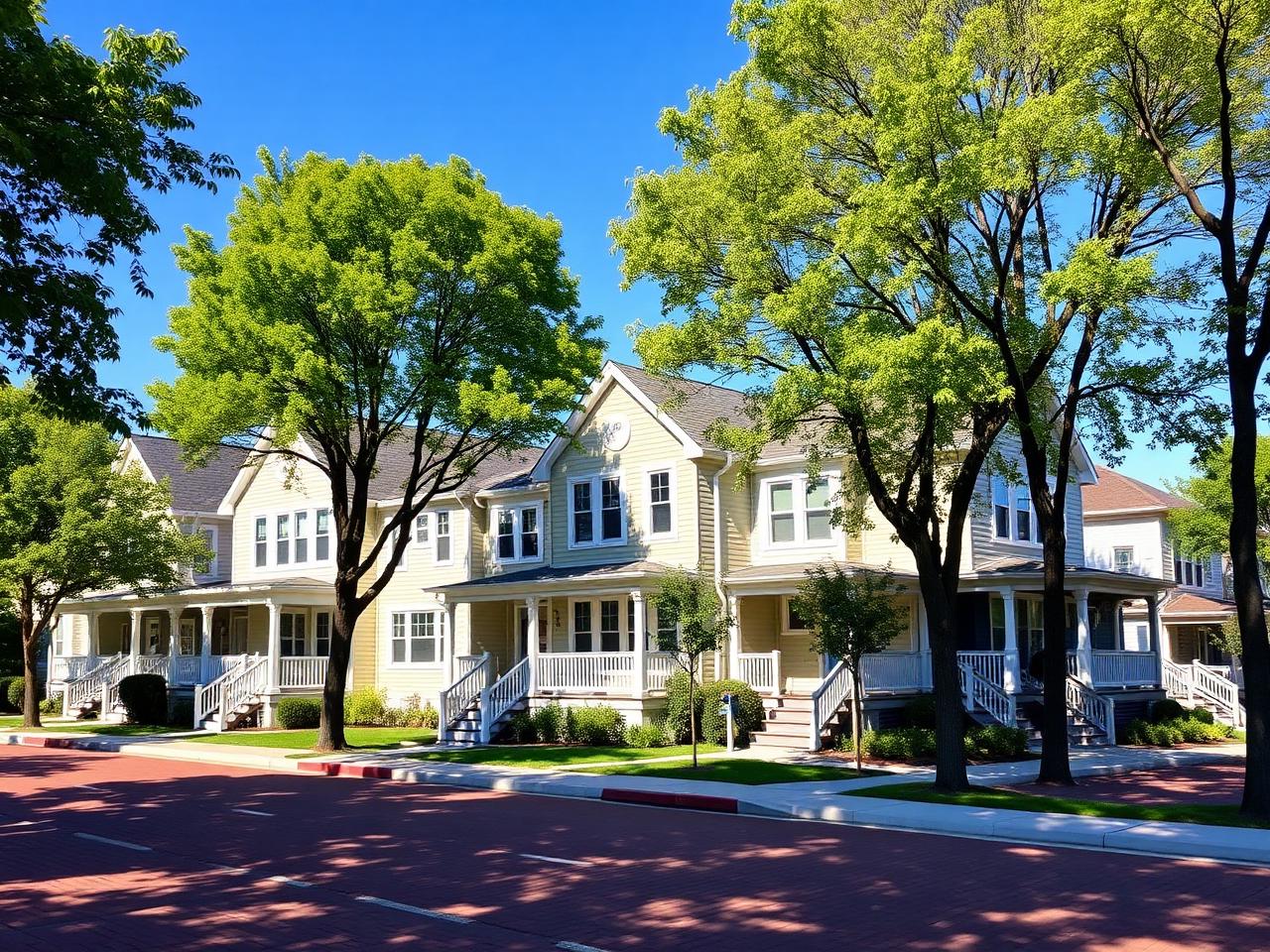
How carefully scaled, owner-occupied infill homes are bringing vitality back to Canton's historic neighborhoods.
For decades, vacant lots scattered across Canton's older neighborhoods told a story of population loss and disinvestment. Drive any of the city's near-northeast or southwest streets and you can still read that story in the gaps between houses — the missing teeth where homes burned down in the eighties, were condemned in the nineties, or simply collapsed under the weight of deferred maintenance in the years since. For a long time, those lots sat as a kind of municipal scar tissue: mowed by the city when the grass got too tall, occasionally fenced off, and otherwise ignored. Today, a very different story is being written one parcel at a time. Urban infill — the practice of building new single-family homes on small, in-fill lots within established neighborhoods — is proving to be one of the most effective tools we have for stabilizing legacy communities.
At Lime Companies, our infill work is intentionally modest in scale. We are not assembling twenty lots and proposing a master plan. We are buying one lot, sometimes three, occasionally five on the same block, and building single-family homes that respect the rhythm of the street: front porches that face the sidewalk, traditional setbacks, pitched roofs, lap siding, and materials that age well in Ohio's freeze-thaw weather. The goal is not to stand out. The goal is to fit in — and over time, to lift the whole block by giving every existing homeowner a freshly painted, well-landscaped neighbor on either side.
The economics of infill are unforgiving and worth understanding. A single vacant lot in an older Canton neighborhood might be acquired for a few thousand dollars from the county land bank, but the cost of building a quality home on it — foundation, framing, mechanicals, finishes, sidewalks, driveway, landscaping — is essentially the same as building that same home in a brand-new subdivision. The difference is the appraisal. New construction in a neighborhood with comparable sales in the $90,000 range will not appraise for the $230,000 it cost to build. That gap is the central challenge of infill development, and closing it requires a creative capital stack: city land contributions, soft-second buyer assistance, HOME or CDBG funds, philanthropic gap financing, and builder discipline on cost. Without that stack, infill does not pencil. With it, a working family can buy a brand-new home on the street where their grandmother lived.
What we have learned, project after project, is that infill works best when it is paired with the people who already live nearby. Conversations with adjacent homeowners are not a public-relations exercise — they are design input. The neighbor whose driveway runs along the property line has opinions about where the new fence should go. The block club president knows which corner floods every spring. The retired carpenter two doors down can tell you which contractors did good work on the last rehab and which ones disappeared mid-job. We listen, and we adjust. Setbacks shift. Driveway curb cuts move. Porch heights match the existing rhythm of the street. These are small concessions that cost almost nothing and buy enormous good will.
Partnerships with the city's land bank and with neighborhood associations have been equally important. The Stark County Land Reutilization Corporation has a clear-eyed view of which lots are ready for redevelopment and which need more time, more demolition, or more environmental work before a home can go on them. Neighborhood associations, where they are active, know which streets are ready to absorb new construction and which are still struggling to keep existing homes occupied. Following that local knowledge has saved us from building beautiful homes on blocks that were not yet ready to support them.
Design discipline matters at the smallest scale. The homes we build on infill lots are typically 1,200 to 1,600 square feet — three bedrooms, two baths, a real basement, and a one-car garage. We have learned to resist the temptation to make them bigger. A 2,400-square-foot home on a 40-foot-wide lot looks out of scale, blocks light to the neighbors, and prices itself out of the very market we are trying to serve. The right home for an infill lot is the home that would have been built there in 1925 — updated for modern energy codes, accessibility, and family life, but recognizably part of the same architectural conversation as the houses on either side.
Energy performance is non-negotiable. An infill home that costs $400 a month to heat in January defeats the affordability mission, no matter how attractive the sale price. Our standard infill spec includes a tightly sealed building envelope, continuous exterior insulation, high-efficiency variable-speed HVAC, heat-pump water heaters, and triple-pane windows on the north and west elevations. The upfront cost is real. The monthly cost to the homeowner is the only number that matters in the long run, and it is dramatically lower than the existing housing stock on the same block.
Owner occupancy is the quiet engine of the whole strategy. A new infill home that is sold to a family that intends to live in it for the next twenty years does something a rental never does — it puts a person on the block who is going to vote in school board elections, attend the city council meeting about the new stop sign, plant tomatoes in the back yard, and notice when something is off with the house across the street. We structure our infill sales with that in mind. Buyer assistance programs require owner occupancy. Resale restrictions discourage flipping. The homes are designed for families who plan to stay.
The cumulative effect, block by block, is measurable. Streets where we have built three or four infill homes over a five-year period consistently show rising assessed values on the existing homes around them, lower rates of code violations, and shorter days-on-market when long-time owners eventually decide to sell. Crime statistics, where neighborhood-level data is available, tend to drift in the right direction as well. None of these are claims we make in isolation. They are patterns that emerge when you look back at a portfolio of completed projects.
We are also honest about what infill cannot do. A single new home does not save a struggling neighborhood. Fifteen new homes on fifteen scattered streets do not save it either. Infill is one tool among many — alongside historic rehabilitation, commercial corridor investment, school stabilization, transit improvements, and basic public-safety work. Builders who claim that new construction alone will turn a neighborhood around are selling something. What new construction does well is signal commitment, fill physical gaps, and add property-tax base. Combined with the rest of the toolkit, it can be a meaningful part of recovery. By itself, it is not enough.
The next phase of our Canton infill work is focused on clusters rather than scattered sites. Instead of building one home on Maple Avenue and another on Tuscarawas, we are concentrating four to six homes on a single block, all delivered within an eighteen-month window. The visual impact of a coordinated cluster is fundamentally different from the impact of one new home in isolation. Neighbors see momentum. Potential buyers see that they will not be alone. Lenders see comparable sales they can underwrite against. The cluster strategy is harder to assemble — it requires holding multiple lots through pre-development — but the results justify the patience.
We are also experimenting with two-family infill on lots that historically supported duplexes. Many of Canton's older neighborhoods were originally built with a healthy mix of single-family and two-family homes, and the existing zoning often still allows that pattern. A well-designed new duplex, with separate entrances, separate utilities, and porches that face the street, can deliver two affordable units on a single lot — one owner-occupied, one rented or sold to a family member. The financing is more complex, but the housing math is more efficient, and the architectural fit with the existing street is excellent.
Over the next five years, our goal is to deliver a hundred new infill homes across Stark, Summit & Cuyahoga Counties, with the heaviest concentration in Canton's near-northeast and southwest neighborhoods, Akron's North Hill and Kenmore, and Cleveland's Slavic Village and Buckeye. A hundred homes is not a population-changing number on its own. But a hundred well-built, well-located, owner-occupied infill homes, paired with the work that local partners are doing on schools, commercial corridors, and public safety, is enough to push several blocks decisively into the recovery column. That is the bet.
None of this work happens without trades partners who care about the neighborhoods they build in. Many of our framers, masons, and finish carpenters grew up in these same streets. They take pride in handing back a finished home that looks like it belongs. They are the reason the work holds up — not just on day one, but in year ten and year twenty, when the next family is still living in the house and the block around it is still gaining ground. Block by block, that is how cities come back.
Next up
Five Semi-Custom Home Trends Buyers Are Asking For in 2026
Developing the future of Northeast Ohio — one neighborhood at a time.
© 2026 Lime Companies LLC. All rights reserved.
Built in Northeast Ohio.