
Affordable Housing
Working With the County Land Bank
By Derek Anders • May 29, 2025 • 8 min read
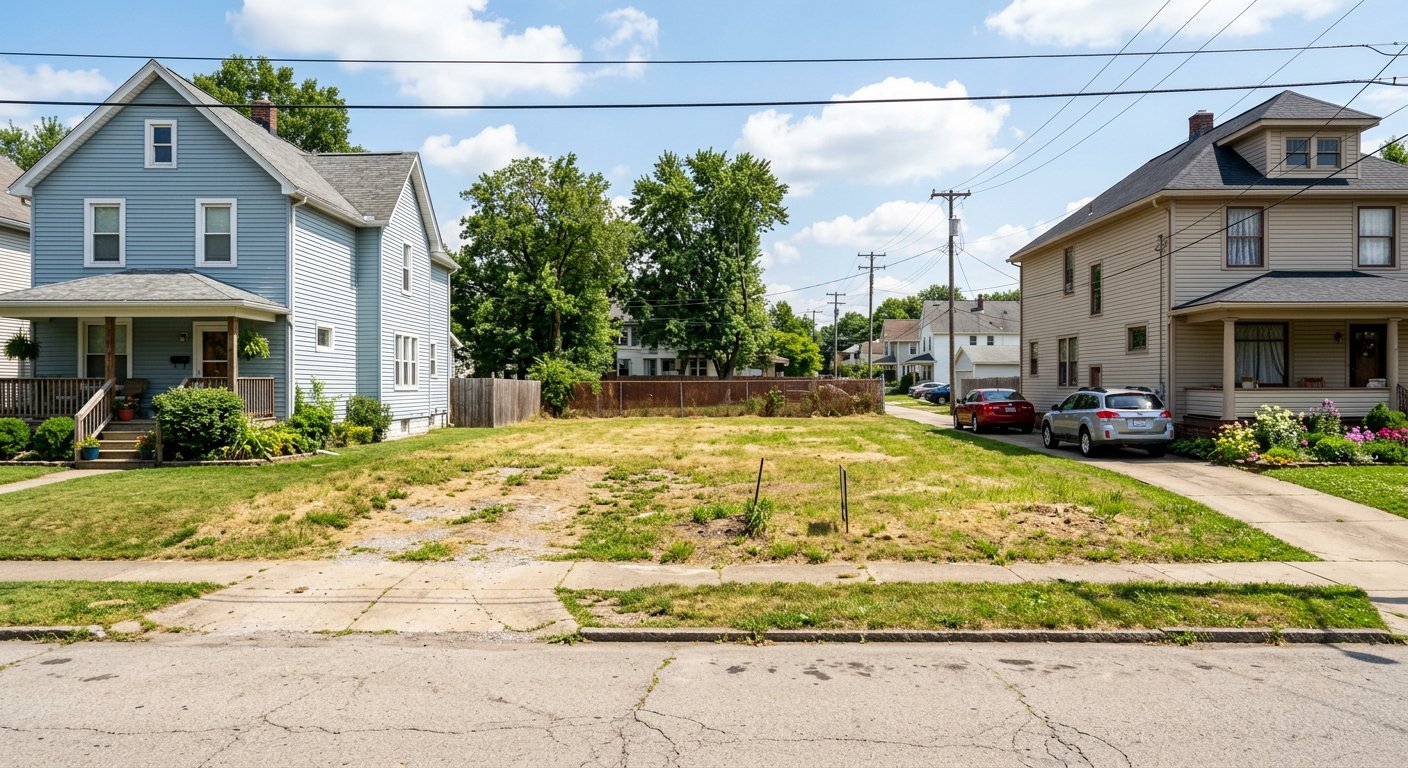
An inside look at how Lime Companies navigates the technical process of acquiring and developing land bank inventory across Stark, Summit, and Cuyahoga Counties.
I spend a significant portion of my week looking at digital parcel maps and spreadsheet exports from the land banks in Stark, Summit, and Cuyahoga Counties. For a developer like me at Lime Companies, these sites are not just a source of cheap dirt; they are the fundamental mechanism for urban-infill affordable housing in Northeast Ohio. The process of working with a county land bank is less about the art of the deal and more about the technical alignment of municipal goals with private sector execution. When we look at a lot in Akron’s Middlebury neighborhood or a tax-foreclosed strip in Cleveland’s Slavic Village, we are evaluating a complex puzzle of clear titles, back taxes, and nuisance abatements. The land bank acts as a clearinghouse that scrubs the legal slate clean, which is the only way these distressed properties become viable for new construction. Without this intervention, the legal liability would outweigh the market value every time.
The initial evaluation phase for any potential acquisition starts with the specific site requirements of our four focus areas. If I am looking at a lot for a Lime Neighborhoods build-to-rent project, I am checking for a cluster of contiguous parcels that can support multiple units without the overhead of heavy infrastructure extensions. In contrast, our sober living houses require larger, existing structures or specific zoning that allows for residential congregate living within established communities. We have to be surgical about where we apply for land. The land banks do not just hand over deeds to the highest bidder; they require a detailed development plan that proves we have the capital and the local experience to actually finish what we start. This means my team spends hours on the phone with city planners in Canton or building inspectors in Cuyahoga Falls before we even submit a formal application for a single parcel.
Navigating the differences between the Stark County Land Reutilization Corporation and the Greater Cleveland Land Bank requires a localized understanding of their specific administrative workflows. In Stark County, the focus is often on stabilization and blight removal in neighborhoods like the Northeast or Southwest sections of Canton. They are looking for developers who can bridge the gap between a vacant lot and a tax-paying asset. When we propose a semi-custom home on a land bank lot, we have to demonstrate that the finished product will help lift the surrounding values without pricing out the existing residents. It is a technical balance. We analyze the neighborhood’s absorption rate and the condition of the subterranean utilities. If a street has a crumbling clay sewer line, that cost is factored into our bid. We are not just buying soil; we are assuming the responsibility for the site’s connection to the city’s aging grid.
Urban-infill affordable housing is perhaps the most difficult segment of our work with these entities because the margins are incredibly thin. In Cuyahoga County, where the inventory is vast but often fragmented, we look for 'in-between' lots that can accommodate modern footprints on narrow setbacks. The technical challenge here is often the soil quality and the history of the site. Many of these land bank lots previously held structures that were demolished decades ago, and the basement foundations were often just filled with debris. Part of our evaluation involves geotechnical testing to ensure we aren't building on top of a subterranean void. If the land bank didn't oversee a clean demolition, our site prep costs can easily double. This is why we maintain a transparent dialogue with the county staff; we need to know exactly how the previous structures were handled before we pull the trigger.
Our build-to-rent model under Lime Neighborhoods relies heavily on the land bank’s ability to assemble land over time. In parts of Summit County, we work within the framework of long-term community plans to identify areas where density makes sense. The land bank serves as a strategic partner by holding parcels until a critical mass is reached. For us, this means managing our cash flow to match the land bank’s release schedule. It isn't a fast process. From the time we submit an application for a lot in Akron to the time we break ground, it can be six to nine months of administrative review. We use this time to finalize our architectural drawings and secure our mechanical permits. By the time the deed transfers, our crews are ready to mobilizing. This efficiency is the only way to make the numbers work in a market where labor costs remain stubbornly high.
The sober living side of Lime Companies presents a different set of obstacles when dealing with land bank acquisitions. These projects often involve the rehabilitation of large, abandoned houses that have been sitting in the county inventory for years. The evaluation here is structural rather than purely geographic. We are looking for 'good bones' in neighborhoods that provide access to public transit and employment centers. In Stark County, for example, we might find a massive Victorian-style home that has been stripped of its copper and left to rot. Our team has to estimate the cost of total system replacements—HVAC, electrical, and plumbing—against the land bank’s requirement that the renovation be completed within a specific timeframe, usually twelve months. If the math doesn't work, we pass. We don't take on properties that will languish on our books, as that defeats the purpose of the land bank’s mission.
Semi-custom homes are where we get to push the design limits within the constraints of land bank inventory. In Cuyahoga County, particularly in developing pockets near the medical centers, we identify lots that are too small for large-scale developers but perfectly sized for a high-efficiency, modern home. The land bank appreciates this because it fills a 'missing middle' in the housing market. Our technical approach involves using standardized building envelopes that can be adjusted to fit the specific dimensions of a city lot. We look at the setback requirements and the utility easements in the county records. Often, a lot might be 40 feet wide but have a 10-foot easement running down one side for an old sewer line. These details are what make or break a project. We have to be more diligent than a suburban developer because we are working within a pre-existing, rigid urban fabric.
The financial mechanics of these deals are often misunderstood. People think because the land cost is low, the profit is high. In reality, the costs of building on land bank parcels are significantly higher than greenfield development. We are dealing with environmental assessments, urban site security, and the logistical nightmare of moving heavy equipment through narrow residential streets. When we buy a lot from the Summit County Land Bank, we are also committing to pay all future property taxes and maintain the lot to a specific standard immediately. There is no 'holding' period where the site just sits. The land banks include reverter clauses in their deeds. If we don't start construction within the agreed-upon window, the county can take the land back. This creates a high-pressure environment that requires a lean, disciplined operational structure at Lime.
One of the biggest advantages of working with the Stark, Summit, and Cuyahoga land banks is the data they provide. Their GIS systems and property histories are invaluable during our due diligence phase. We can see when a property was last occupied, the extent of the tax delinquency, and the history of code violations. This data allows us to build a risk profile for each neighborhood. In East Cleveland or parts of South Akron, the risk might be higher due to infrastructure decay, so we adjust our construction methods accordingly. This might mean installing more robust foundation drainage or upgrading the electrical service to handle modern loads in an area where the grid is taxed. We treat every land bank acquisition as a unique engineering challenge that requires its own set of technical specifications.
Community engagement is a quiet but essential part of the technical process. Even though we are dealing with the county, we are building in someone’s backyard. In neighborhoods where we do multiple urban-infills, we make sure our site supervisors are known to the residents. The land bank often asks for letters of support from local community development corporations or neighborhood groups. This is where our reputation as a local developer in Northeast Ohio matters. They know that Lime isn't an out-of-state investment fund looking to flip paper; they see our trucks on-site in Canton and Cleveland. Showing a history of successful completions helps expedite our applications. The county wants to work with people who have a proven track record of turning vacant dirt into occupied housing because it stabilizes the entire block’s valuation.
The environmental aspect of land bank development is a major technical hurdle that we address early. Many of the lots we acquire, especially in the industrial corridors of Cleveland or Akron, have the potential for soil contamination. The land bank often provides Phase I environmental reports, but we frequently conduct our own Phase II testing if there is any indication of past industrial use. Dealing with lead-based paint soil contamination or old fuel tanks requires specific remediation steps that must be baked into the budget. We work with environmental consultants to ensure that our affordable housing projects are safe for families. We aren't just meeting the minimum legal standard; we are ensuring the long-term health of the neighborhood. This technical rigor is what allows us to secure financing from traditional lenders who might otherwise be wary of urban-infill projects.
Looking ahead, the role of land banks in Northeast Ohio will only become more critical as housing inventory remains tight. At Lime Companies, we are positioning our four focus areas to align even more closely with the strategic goals of these county entities. Whether it’s providing high-quality rental options through Lime Neighborhoods or creating specialized sober living environments, our goal is to be the primary partner for turning distressed assets into community anchors. It requires a lot of paperwork, several late nights looking at topographical maps, and a constant dialogue with county officials, but the result is a more resilient urban core for Stark, Summit, and Cuyahoga Counties. We aren't looking for the easy path; we are looking for the technical path that leads to sustainable growth in the places where we live and work.
Next up
Kitchen Design for Families Who Actually Cook
Developing the future of Northeast Ohio — one neighborhood at a time.
© 2026 Lime Companies LLC. All rights reserved.
Built in Northeast Ohio.